Overview
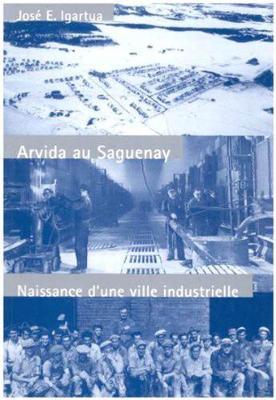
The town of Arvida provides a field on which we can observe in microcosm the birth of an industrial town and the development of the population's identity as a community. Using a wealth of quantitative and qualitative data, Jose Igartua examines what type of people chose to come, who decided to stay, how they lived, and how the demographic traits of the region shifted. He argues that even though a significant proportion of the population came from outside the region Arvida gradually acquired the character of a Saguenay town, where family, the Catholic Church, and French-Canadian culture were dominant. Igartua pays particular attention to the local labour movement, which culminated in the famous wildcat strike of 1941, revealing that the fight for collective action was the turning point in the development of a community consciousness.
Full Product Details
Author: José E. Igartua ,
Jose E. Igartua
Publisher: McGill-Queen's University Press
Imprint: McGill-Queen's University Press
ISBN: 9780773513778
ISBN 10: 0773513779
Pages: 288
Publication Date: 24 May 1996
Audience:
Professional and scholarly
,
Professional & Vocational
Format: Hardback
Publisher's Status: Active
Availability: Out of stock

The supplier is temporarily out of stock of this item. It will be ordered for you on backorder and shipped when it becomes available.
Language: French
Reviews
An excellent portrait of the evolution of Arvida in the first twenty years of existence. This is one of the few investigations of its type to be produced in Quebec in recent years on the history of the working class. Arvida au Saguenay makes an important and original contribution to social history. [translation] Fernand Harvey, INRS -- Culture et Societe, Quebec. Arvida au Saguenay fills a significant gap in Quebec historiography. Igartua's analysis of the work force, the union movement, and the 1941 strike adds an important new dimension to Canadian labour and working-class history. Jack Little, Department of History, Simon Fraser University.
An excellent portrait of the evolution of Arvida in the first twenty years of existence. This is one of the few investigations of its type to be produced in Quebec in recent years on the history of the working class. Arvida au Saguenay makes an important and original contribution to social history. [translation] Fernand Harvey, INRS -- Culture et Societe, Quebec. Arvida au Saguenay fills a significant gap in Quebec historiography. Igartua's analysis of the work force, the union movement, and the 1941 strike adds an important new dimension to Canadian labour and working-class history. Jack Little, Department of History, Simon Fraser University.
Author Information
José E. Igartua is a retired professor of history at the Université du Québec à Montréal.