Overview
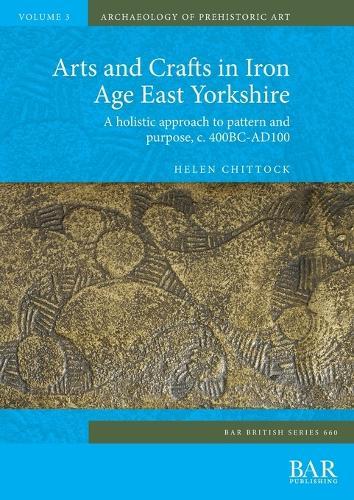
This volume presents a new approach to decorative practices in Iron Age Britain and beyond. It aims to collapse the historic distinction between art and craft during the period 400BC-AD100 by examining the purposeful nature of decoration on varied Iron Age objects, not just those traditionally considered art. A case study from East Yorkshire (UK), a region well known for its elaborate Iron Age metalwork, is presented. This study takes a holistic approach to the finds from a sample of 30 sites, comparing pattern and plainness on objects of a wide range of materials. The analysis focuses on the factors that led makers to decorate certain objects in certain ways and the uses of different patterns in different social contexts. A concentrated study on evidence for use-wear, damage, repair and modification then draws on primary research and uses assemblage theory to better understand the uses and functions of decorated objects and the ways these developed over time.
Full Product Details
Author: Helen Chittock
Publisher: BAR Publishing
Imprint: BAR Publishing
Weight: 0.590kg
ISBN: 9781407356976
ISBN 10: 1407356976
Pages: 148
Publication Date: 25 February 2021
Audience:
Professional and scholarly
,
Professional & Vocational
Format: Paperback
Publisher's Status: Active
Availability: Available To Order 
We have confirmation that this item is in stock with the supplier. It will be ordered in for you and dispatched immediately.
Table of Contents
Contents List of Figures List of Tables Abstract 1. An Introduction to This Book: What Did Pattern Do? 1.1. Introduction 1.2. The Origins of This Book 1.3. What Is This Book About? 1.4. Chapter Outline 2. A Brief History of Celtic Art Studies in Britain and Beyond 2.1. Introduction 2.2. The Emergence of a Celtic Art Style 2.2.1. The Idea of the Celts 2.2.2. The Grammar of Ornament 2.2.3. Horae Ferales, John Kemble and A.W. Franks 2.3. Celtic Art in Time and Space 2.3.1. Synthesis and Chronology in the 20th Century 2.3.2. The Limitations of Celtic Art 2.4. Peasant Art and Home-Crafts 2.4.1. Glastonbury Lake Village and Its Arts and Crafts 2.4.2. Shifting Models of Iron Age Craft and Value 2.5. Rethinking Celtic Art 2.6. Chapter Conclusion 3. A Return to Pattern and Purpose 3.1. Introduction 3.2. Formulating the Research Question 3.3. Pattern and Purpose: A Survey of Early Celtic Art in Britain 3.4. Defining Pattern 3.5. Defining Purpose 3.6. Reintegrating Pattern and Purpose 3.7. Chapter Conclusion 4. Beyond the Arras Culture: Characterising the Iron Age of East Yorkshire 4.1. Introduction 4.1.1. Why East Yorkshire? 4.2. Researching the Iron Age in East Yorkshire 4.2.1. Antiquarianism 4.2.2. The Arras Culture 4.2.3. Searching for Settlements 4.2.4. Chronological Discussions of Iron Age East Yorkshire 4.3. Characterising the Middle-Late Iron Age in East Yorkshire 4.3.1. The Middle Iron Age: 400-100BC 4.3.2. The Late Iron Age: 100BC-AD100 4.4. Pattern, Colour and Society in Iron Age East Yorkshire 4.4.1. Early Celtic Art (and Other Art) in East Yorkshire 4.4.2. Significant Materials 4.4.3. The Functions of Patterned Objects 5. Pattern and Context in the Dataset 5.1. Introduction 5.2. The Dataset 5.2.1. The Sample of Sites 5.2.2. Data from the Portable Antiquities Scheme 5.2.3. Dating 5.2.4. Data Collection 5.2.5. Pattern in the Dataset 5.2.6. Context in the Dataset 5.3. Data Analysis 5.3.1. Ceramic Sherds 5.3.2. Patterned and Plain Objects 5.3.3. Style and Context 5.3.4. Patterned Object Types 5.4. Discussion of Data 5.4.1. The Decision to Decorate 5.4.2. The Decision to Deposit 5.4.3. Reflecting on the Limitations of 'Object Type' Categories 6. Pattern and Purpose in the Dataset 6.1. Introduction 6.1.1. Fox's Ideas about Purpose 6.1.2. Augmenting Purpose 6.2. Data Analysis 6.2.1. Purpose Categories and Pattern 6.2.2. Purpose Categories and Deposition 6.3. Discussion of Data 6.3.1. Horse and Chariot Gear 6.3.2. Weapons and Defence 6.3.3. Personal Ornament 6.3.4. Mirrors 6.3.5. Vessels 6.3.6. Implements 6.3.7. Ambiguous Objects 6.4. Chapter Conclusion 7. Iron Age Groupsets in Time and Space 7.1. Introduction 7.1.1. Biographies, Itineraries and Beyond 7.1.2. Iron Age Groupsets 7.2. Methodology 7.3. Chariots 7.3.1. Ferry Fryston (Wakefield Museums and Castles) 7.3.2. Wetwang Village (British Museum, 2001,0401) 7.3.3. Wetwang 2 (Hull and East Riding Museum, 2010.8) 7.3.4. Garton Slack (Hull and East Riding Museum, 1973.32) 7.3.5. Wetwang 1 (Hull and East Riding Museum, 2010.8) 7.3.6. Wetwang 3 (Hull and East Riding Museum, 2010.8) 7.3.7. Kirkburn (British Museum, 1987,0404) 7.3.8. Garton Station (British Museum, 1985,0305) 7.3.9. Arras: The Queen's Barrow (British Museum, 1877,1016) 7.3.10. Chariots: Discussion 7.4. Swords (and a Single Shield) 7.4.1. The Bugthorpe Sword (British Museum, 1905,0717.1) 7.4.2. The Kirkburn Sword (British Museum, 1987,0404.2) 7.4.3. Wetwang 1 (Hull and East Riding Museum, KINCM:2010.8.31) 7.4.4. Wetwang 3 (Hull and East Riding Museum, KINCM:2010.8.65) 7.4.5. The Grimthorpe Sword and Shield (British Museum, 1876,0208.10) 7.4.6 The South Cave Hoard (Beverley Treasure House) 7.4.7. Swords: Discussion 7.5. Bone and Antler Objects 7.5.1. Bone and Antler Objects: An Overview 7.5.2. The Comb Pit (Garton Slack XI, Hull and East Riding Museum) 7.5.3. Bone and Antler Objects from Rudston Villa East Site 7.5.4. Bone Points 7.5.5. Bone and Antler Objects: Discussion 7.6. Pots 7.6.1. Raw Materials 7.6.2. Design 7.6.3. Use-Wear 7.6.4. Fragmentation and Deposition 7.6.5. Exchange 7.6.6. Pots: Discussion 7.7. Chapter Conclusion 7.7.1. Iron Age 'Kintsugi' 7.7.2. Pattern as Patina 8. Pattern and Purpose in Iron Age East Yorkshire 8.1. The Decision to Decorate 8.2. The Processes of Design and Patterning 8.3. The Deployment of Pattern 8.4. The Accumulation of Pattern 8.5. The Deposition of Patterned Objects 8.6. What Did Pattern Do? 8.7. Looking Further Afield: Overlapping Traditions at Different Scales, and Local Interpretations of Wider Artistic Practices 8.8. Conclusion: A Threefold Purpose of Iron Age Pattern References Appendix I Appendix II
Reviews
'The work is an excellent contribution to our understanding of the uses of decoration and other art in Iron Age Britain. It is a solid, thoughtful presentation of a new way of looking at a large body of material, some of it familiar to researchers of Iron Age Europe, some of it new.' Professor Peter S. Wells, University of Minnesota 'This is a significant contribution in terms of our understanding of the linking of pattern and purpose in object manufacture, decoration and appearance, and in reintegrating the study of art with the study of material culture and society at large.' Professor Colin Haselgrove, University of Leicester
"'The work is an excellent contribution to our understanding of the uses of decoration and other ""art"" in Iron Age Britain. It is a solid, thoughtful presentation of a new way of looking at a large body of material, some of it familiar to researchers of Iron Age Europe, some of it new.' Professor Peter S. Wells, University of Minnesota 'This is a significant contribution in terms of our understanding of the linking of pattern and purpose in object manufacture, decoration and appearance, and in reintegrating the study of ""art"" with the study of material culture and society at large.' Professor Colin Haselgrove, University of Leicester"
Author Information
Helen Chittock is an archaeologist specialising in the study of later prehistoric and Roman finds. Her research encompasses a range of topics relating to decorative practices and the use and treatment of objects across Europe during the 1st millennium BC. She works as a Project Officer (Post-Excavation) for AOC Archaeology Group.
Tab Content 6
Author Website:
Countries Available
All regions
|