Overview
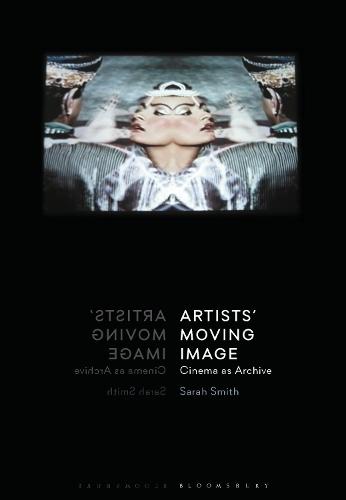
Artists have long been fascinated by film, but recent decades have seen an explosion in direct artistic engagements with mainstream cinema, particularly from the classical and post-classical eras of Hollywood filmmaking. Ranging from directly sampling film clips to imitating aspects of films, these engagements deploy highly recognisable examples of cinema to activate collective cultural memory. Artists’ Moving Image presents a diverse and wide-ranging body of works, from established artists such as Steve McQueen and Douglas Gordon to mid-career artists like Jesse Jones and Rachel Maclean, reinvigorating the existing ‘canon’ of cinematic artists’ films. Beyond discussing individual works, Sarah Smith categorizes and analyzes the trends in this expanding area of art practice, arguing that the point of interest is not cinema (and its history) per se, but what its evocation as cultural archive can illuminate about the legacies of the past in the present. Examining subjects such as found footage as feminist poetics, the documentary turn in contemporary art and the unfinished film, she shows how artists’ films interrogate dominant cinematic forms and their cultural meanings. For anyone interested in contemporary art, film studies or exhibition practice, this book is a defining exploration of how cinema operates as twentieth-century archive in recent artists’ moving image.
Full Product Details
Author: Sarah Smith (The Glasgow School of Art, UK)
Publisher: Bloomsbury Publishing PLC
Imprint: Bloomsbury Academic
Dimensions:
Width: 18.80cm
, Height: 1.40cm
, Length: 24.40cm
Weight: 0.560kg
ISBN: 9781350232327
ISBN 10: 1350232327
Pages: 200
Publication Date: 30 April 2026
Audience:
College/higher education
,
Tertiary & Higher Education
Format: Paperback
Publisher's Status: Forthcoming
Availability: Not yet available 
This item is yet to be released. You can pre-order this item and we will dispatch it to you upon its release.
Table of Contents
Introduction: Citations of Cinema in Artists’ Moving Image Since the 1990s Section 1: Sampling Chapter 1: Slurs, Stutters and Screams: Articulations of Hollywood’s Unconscious in Artists’ Moving Image · 24 Hour Psycho (Douglas Gordon, 1993) · Alone. Life Wastes Andy Hardy (Martin Arnold, 1998) · Him + Her (Candice Breitz, 1968-2008) Chapter 2: Found Footage Film as Feminist Poetics · Bullets for Breakfast (Holly Fisher, 1992) · Psi Girls (Susan Hiller, 1999) · Mirror World (Abigail Child, 2006) Chapter 3: The Documentary Turn in Contemporary Art · B/Side (Abigail Child, 1996) · Dial H-I-S-T-O-R-Y (Johan Grimonprez, 1997) · Bernadette (Duncan Campbell, 2008) Section 2: Imitation Chapter 4: Maximal Intertextuality · Cremaster Cycle (Matthew Barney, 1994-2002) · Feature (Shezad Dawood, 2008) · Over the Rainbow (Rachel Maclean, 2013) Chapter 5: Aesthetic Dissonance and the Hollywood Fragment as Audiovisual Metonym · Deadpan (Steve McQueen, 1997) · Zoo (Salla Tykkä, 2006) · Zarathustra (Jesse Jones, 2008) Chapter 6: The Unfinished Film and Archival Partiality · Two Impossible Films (Mark Lewis, 1995) · Unfolding the Aryan Papers (Jane and Louise Wilson, 2009) · End Credits (Steve McQueen, 2012-2022) Conclusion: New Directions for Critical Engagements with Cinema in Artists’ Moving Image Bibliography Index
Reviews
This brilliant book discusses some of the most important installation video and film art pieces and their intersections with contemporary cinema, as well as discussing numerous other ambitious and influential installation art works that may not be as well known. It explores these projects in rich detail, offering many surprising and illuminating insights. It’s a remarkable and deeply researched book – essential reading for film and video historians – examining some of the key works of 20th and 21st century film and video art. -- Wheeler Winston Dixon, Professor Emeritus of Film Studies, University of Nebraska-Lincoln, USA
Author Information
Sarah Smith is Head of Fine Art Critical Studies at the Glasgow School of Art, UK. She is one of a small number of leading experts on Scottish experimental and artists’ film and also researches in the areas of feminist art and Irish national identity. In addition to working within academic contexts, her research is disseminated through a variety of public platforms such as gallery and cinema talks, curating and programming, exhibition catalogue essays, magazine articles and reviews.
Tab Content 6
Author Website:
Countries Available
All regions
|