Overview
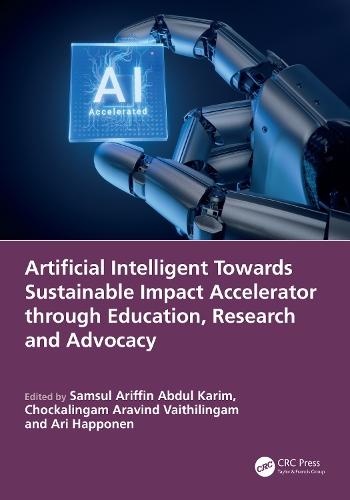
This book emphasizes the importance of incorporating sustainability concepts through the lens of education, research, and advocacy. A core focus is artificial intelligence (AI) and its developing role in relation to education, research, and advocacy to advance sustainable development. By providing a comprehensive perspective, the reader learns that research and education must work together to generate innovation, advocating responsible AI development and deployment. To enable the development of change agents in their fields, the authors emphasize the importance of incorporating sustainability ideas into a variety of educational programs. On the topic of creating purposeful learning environments, AI is examined as the tool to strike a balance between flexible, student-centered approaches and curriculum standards, in consideration of the sustainability impact factor. This book aims to align with the United Nations Sustainable Development Goal (SDG) No. 4 on quality education. It also examines how research aids in the development of sustainable practices and the discovery of novel solutions. Researchers can contribute to evidence-based decision-making by encouraging interdisciplinary collaboration and interacting with stakeholders. Furthermore, the reader learns that advocacy can be used by both individuals and groups to effect real change through awareness-raising, influencing public opinion, and advocating for legislative changes. The ethical issues, legal frameworks, and the role of advocacy in forming responsible AI practices for capacity building are discussed. Each topic is supported by case studies, best practices, and practical insights, making this book a useful reference for research and practice. Developed by experts in their respective fields of science, technology, and engineering with experience in education, research, and advocacy, this book would serve scholars with innovative insights for their research. Practitioners may also utilize this book for their professional work to apply the latest advancements and optimal methodologies.
Full Product Details
Author: Samsul Ariffin Abdul Karim (FASD, Universiti Teknologi Petronas, Malaysia) ,
Chockalingam Aravind Vaithilingam ,
Ari Happonen
Publisher: Taylor & Francis Ltd
Imprint: CRC Press
Weight: 0.660kg
ISBN: 9781041048909
ISBN 10: 1041048904
Pages: 342
Publication Date: 26 May 2026
Audience:
College/higher education
,
Professional and scholarly
,
Tertiary & Higher Education
,
Professional & Vocational
Format: Paperback
Publisher's Status: Forthcoming
Availability: Not yet available

This item is yet to be released. You can pre-order this item and we will dispatch it to you upon its release.
Author Information
Samsul Ariffin Abdul Karim is an associate professor at UUM's School of Quantitative Sciences, Research Fellow at ISIDM and the Founding Director of CSAM. He has published over 223 works, including 80 book chapters, and has received UTP's education and publication awards. He is also a Certified Wolfram Technology Associate. Chockaligam Aravind Vaithilingam is a professor at the Faculty of Innovation and Technology at Taylor’s University, Malaysia. He also heads the Clean Technology Impact Lab, which is aligned with SDG 6 and SDG 7 as part of Taylor's University's future-focused education, research and advocacy strategy. Ari Happonen is an adjunct and associate Professor, a project manager/principal investigator, and university-industry collaborator at LUT School of Engineering Science in Lappeenranta University of Technology, Finland. He contributes to software engineering, Createch research, ICT and sustainability, AI solutions, hackathon- and education-related research.