|
|
|||
|
||||
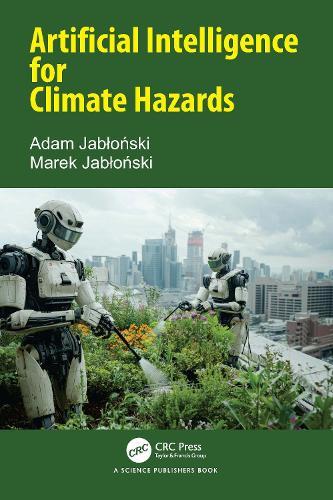
OverviewThe aim of the monograph is to present a modern and original approach to the design and implementation of effective and efficient artificial intelligence solutions that ensure the induction of positive climate change. The monograph presents the application of digital business models and strategies combining solutions for digital and climate transformation. Digital platform solutions based on algorithms changing the functioning of technical organizations will be presented. Applied technological management, supported by elements of automation and robotics, will shape the emergence of new climate services. The mechanisms for implementing cybersecurity and safety principles described herein will serve to reduce climate hazards. Full Product DetailsAuthor: Adam Jabłoński (WSB University in Poznań) , Marek Jabłoński (WSB University in Poznań)Publisher: Taylor & Francis Ltd Imprint: CRC Press Weight: 0.453kg ISBN: 9781032561295ISBN 10: 1032561297 Pages: 162 Publication Date: 05 May 2026 Audience: College/higher education , Professional and scholarly , Tertiary & Higher Education , Professional & Vocational Format: Hardback Publisher's Status: Forthcoming Availability: Not yet available This item is yet to be released. You can pre-order this item and we will dispatch it to you upon its release. Table of ContentsPreface. List of Figures. List of Tables. The Main Objective of the Scientific Discussion. Artificial Intelligence as a Research Object in Management and Climate Sciences and as a Practical Tool for Modern Business Solutions. Systematic Literature Review—Description of the Landscape of AI Research. Artificial Intelligence—Key Meanings and Interpretations in the Context of Climate Change. Artificial Intelligence and an Overview of Selected Solutions for Creating Positive Climate Changes. Climate Hazard Management Mechanisms using Artificial Intelligence Solutions. Contextualization of the Place and Role of Artificial Intelligence in Climate Hazard Management. The Authors’ Original Concept for the Development of the Evolutionary Cycle of Climate Business Models—From Sustainable Business Models to AI Climate-Changing Business Models. The Authors’ Original Concept of Climate Hazard Management by Means of Artificial Intelligence. The Authors’ Original Concept of Developing AI Mechanisms and Solutions in Climate Hazard Management. The Authors’ Original Spiral of Knowledge on the use of Artificial Intelligence Mechanisms to Solve Problems in the Field of Climate Hazards and Climate Change. Discussion of Research Results – Conclusions for Theory, Practice, Future Research Directions and Limitations of the Research Process, Theoretical Implications, Practical Implications, Potentially Interesting Future Research Directions, Research Limitations. Recommendations and Strategic Axioms for the Development of Artificial Intelligence in Climate Hazard Management. Conclusion. Index.ReviewsAuthor InformationAdam Jabłoński is a Full Professor at WSB MERITO University in Poznan, Poland. He is also Vice-President of the Board of the reputable management consulting company “OTTIMA plus” Sp. z o.o. (Ltd.), Katowice, and President of the “Southern Railway Cluster” Association, Katowice. He conducts extensive research on the design and implementation of business models that positively impact the climate, considering the principles of Digital and Climate Transformation supported by Artificial Intelligence solutions. Adam Jabłoński’s scientific interests focus also on climate responsibility concept. Marek Jabłoński is an Associate Professor at WSB MERITO University in Poznan, Poland. He is also President of the Board of the reputable consulting company “OTTIMA plus” Sp. z o.o. (Ltd.), Katowice, and Vice-president of the “Southern Railway Cluster” Association, Katowice. Marek Jabłoński’s scientific interests focus on the business models concept, as well as climate-changing aspects and Digital and Climate Transformation supported by Artificial Intelligence solutions. He conducts extensive research on socio-technical systems with using evidence-based management concept. Tab Content 6Author Website:Countries AvailableAll regions |
||||