Overview
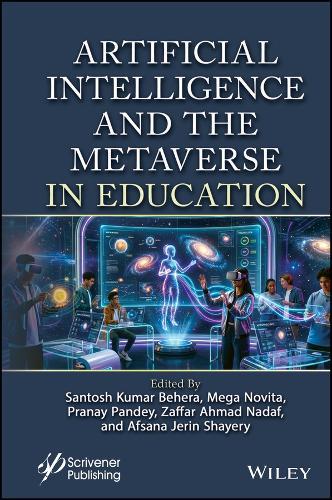
Secure your place at the forefront of the academic revolution by mastering the expert-led frameworks for integrating AI and the metaverse into immersive, ethical, and inclusive learning ecosystems that transcend physical boundaries. In the rapidly evolving landscape of education, the convergence of artificial intelligence and the metaverse presents a transformative paradigm shift. This book explores the intersection of these cutting edge technologies, exploring their profound impact on academia in the coming years. As traditional educational models adapt to meet the demands of a digital age, AI and the metaverse offer unprecedented opportunities to enhance learning experiences, redefine collaboration, and reimagine the very concept of campus and classroom. AI, with its ability to analyze vast datasets and personalize learning pathways, promises to revolutionize curriculum design and student engagement. Meanwhile, in the metaverse, a collective virtual shared space that blurs the lines between physical and digital realms, opens new avenues for immersive learning environments and global connectivity. Together, these technologies herald a future where education is not confined by physical boundaries but enriched by limitless virtual possibilities. Yet, alongside these opportunities lie significant challenges: ethical considerations of AI algorithms in educational decision-making, ensuring equitable access to virtual learning environments, and safeguarding data privacy in an increasingly interconnected world. This book navigates these complexities, offering insights into how institutions can harness AI and the metaverse responsibly while fostering inclusive, innovative learning ecosystems. Through case studies, expert analyses, and visionary perspectives, it equips educators, policymakers, and stakeholders with the knowledge needed to navigate and thrive in this dynamic era of next-generation academia.
Full Product Details
Author: Santosh Kumar Behera (Kazi Nazrul University, India) , Mega Novita (Universitas PGRI Semarang, Indonesia) , Pranay Pandey (Bhatter College, India) , Zaffar Ahmad Nadaf (Central University of Kashmir, India)
Publisher: John Wiley & Sons Inc
Imprint: Wiley-Scrivener
ISBN: 9781394335619
ISBN 10: 139433561
Pages: 624
Publication Date: 07 May 2026
Audience:
Professional and scholarly
,
Professional & Vocational
Format: Hardback
Publisher's Status: Active
Availability: Out of stock 
The supplier is temporarily out of stock of this item. It will be ordered for you on backorder and shipped when it becomes available.
Table of Contents
Preface xxiii 1 Artificial Intelligence: An Educational Frontier 1 Mohamed Saud Mira 1.1 Introduction 2 1.2 Role of AI in Education 3 1.3 Generating Smart Content 6 1.4 Universal Approaches 7 1.5 AI's Benefits to Students 7 1.6 Impartial and Objective Evaluation 9 1.7 Trends of AI in Education 11 1.8 Research Gap and Prospects for Future Research 12 1.9 Conclusion 13 2 Artificial Intelligence in Education 19 Shahzad Rizwan, Chee Ken Nee, Salem Garfan and Muhammad Muzammil 2.1 Introduction 20 2.2 Chapter Organization 35 2.3 Literature Review 35 2.4 Objectives of the Study 41 2.5 Trending Applications 42 2.6 Challenges and Ethical Concerns in AI-Based Education 47 2.7 Ethical Use of AI in Decision-Making 50 2.8 Future Directions and Opportunities for AI in Education 51 2.9 Limitations 56 2.10 Educational Implications 56 2.11 Conclusion 57 3 Cyborg Intellectuals: Combining Humans and Artificial Intelligence (AI) in Scientific-Article Writing 67 Jordy Satria Widodo and Henny Suharyati 3.1 Introduction 68 3.2 Literature Review 70 3.3 Objectives of The Study 72 3.4 Research Questions 72 3.5 Methodology 72 3.6 Results and Discussion 76 3.7 Conclusion 87 4 Intelligent Tutoring Systems: A Five-Year Overview of Research in Developing Countries 91 Maylia Fatmawati, Febrian Murti Dewanto, Bambang Agus Herlambang and Noora Qotrun Nada 4.1 Introduction 92 4.2 Literature Review 95 4.3 Objectives of the Study 97 4.4 Research Questions 98 4.5 Methodology 98 4.6 Result and Discussion 101 4.7 Limitations 111 4.8 Educational Implications 111 4.9 Conclusion 112 5 Artificial-Intelligence-Based Tutoring System 117 Agus Supriyanto 5.1 Introduction 118 5.2 Literature Review 120 5.3 Objectives of the Study 123 5.4 Results and Discussion 123 5.5 Conclusion 132 6 Personalized Adaptive Learning: A Nascent Pedagogical Approach in Education 137 Rufus Olanrewaju Adebisi and Ugochi Nnenna Ndoh 6.1 Introduction 138 6.2 The Practice of Personalized Adaptive Learning in Education 142 6.3 Core Principles of Personalized Adaptive Learning (PAL) 143 6.4 Benefits of Personalized Adaptive Learning (PAL) 144 6.5 Technologies Underpinning Personalized Adaptive Learning (PAL) 146 6.6 Learning Technology in Adaptive Learning Environments 148 6.7 Challenges and Ethical Issues in Personalized and Adaptive Learning 160 6.8 Psychological and Social Impact of Personalized Learning 162 6.9 Ethical Considerations in Digital Learning Environments 166 6.10 Implications for Educational Practice 170 6.11 Conclusion 174 7 Artificial Intelligence in Educational Assessment and Evaluation 183 Sari Ayu Wulandari and Jumanto Jumanto 7.1 Definition and Concept of AI in Educational Evaluation 184 7.2 Application of AI in Various Sectors 187 7.3 Relevance of AI in Education 189 7.4 Challenges and Opportunities for Integrating AI into Educational Assessment 191 7.5 AI in Non-Cognitive Assessment 197 7.6 Data Security, Ethics, and Privacy in AI 199 8 AI for Administrative Efficiency 207 Waewalee Waewchimplee 8.1 Introduction 207 8.2 Literature Review 208 8.3 Automating Administrative Processes for Greater Efficiency 211 8.4 AI in Higher Education: Curriculum Development, Ethical Considerations, and Administrative Innovation 213 8.5 Advantages of Integrating AI in Administration 218 8.6 Highlighting Regional Contexts 222 8.7 Trends and Innovations in Problem-Solving with AI 226 9 AI and Virtual Learning Advancement in Nigerian Universities 237 Basil Osayin Daudu, Jude Zeal Adegoke and Daniel Yakubu Usman 9.1 Introduction 238 9.2 Review of the Literature 240 9.3 Adoption and Challenges of Virtual Learning in Nigerian Universities 244 9.4 Results and Analysis 246 9.5 Conclusion 252 9.6 Recommendations 253 10 The Role of Virtual and Augmented Reality in Young Learners' Motivation in English Learning 259 Mai Sri Lena 10.1 Introduction 260 10.2 Literature Review 261 10.3 Objectives of the Research 265 10.4 Research Questions 266 10.5 Methodology 266 10.6 Results and Discussion 269 10.7 Limitations 278 10.8 Educational Implications 279 10.9 Conclusion 280 11 Virtual Reality (VR) and Augmented Reality (AR) in Education 285 J. Vijila, Godfrey Winster Sathianesan and Gnanavel S. 11.1 Introduction 286 11.2 Foundations of VR and AR 291 11.3 Educational Theories and Frameworks 296 11.4 Applications of VR in Education 299 11.5 Applications of AR in Education 301 11.6 Design and Development of VR/AR Educational Content 312 11.7 Implementation and Integration 314 11.8 Challenges and Barriers 316 11.9 Future Trends and Innovations 319 11.10 Conclusion 323 12 Transformation of Reality to Virtuality: Collaboration in the Realm of Metaverse 327 Jayashree Mahanti, Mazhar Shamsi Ansary, Ayush Mazumdar, Soma Saha and Sadat Ali Khan 12.1 Introduction 328 12.2 Review of the Related Literature 330 12.3 Objectives of the Present Research 332 12.4 Research Questions 332 12.5 Methodology 332 12.6 Discussion 332 12.7 Conclusion 347 13 The Use of Simulation and Gamification in Education: Transforming Learning for the 21st Century 355 Tika Ram Pokhrel, Nara Hari Acharya and Rajendra Kuwar 13.1 Background 356 13.2 MDA Framework 357 13.4 Levels of Gamification 360 13.5 Simulated Gamification 362 13.6 The Future of Simulation and Gamification in Education 364 13.7 Conclusion 365 14 Demystifying Ethical Issues and Concerns of Artificial Intelligence in Education Systems with Education 4.0: A Scientific Study 369 P.K. Paul, K.L. Dangwal, Tatayya Bommali, Sanjukta Chakraborty, Mustafa Kayyali, Ujan Pradhan and S.K. Sharma 14.1 Introduction 370 14.2 Objectives of the Chapter 372 14.3 Methodology 372 14.4 Review of Existing Works 373 14.5 AI and Knowledge Management: Context of the Education Sector 375 14.6 AI, Allied Technology, and Education: Some Perspectives 380 14.7 The Impact of AI in Education and Digital Learning: Understanding Knowledge Management 382 14.8 Ethical Issues of AI in Education and Online and Digital Education 386 14.9 Ethical and Future Use of AI in Student Assessment 395 14.10 Issues and Challenges of AI in Traditional Education 396 14.11 Education 4.0: Challenges and Ethical Considerations in AI Integration 401 14.12 Core Findings, Suggestions, and Future Potentialities 402 14.13 Concluding Remarks 404 15 Ethical and Legal Challenges in Implementing Artificial Intelligence (AI) and Metaverse in Education 411 Mujiono and Riza Weganofa 15.1 Introduction 412 15.2 Literature Review 413 15.3 Methodology 417 15.4 Results 419 15.5 Discussion 429 15.6 Conclusion 431 16 Technical and Ethical Challenges in Integrating AI and the Metaverse in Education 437 Papiya Upadhyay and Sudipta Karmakar 16.1 Introduction 438 16.2 Objectives of the Study 439 16.3 Methodology 439 16.4 The Concept of Artificial Intelligence 440 16.5 The Expanding Scope of AI Applications 441 16.6 The Role of AI in Education: Transforming Learning and Administration 442 16.7 Future Prospects of AI 446 16.8 The Metaverse: Transforming Digital Learning and Human Development 446 16.9 Technological Integration and Future Development 448 16.10 Worldwide Overview of E-Learning Ecosystem 449 16.11 Technical Challenges of AI in Education 450 16.12 Ethical Challenges of AI in Education 457 16.13 Addressing the Challenges of AI Adoption 463 16.14 Concluding Remarks 465 17 Evaluating the Impact of AI and the Metaverse: Metrics, Costs, and Behavioral Outcomes 473 Durgeshwary Kolhe and Arshad Bhat 17.1 Introduction 474 17.2 Review of Literature 477 17.3 Key Metrics for Evaluating AI and Metaverse in Education 477 17.4 Cost Evaluation: Economic Considerations of AI and the Metaverse 481 17.5 Psychological and Behavioral Outcomes 483 17.6 Neurodiversity and Inclusivity: Leveraging AI and Metaverse 485 17.7 Gamification and Motivation in Virtual Learning 487 17.8 Intergenerational Dynamics in Adopting AI and Metaverse 490 17.9 Psychological Safety in Virtual Learning Environments 492 17.10 AI and Metaverse Integration for Lifelong Learning 493 17.11 Future Directions: Enhancing Impact Assessment 494 17.12 Conclusion 496 18 The Future of Education in the Digital Era 503 A.B. Prabowo Kusumo Adi and Jumanto Jumanto 18.1 Introduction 504 18.2 Methodology: Elaborating on These Accounts 508 18.3 Technological Drivers of Change in Education 510 18.4 Student-Centered Learning in the Digital Age 514 18.5 The Evolution of the Classroom 518 18.6 Stakeholders in the Future of Education 521 18.7 The Role of Education in Preparing for the Future Job Market 525 18.8 Challenges and Barriers to the Future of Education 529 18.9 What's Next: Results and Discussion 532 18.10 Conclusion 535 19 Redefining Learning in the Digital Era 539 Ouafa Ouarniki and Houda Boumediene 19.1 Introduction 540 19.2 Review of Literature 542 19.3 Methodology 544 19.4 Results 546 19.5 Discussion 550 19.6 The Future of Education 551 19.7 Practical Recommendations 554 19.8 Conclusion 555 19.9 Limitations of the Study 556 20 Enhancing Quality Education through Artificial Intelligence: A Sustainable Approach toward Global Learning Challenges 559 Subhankar Ghosh and Sekh Nur Hossain 20.1 Introduction 560 20.2 Artificial Intelligence: A Conceptual Framework 560 20.3 AI in Education (AIED): Historical Evolution 562 20.4 AIED and NEP-2020 565 20.5 Transformative Role of AIED 565 20.6 Sustainable Approach toward Global Learning Challenges 568 20.7 Challenges and Ethical Considerations 570 20.8 Future Directions for AIED 572 20.9 Conclusion 574 References 576 Index 581
Reviews
Author Information
Santosh Kumar Behera, PhD is an Associate Professor in the Department of Education at Kazi Nazrul University with more than 14 years of teaching experience. He has contributed a number of articles and edited volumes in the educational field. His research interests include educational technology, philosophy of education, peace education, and measurement and evaluation in education. Mega Novita, PhD is an Associate Professor and the Head of Foreign Cooperation at Universitas PGRI Semarang. Her study focuses on first-principles calculations of transition metal and rare earth ions using the discrete variational multi-electron method. Establishing standards for new red phosphor materials is the main goal of her research. Pranay Pandey, PhD is an Assistant Professor at the Department of Education at Bhatter College. He has authored many books and published more than 70 research articles and book chapters in various esteemed journals and edited volumes. Additionally, he holds copyrights for eight literary works and has developed ten psychological scales, further cementing his impact in the field of education. Zaffar Ahmad Nadaf, PhD is an Assistant Professor in the School of Education at the Central University of Kashmir. He is the author of three books and has contributed extensively to internationally recognized journals. He is also a board member and editor for several prestigious international journals. Afsana Jerin Shayery is a Lecturer in the Department of English at Daffodil International University. She has published her research works in reputed journals and presented at international conferences. She is an expert in institutional internationalization by profession, and a social activist working for social business, three zeros, and digital equity for all ages.
Tab Content 6
Author Website:
Countries Available
All regions
|