Overview
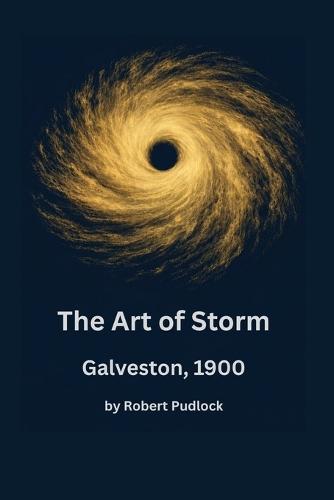
The heat came first. It always did. That is the opening line of Art of Storm: Galveston, 1900 - the first volume in a new series pairing Sun Tzu's Art of War with the American hurricane record. What follows that line in the book is the Storm Council taking notice. The Storm Council is a fictional construct - a human-like governing body that has existed as long as Atlantic hurricanes have struck the American coast. It operates outside of politics, institutional pressure, and the budget cycles that shape how real organizations respond to disaster. Four voices organize its work: the Observer, who tracks the storm; the Archivist, who holds the record of every prior entry; the Analyst, who reads the human target; and the Council Elder, who keeps the discipline. ""The Storm Council recognized Sun Tzu's principles before it finished reading them."" - The Council Elder That line - from the Council Elder's prologue to Art of Storm: Galveston, 1900 - is the most precise statement of why this series exists. Sun Tzu didn't write about storms. But the principles he documented about preparation, foreknowledge, the obligations of leadership, and the conditions that determine outcomes before engagement begins are the same variables the Storm Council finds in every storm it documents. Both bodies of thought - twenty-five centuries apart - are studying the same human failure modes. Both find them in the same sequence. The first volume applies Sun Tzu's principle of Foreknowledge to the deadliest natural disaster in American history. Galveston, 1900. A city that had watched Indianola - one hundred miles down the same coast - destroyed twice in eleven years. A federal meteorologist who published a declaration in 1891 calling the idea of a major hurricane striking the Texas coast an absurd delusion. A Weather Bureau chief who cut the most accurate hurricane-tracking observatory in the Western Hemisphere out of American communication channels - for reasons that had nothing to do with the accuracy of the forecasts. The forecast that reached Galveston on the morning of September 8, 1900 was twelve words. Between 8,000 and 12,000 people died. The Council Elder's words close the volume. ""Failure doesn't require a general who is simply indifferent. It requires only that he didn't prepare.""
Full Product Details
Author: Robert Pudlock
Publisher: Onda Nexus Group
Imprint: Onda Nexus Group
Volume: 1
Dimensions:
Width: 15.20cm
, Height: 0.50cm
, Length: 22.90cm
Weight: 0.132kg
ISBN: 9798995541417
Pages: 90
Publication Date: 22 April 2026
Audience:
General/trade
,
General
Format: Paperback
Publisher's Status: Active
Availability: Available To Order

We have confirmation that this item is in stock with the supplier. It will be ordered in for you and dispatched immediately.
Author Information
Robert Pudlock is the founder of Onda Nexus Group and the creator of the Storm Council and Art of Storm series-an interdisciplinary body of work examining hurricanes through the convergence of history, human decision-making, and the systems that shape outcomes under pressure.With a background spanning emergency management operations, disaster recovery, and manufactured housing communities, Pudlock brings a first-principles perspective to environments where timing, judgment, and execution carry real consequence. His work has included leading complex housing and recovery efforts across Florida following major storm events, coordinating construction, permitting, and case management functions within federally funded disaster programs.Prior to his work in disaster recovery, Pudlock built a career in executive recruiting and talent acquisition, developing a systems-oriented approach to evaluating performance, leadership, and operational alignment-principles that now underpin his analytical frameworks.His writing integrates these disciplines into a structured narrative lens. Through the Storm Council, Pudlock introduces a multi-voice framework that separates observation, analysis, and judgment, allowing readers to examine historical storms not just as events, but as sequences of decisions-made and unmade.Across his work, Pudlock focuses on one central question: what can be learned, in advance, from environments where the cost of misjudgment is irreversible?