Overview
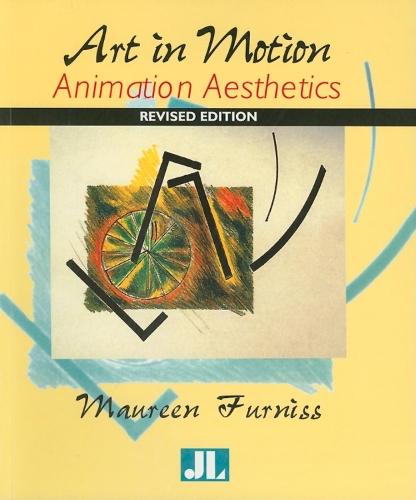
Art in Motion is the first comprehensive examination of the aesthetics of animation in its many forms. It gives an overview of the relationship between animation studies and media studies, then focuses on specific aesthetic issues concerning flat and dimensional animation, full and limited animation, and new technologies. A series of studies on abstract animation, audiences, representation, and institutional regulators is also included.
Full Product Details
Author: Maureen Furniss
Publisher: John Libbey & Co
Imprint: John Libbey Publishing Ltd
Edition: Revised Edition
Dimensions:
Width: 20.30cm
, Height: 2.10cm
, Length: 22.90cm
Weight: 0.966kg
ISBN: 9780861966639
ISBN 10: 0861966635
Pages: 288
Publication Date: 05 February 2008
Audience:
Professional and scholarly
,
Professional & Vocational
Format: Paperback
Publisher's Status: No Longer Our Product
Availability: In Print

This item will be ordered in for you from one of our suppliers. Upon receipt, we will promptly dispatch it out to you. For in store availability, please contact us.
Reviews
True to the description on its back cover, this book remains a 'comprehensive' treatment of animation aesthetics--but comprehensive pertains primarily to the US--which Furniss (California Institute of the Arts) acknowledges--with occasional references to Canada and Europe. Covering history, alternatives, visuals, sound/structural design, limited animation, stop-motion and digital animation, censorship, audiences, representation, and abstract animation, the book provides a thorough overview suitable for nonspecialists because of its facile writing style and numerous illustrations. But to be truly comprehensive, this book should cover a broader geographical area. A serious shortcoming of this revised edition is the skimpy coverage of Asia's rich tradition. Though Japan merits a page or two, China and Korea each get a paragraph, India even less. For example, the author makes no mention of China's exquisite brush painting style, Korea's 'multimation' experiments, or the very recent accelerated growth of animation production in India, Korea, China, and parts of Southeast Asia. Only two of the 129 illustrations are Asia-oriented, both of the South Asian cooperative venture 'Meena' (initiated by UNICEF in association with Hanna-Barbera Cartoons), with not one word of explanation about it. Those who do not own the first edition (1998) may wish to acquire this one. Summing Up: Optional. Undergraduate and general readers. -- ChoiceJ. A. Lent, Temple University, Dec. 2008
<p>True to the description on its back cover, this book remains a'comprehensive' treatment of animation aesthetics--but comprehensive pertainsprimarily to the US--which Furniss (California Institute of the Arts)acknowledges--with occasional references to Canada and Europe. Covering history, alternatives, visuals, sound/structural design, limited animation, stop-motion anddigital animation, censorship, audiences, representation, and abstract animation, the book provides a thorough overview suitable for nonspecialists because of itsfacile writing style and numerous illustrations. But to be truly comprehensive, thisbook should cover a broader geographical area. A serious shortcoming of this revisededition is the skimpy coverage of Asia's rich tradition. Though Japan merits a pageor two, China and Korea each get a paragraph, India even less. For example, theauthor makes no mention of China's exquisite brush painting style, Korea's'multimation' experiments, or the very recent accelerated gr
Author Information
Maureen Furniss teaches on the animation faculty at California Institute of the Arts. She is the founding editor of Animation Journal.