Overview
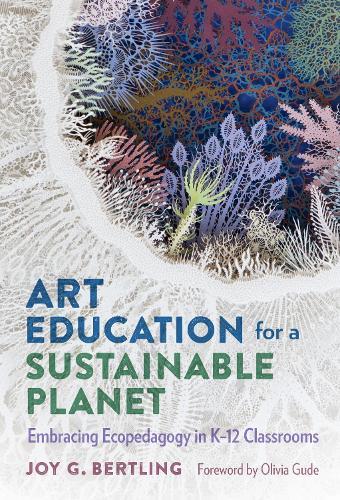
Explore how art education can contribute to a more just and sustainable planet. Making the case that ecopedagogy and eco-art can transform and enrich art education, Bertling introduces these two burgeoning movements and then outlines how they can be infused into K–12 art education. Seven innovative curricular strands are presented to help art teachers embrace natural cycles and processes, envision alternative states and ways of being, restore ecosystems, and empower communities. These strands weave together specific contemporary eco-artworks, cultural and environmental philosophies, and art education methods. Reflective questions, innovative curriculum frameworks, and other resources are provided to support teachers in enacting these inspiring curricular ideas for better social and ecological futures. Curricular themes include attentiveness, relationality, co-creation, consumption, progress, cultural desire, identity stories, restoration, and coalitions. This accessible, full-color text is the first of its kind to provide practical guidance and concrete strategies for educators interested in enacting ecological art instruction. Book Features: A foundational resource for using art education to foster environmental health and ecological integrity. Guidance for developing art curriculum to meet different ecopedagogical goals. Many color images of contemporary eco-artworks. Curriculum framework tables and reflective questions at the end of each chapter. A comprehensive glossary and list of contemporary eco-artists and their websites.
Full Product Details
Author: Joy G. Bertling ,
Olivia Gude
Publisher: Teachers' College Press
Imprint: Teachers' College Press
Dimensions:
Width: 16.20cm
, Height: 1.40cm
, Length: 23.50cm
Weight: 0.272kg
ISBN: 9780807767719
ISBN 10: 0807767719
Pages: 208
Publication Date: 23 June 2023
Audience:
Professional and scholarly
,
Professional & Vocational
Format: Hardback
Publisher's Status: Active
Availability: Out of stock

The supplier is temporarily out of stock of this item. It will be ordered for you on backorder and shipped when it becomes available.
Reviews
“The heart of the book dissects our dependence as a species on countless elements of our habitat through examining a series of discrete themes in recent art that can be dynamically explored in educational settings…neither urgency nor creativity is lacking in this excellent volume, and I have every intention of using it in my own teaching.” —International Journal of Education Through Art
Author Information
Joy G. Bertling is an assistant professor and team leader of art education at the University of Tennessee. She currently serves as founding chair of the National Art Education Association's Ecology and Environment Special Interest Group and chair of the American Educational Research Association's Arts and Learning Special Interest Group.