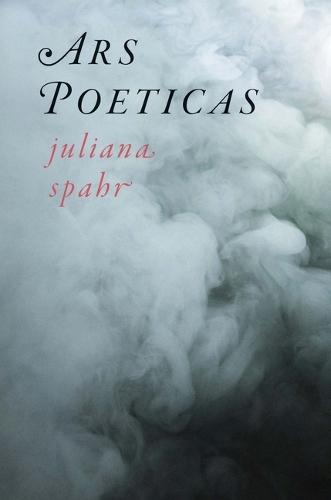
Full Product Details
Author: Juliana Spahr
Publisher: Wesleyan University Press
Imprint: Wesleyan University Press
ISBN: 9780819501523
ISBN 10: 0819501522
Pages: 72
Publication Date: 15 April 2026
Audience:
General/trade
,
General
Format: Hardback
Publisher's Status: Active
Availability: Available To Order

We have confirmation that this item is in stock with the supplier. It will be ordered in for you and dispatched immediately.
Reviews
""Juliana Spahr's Ars Poeticas (Wesleyan Univ., Feb.) ask how one might write in troubled times. (Spahr started by reading Brecht.)""--Library Journal ""Throughout Ars Poeticas, Spahr unpacks the steadily worsening threats of climate change and right-wing populism with humility and artistry. We can't help but wonder what poetry could ever add to the efforts to address them, if not just more lines of poetry. With Ars Poeticas, the answer, despite Spahr's reservations, is a tremendous amount.""--Christopher Kondrich, The Washington Post ""Writing the common from the Emersonian tradition has been central to Juliana Spahr's practice of the past few decades. Her work's discipline is processual, labile, and mobile, like Emerson's, and politically lyrical, like Whitman's after him.""--Lauren Berlant, author of On the Inconvenience of Other People ""Spahr's scenes of pastoral enchantment invoke enduring human fantasies of ecological coexistence grounded in mutual care and protection. Yet if these scenes lay the groundwork for the banishments to come, they also speak poignantly to the psychic need for these fantasies.""--Margaret Ronda, author of Remainders: American Poetry at Nature's End
"""Writing the common from the Emersonian tradition has been central to Juliana Spahr's practice of the past few decades. Her work's discipline is processual, labile, and mobile, like Emerson's, and politically lyrical, like Whitman's after him.""-- ""Spahr's scenes of pastoral enchantment invoke enduring human fantasies of ecological coexistence grounded in mutual care and protection. Yet if these scenes lay the groundwork for the banishments to come, they also speak poignantly to the psychic need for these fantasies.""--"
""Writing the common from the Emersonian tradition has been central to Juliana Spahr's practice of the past few decades. Her work's discipline is processual, labile, and mobile, like Emerson's, and politically lyrical, like Whitman's after him.""--Lauren Berlant, author of On the Inconvenience of Other People ""Spahr's scenes of pastoral enchantment invoke enduring human fantasies of ecological coexistence grounded in mutual care and protection. Yet if these scenes lay the groundwork for the banishments to come, they also speak poignantly to the psychic need for these fantasies.""--Margaret Rhonda, author of Remainders: Mourning and Melancholia at the End of Nature
"""Writing the common from the Emersonian tradition has been central to Juliana Spahr's practice of the past few decades. Her work's discipline is processual, labile, and mobile, like Emerson's, and politically lyrical, like Whitman's after him.""--Lauren Berlant, author of On the Inconvenience of Other People ""Spahr's scenes of pastoral enchantment invoke enduring human fantasies of ecological coexistence grounded in mutual care and protection. Yet if these scenes lay the groundwork for the banishments to come, they also speak poignantly to the psychic need for these fantasies.""--Margaret Rhonda, author of Remainders: Mourning and Melancholia at the End of Nature"
Author Information
JULIANA SPAHR is a writer and scholar of literature. Her most recent book of poetry is That Winter the Wolf Came (2015).