Overview
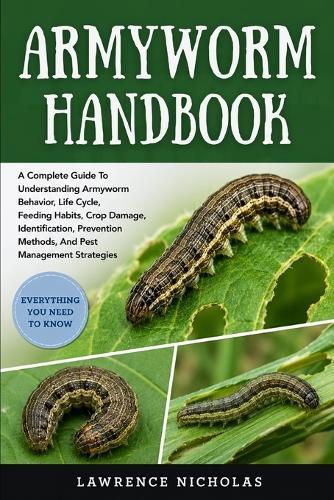
INTRODUCTION TO ARMYWORMS Armyworm Basics Armyworms are among the most widely recognized agricultural pests in the world, feared by farmers because of their extraordinary ability to appear suddenly, spread rapidly, and consume large areas of crops within a very short period. Despite the name ""armyworm,"" these insects are not worms at all. They are the larval stage of several species of moths belonging mainly to the genus Spodoptera. The name comes from their marching behavior, where large numbers of caterpillars move together across fields in search of food, resembling an advancing army sweeping through the land. This movement can transform healthy green farmland into devastated fields almost overnight, leaving farmers shocked by the speed and intensity of the destruction. Armyworms are soft-bodied caterpillars with segmented bodies, strong chewing mouthparts, and coloration that varies depending on species and age. Some appear green, brown, gray, or nearly black, often with stripes running along the body. Many species have distinct markings that help researchers and farmers identify them in the field. The fall armyworm, for example, is known for the pale inverted ""Y"" marking on the front of its head and the pattern of spots along its body. Although they may seem small individually, their collective feeding power makes them one of the most destructive agricultural pests in modern farming. The life of an armyworm begins as a tiny egg laid by an adult moth on the leaves of plants. Once the eggs hatch, the young caterpillars begin feeding immediately, often scraping leaf surfaces before progressing to deeper chewing damage as they grow larger. Their appetite increases dramatically during the later stages of development, which is why infestations often become far more noticeable after the caterpillars have matured for several days. After completing their feeding phase, the larvae burrow into the soil to pupate before eventually emerging as adult moths capable of flying long distances and beginning the cycle again. What makes armyworms particularly challenging is their combination of mobility, adaptability, and reproductive potential. Adult moths can travel hundreds of kilometers with favorable winds, allowing infestations to spread across regions and even continents. This migratory behavior means that outbreaks may appear suddenly in areas where no infestation existed previously. Farmers may go to sleep with healthy crops and wake to discover large portions of their fields damaged by newly arrived larvae. Armyworms are highly adaptable feeders capable of attacking a wide range of crops and grasses. Corn, maize, rice, wheat, sorghum, millet, sugarcane, and pasture grasses are among their favorite food sources. Some species are also known to attack vegetables and ornamental plants when preferred crops are unavailable. Because of this broad feeding range, armyworms pose a threat not only to large commercial farms but also to small household gardens and community agricultural systems. Although armyworms are often discussed mainly as destructive pests, they are still part of natural ecosystems. They serve as prey for birds, insects, spiders, reptiles, amphibians, and small mammals. Their populations are naturally controlled in healthy ecosystems through predators, parasites, diseases, and environmental conditions. Problems arise when favorable weather, reduced natural enemies, or large-scale farming systems allow armyworm populations to grow faster than natural controls can manage.
Full Product Details
Author: Lawrence Nicholas
Publisher: Independently Published
Imprint: Independently Published
Dimensions:
Width: 15.20cm
, Height: 1.30cm
, Length: 22.90cm
Weight: 0.336kg
ISBN: 9798198648234
Pages: 246
Publication Date: 27 May 2026
Audience:
General/trade
,
General
Format: Paperback
Publisher's Status: Active
Availability: Available To Order

We have confirmation that this item is in stock with the supplier. It will be ordered in for you and dispatched immediately.