Overview
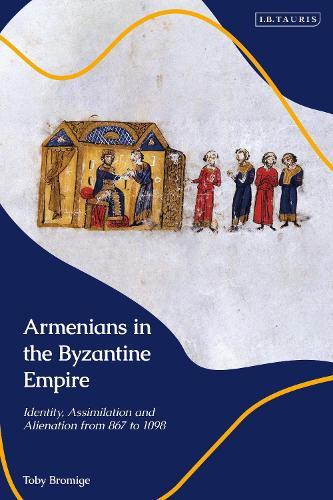
Armenians in the Byzantine Empire is a new study exploring the relationship between the Armenians and Byzantines from the ninth through eleventh centuries. Utilising primary sources from multiple traditions, the evidence is clear that until the eleventh century Armenian migrants were able to fully assimilate into the Empire, in time recognized fully as Romaioi (Byzantine Romans). From the turn of the eleventh century however, migrating groups of Armenians seem to have resisted the previously successful process of assimilation, holding onto their ancestral and religious identity, and viewing the Byzantines with suspicion. This stagnation and ultimate failure to assimilate Armenian migrants into Byzantium has never been thoroughly investigated, despite its dire consequences in the late eleventh century when the Empire faced its most severe crisis since the rise of Islam, the arrival and settlement of the Turkic peoples in Anatolia.
Full Product Details
Author: Toby Bromige (City University of London, UK)
Publisher: Bloomsbury Publishing PLC
Imprint: I.B. Tauris
Dimensions:
Width: 15.40cm
, Height: 1.40cm
, Length: 23.40cm
Weight: 0.320kg
ISBN: 9780755642465
ISBN 10: 0755642465
Pages: 208
Publication Date: 29 May 2025
Audience:
College/higher education
,
Tertiary & Higher Education
Format: Paperback
Publisher's Status: Active
Availability: Manufactured on demand

We will order this item for you from a manufactured on demand supplier.
Reviews
"""This is an exploration of another Byzantium, viewed not through the usual lens of Greek Orthodoxy and Hellenic culture, but through the Armenian princes and soldiers who first submitted to their powerful neighbour and integrated themselves into its society, then later separated and founded a state of their own."" --Professor Jonathan Harris, Royal Holloway University of London, UK ""The eleventh-century rift between the Byzantine Empire and the Armenian people played a crucial role in shaping the future history of Anatolia and the wider region. In this compelling study, Bromige offers an insightful model for understanding how the once-strong bonds connecting these communities collapsed into suspicion and animosity."" --Nicholas Morton, Nottingham Trent University, UK"
This is an exploration of another Byzantium, viewed not through the usual lens of Greek Orthodoxy and Hellenic culture, but through the Armenian princes and soldiers who first submitted to their powerful neighbour and integrated themselves into its society, then later separated and founded a state of their own. * Professor Jonathan Harris, Royal Holloway University of London, UK * The eleventh-century rift between the Byzantine Empire and the Armenian people played a crucial role in shaping the future history of Anatolia and the wider region. In this compelling study, Bromige offers an insightful model for understanding how the once-strong bonds connecting these communities collapsed into suspicion and animosity. * Nicholas Morton, Nottingham Trent University, UK *
Author Information
Toby Bromige is Visiting Lecturer at City, University of London. He holds a PhD from Royal Holloway, University of London.