Overview
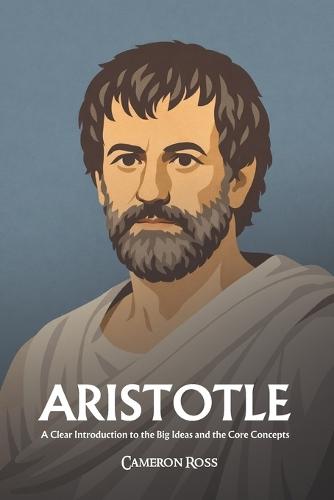
Aristotle writes at a moment when philosophy is no longer content to wonder but must also explain. Student of Plato, tutor of Alexander, observer of nature and civic life, he inherits a fractured intellectual landscape and sets out to restore coherence without illusion. His thought moves patiently between what changes and what endures, between form and matter, chance and purpose. Nothing is too small to matter, yet nothing is understood in isolation. For Aristotle, knowledge is not abstraction pulled away from life but clarification drawn from it. Ethics grows from habit and character, politics from shared practices, nature from internal principles of motion. The world is intelligible because it is structured, and that structure can be known without dissolving complexity. Yet this confidence is not naïve. Aristotle recognizes contingency, imperfection, and conflict as permanent features of human life. His legacy is neither a closed system nor a doctrine frozen in time. It is a method of attention, one that resists extremes and false oppositions. To read Aristotle is to enter a world where explanation aims at balance rather than certainty, where meaning arises from relation, and where philosophy remains inseparable from how one lives, acts, and judges within a shared world. What you will find in this book: A systematic vision of knowledge and reality This book explains how Aristotle builds a comprehensive framework covering logic, nature, metaphysics, and human life. You will discover why his philosophy seeks causes, structures, and purposes, and how this systematic approach shaped scientific and philosophical inquiry for centuries. Form, matter, and the explanation of change You will explore Aristotle's key concepts of form and matter, potentiality and actuality. The book clarifies how these ideas explain change, growth, and identity in the natural world, offering a powerful alternative to both pure materialism and abstract idealism. Logic, reasoning, and the foundations of science This section presents Aristotle's invention of formal logic and syllogistic reasoning. You will understand how clear definitions, valid inference, and demonstration become tools for reliable knowledge, laying the groundwork for scientific method and rational debate. Ethics as the cultivation of character The book explains Aristotle's virtue ethics, centered on habit, practical wisdom, and the mean between extremes. You will discover why happiness (eudaimonia) is an activity of the soul, achieved through character formation rather than rules or consequences alone. Politics, community, and the human good This book shows how Aristotle links ethics to politics, arguing that human flourishing depends on life within a just community. You will understand why the polis exists for the sake of living well, and how citizenship, law, and education serve the common good. Add this book to your cart now to understand why Aristotle remains a foundational thinker for logic, science, ethics, and political philosophy.
Full Product Details
Author: Cameron Ross
Publisher: Independently Published
Imprint: Independently Published
Dimensions:
Width: 15.20cm
, Height: 0.60cm
, Length: 22.90cm
Weight: 0.170kg
ISBN: 9798245978673
Pages: 118
Publication Date: 28 January 2026
Audience:
General/trade
,
General
Format: Paperback
Publisher's Status: Active
Availability: Available To Order

We have confirmation that this item is in stock with the supplier. It will be ordered in for you and dispatched immediately.