Overview
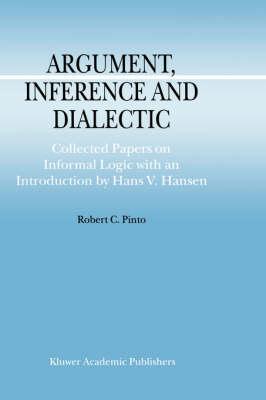
Chapters 1-12 of this volume contain the papers on infonnal logic and argumentation that I've published and/or read at conferences over the last 17 years. These papers are reproduced here pretty much unchanged from their first appearance; it is my intention that their appearance here constitute a record of my positions and arguments at the time of their original publication or delivery. I've made minor changes in fonnat, in the style of references, etc., for the sake of consistency; I've also corrected typographical errors and the like. The only extensive changes in wording occur in the last few pages of Chapter 7, and were made only to enable the reader to see more clearly what I was getting at in my first attempt to write about the notion of coherence. Chapter 13 was written expressly for this volume. It looks retrospectively at the contents of the first 12 chapters and attempts to highlight the unifying themes that run through them. It also revisits the ideas about dialectic that occupied my first in light of later developments in my thinking but also re paper, reworking them emphasizing themes about which I've tended to remain silent in the last few years.
Full Product Details
Author: R.C. Pinto ,
Hans V. Hansen
Publisher: Kluwer Academic Publishers
Imprint: Kluwer Academic Publishers
Edition: 2001 ed.
Volume: 4
Dimensions:
Width: 15.50cm
, Height: 1.10cm
, Length: 23.50cm
Weight: 0.930kg
ISBN: 9780792370055
ISBN 10: 0792370058
Pages: 148
Publication Date: 31 May 2001
Audience:
College/higher education
,
Professional and scholarly
,
Tertiary & Higher Education
,
Professional & Vocational
Format: Hardback
Publisher's Status: Active
Availability: Awaiting stock

The supplier is currently out of stock of this item. It will be ordered for you and placed on backorder. Once it does come back in stock, we will ship it out for you.
Reviews
These papers develop a distinct, plausible and coherent approach to the understanding and evaluation of argument. This approach sets out a much more comprehensive agenda than is common in the current literature. The papers link issues in the philosophy of argument ('informal logic,' 'theory of argumentation') with the mainstream of post-war Anglo-American philosophical work. (David Hitchcock, McMaster University, Hamilton, Canada)
These papers develop a distinct, plausible and coherent approach to the understanding and evaluation of argument. This approach sets out a much more comprehensive agenda than is common in the current literature. The papers link issues in the philosophy of argument (informal logic, ' theory of argumentation') with the mainstream of post-war Anglo-American philosophical work. <br>(David Hitchcock, McMaster University, Hamilton, Canada)