Overview
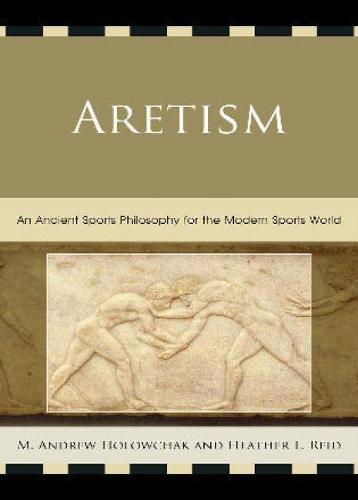
Aretism: An Ancient Sports Philosophy for the Modern Sports World applies a robust ancient ethic to the widely-acknowledged problems faced by modern sports. Aretism—from the Greek word arete (""excellence"")—draws a balance between the hard commercialism of modern sports culture and the soft playfulness of recreational models to recover the value of sport for individuals, education, and society at large. The authors’ approach proposes practical strategies for athletes, coaches, and physical educators to use when facing ethical challenges in the modern world. Holowchak and Reid present Aretism as a tripartite model of athletic excellence focused on personal, civic, and global integration. They reject the personal and social separation characteristics of much of contemporary moral reasoning. Aretism creates a critical and normative framework within which athletic agents can aim for spirited, but morally sensitive, competition by seeking the betterment not only of themselves, through athletic competition, but also of their teammates, fellow competitors, and even their communities. Holowchak and Reid also present a historical overview of sport and a critique of two traditional models—the martial/commercial model and the aesthetic/recreational model. This book is most applicable to students and academics concerned with the philosophy of sport, but will be of interest to all those in sports professions, including coaches, trainers, and athletes.
Full Product Details
Author: Heather Reid ,
Mark Holowchak
Publisher: Bloomsbury Publishing Plc
Imprint: Lexington Books
Dimensions:
Width: 16.30cm
, Height: 2.20cm
, Length: 24.00cm
Weight: 0.513kg
ISBN: 9780739148815
ISBN 10: 0739148818
Pages: 234
Publication Date: 31 May 2011
Audience:
Professional and scholarly
,
Professional & Vocational
Format: Hardback
Publisher's Status: Out of Print
Availability: Awaiting stock

Reviews
Aretism is a subtle and engaging attempt to show historical connections between the prized character traits of classical antiquity and modern commercialized sports. Written in uncluttered prose and full of great examples, it is an accessible and thought-provoking re-statement of sporting virtues.--Michael McNamee
Aretism is a subtle and engaging attempt to show historical connections between the prized character traits of classical antiquity and modern commercialized sports. Written in uncluttered prose and full of great examples, it is an accessible and thought-provoking re-statement of sporting virtues. -- Michael McNamee Aretism will be one of the most valuable books for those interested in the history of sport, and even more so for those who want to think about the cultural significance of sport--and its problems--in our own times. Reid and Holowchak have thought long and hard about these issues, and this book is a gift to us all. -- Hyland, Drew A. Just what we have come to expect from these two authors: a broad sweep at the historical level, a comprehensive account at the theoretical level, married with punchy and insightful analyses of particular issues and events. The sheer scope of the enterprise, together with the telling detail, is astonishing. I read this like an 'I couldn't put it down' novel. An impressive achievement. -- Jim Parry
Aretism is a subtle and engaging attempt to show historical connections between the prized character traits of classical antiquity and modern commercialized sports. Written in uncluttered prose and full of great examples, it is an accessible and thought-provoking re-statement of sporting virtues. -- Michael McNamee, Swansea University Aretism will be one of the most valuable books for those interested in the history of sport, and even more so for those who want to think about the cultural significance of sport-and its problems-in our own times. Reid and Holowchak have thought long and hard about these issues, and this book is a gift to us all. -- Drew A. Hyland, Trinity College Just what we have come to expect from these two authors: a broad sweep at the historical level, a comprehensive account at the theoretical level, married with punchy and insightful analyses of particular issues and events. The sheer scope of the enterprise, together with the telling detail, is astonishing. I read this like an 'I couldn't put it down' novel. An impressive achievement. -- Jim Parry, University of Leeds With the news dominated by college sports scandals, and professional athletics by strikes, lockouts, and superstar athletes' demands for ever larger contracts, this book's claim that contemporary sports is dominated by a martial/commercial model rings true. The commercial aspect is all too apparent. The martial aspect emphasizes winning at all costs, treats opponents as the enemy, and embraces aggression and individualism as means to external goals. This book also rejects an opposite approach-the aesthetic/recreational model, which sees sports as just for fun. Instead Holowchak (Rider Univ.) and Reid (Morningside College) propose returning sports to the ancient Greek ideal of arete, or excellence. Aretism demands 'respect for human limitations' as well as the view that 'victory in sport has no intrinsic value and that competitive sport is a good insofar as it is a means to human improvement.' The authors offer aretism as the Aristotelian mean between the martial/commercial and aesthetic/recreational approaches. Sports in higher education should promote virtue (in the sense of arete) or be abolished, which the authors acknowledge is not likely to happen. Copious endnotes to the 22 chapters and a good index make this book a useful resource. Summing Up: Recommended. Lower-level undergraduates and above; general readers. CHOICE
Aretism is a subtle and engaging attempt to show historical connections between the prized character traits of classical antiquity and modern commercialized sports. Written in uncluttered prose and full of great examples, it is an accessible and thought-provoking re-statement of sporting virtues. -- Michael McNamee Aretism will be one of the most valuable books for those interested in the history of sport, and even more so for those who want to think about the cultural significance of sport--and its problems--in our own times. Reid and Holowchak have thought long and hard about these issues, and this book is a gift to us all. -- Hyland, Drew A. Just what we have come to expect from these two authors: a broad sweep at the historical level, a comprehensive account at the theoretical level, married with punchy and insightful analyses of particular issues and events. The sheer scope of the enterprise, together with the telling detail, is astonishing. I read this like an 'I couldn't put it down' novel. An impressive achievement. -- Jim Parry With the news dominated by college sports scandals, and professional athletics by strikes, lockouts, and superstar athletes' demands for ever larger contracts, this book's claim that contemporary sports is dominated by a martial/commercial model rings true. The commercial aspect is all too apparent. The martial aspect emphasizes winning at all costs, treats opponents as the enemy, and embraces aggression and individualism as means to external goals. This book also rejects an opposite approach--the aesthetic/recreational model, which sees sports as just for fun. Instead Holowchak (Rider Univ.) and Reid (Morningside College) propose returning sports to the ancient Greek ideal of arete, or excellence. Aretism demands respect for human limitations as well as the view that victory in sport has no intrinsic value and that competitive sport is a good insofar as it is a means to human improvement. The authors offer aretism as the Aristotelian mean between the martial/commercial and aesthetic/recreational approaches. Sports in higher education should promote virtue (in the sense of arete) or be abolished, which the authors acknowledge is not likely to happen. Copious endnotes to the 22 chapters and a good index make this book a useful resource. Summing Up: Recommended. Lower-level undergraduates and above; general readers. Choice
Aretism is a subtle and engaging attempt to show historical connections between the prized character traits of classical antiquity and modern commercialized sports. Written in uncluttered prose and full of great examples, it is an accessible and thought-provoking re-statement of sporting virtues.--Michael McNamee
Author Information
M. Andrew Holowchak teaches philosophy at Rider University. His books include Happiness and Greek Ethics, Critical Reasoning & Philosophy, Ancient Science and Dreams: Oneirology in Greco-Roman Antiquity, Philosophy of Sport: Crucial Readings, Critical Issues, and The Stoics: A Guide for the Perplexed. Heather L. Reid is professor and chair of philosophy at Morningside College and author of Philosophy and Athletics in Ancient Greece and Rome: Contests of Virtue and The Philosophical Athlete.