Awards
- Runner-up for Nautilus Book Awards 2019 (United States)
Overview
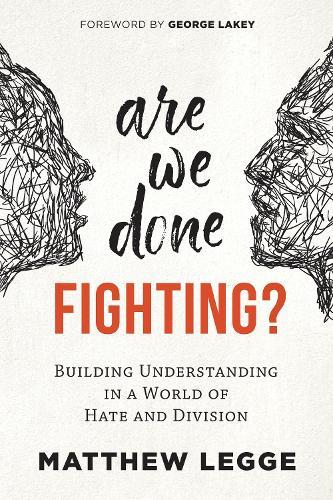
Powerful tools for spreading peace in your community Unfounded beliefs and hateful political and social divisions that can cascade into violence are threatening to pull the world apart. Responding to fear and aggression strategically and with compassion is vital if we are to push back against the politics of hate and live in greater safety and harmony. But how to do it? Are We Done Fighting? is brimming with the latest research, practical activities, and inspirational stories of success for cultivating inner change and spreading peace at the community level and beyond. Coverage includes: An explanation of the different styles of conflict Cognitive biases that help explain polarized and lose-lose positions Practical methods and activities for changing our own and others' minds When punishment works and doesn't, and how to encourage discipline in children without using violence The skill of self-compassion and ways to reduce prejudice in ourselves and others Incredible programs that are rebuilding trust between people after genocide. Packed with inspiration and cutting-edge findings from fields including neuroscience, social psychology, and behavioural economics, Are We Done Fighting? is an essential toolkit for activists, community and peace groups, and students and instructors working to build dialogue, understanding, and peace as the antidote to the politics of hate and division. AWARDS SILVER | 2019 Nautilus Book Awards: Social Change & Social Justice
Full Product Details
Author: Matthew Legge ,
George Lakey ,
Adam Farnsworth
Publisher: New Society Publishers
Imprint: New Society Publishers
Dimensions:
Width: 15.20cm
, Height: 2.20cm
, Length: 22.90cm
Weight: 0.586kg
ISBN: 9780865719088
ISBN 10: 086571908
Pages: 354
Publication Date: 28 May 2019
Recommended Age: From 16 years
Audience:
General/trade
,
General
Format: Paperback
Publisher's Status: Active
Availability: Temporarily unavailable

The supplier advises that this item is temporarily unavailable. It will be ordered for you and placed on backorder. Once it does come back in stock, we will ship it out to you.
Reviews
""A fresh, studious and very readable book on how to live peace in today's chaotic world. Matthew Legge's helpful hints for individual or group action are in the best Quaker tradition."" — Hon. Douglas Roche, O.C., former Senator and former Canadian Ambassador for Disarmament ""No, we are not done fighting, but we can fight in a better way. This book tells you how."" — Johan Galtung, founder of the academic discipline of Peace Studies, and founder, Transcend International ""I recommend this extremely inspirational, accessible study book with its extensive practical exercises. I love the way it accepts that peace is possible, so in an interdependent world, it is everyone's responsibility to create positive change that fosters sustainable peace."" — Professor Elisabeth Porter, University of South Australia ""This book is a joy....[it] offers new material (stories and science) to those who have been doing this work for years, and a great way into peace for those just getting started. I especially appreciate the group discussions and exercises. No one should do peacework alone."" — Stephanie Van Hook, Executive Director, Metta Center for Nonviolence ""...an invaluable contribution to the ongoing quest to ensure peacemaking rather than violence is utilised to resolve conflicts, be they between individuals, groups or nations."" — Andrew Feinstein, author The Shadow World: Inside the Global Arms Trade ""This transformative book presents a refreshing and innovative exploration of how to visualize and actualize peace in global society, in our families and relationships, and in our own minds."" — Douglas P. Fry, author, Beyond War, and co-author, Nurturing Our Humanity ""... a much-needed antidote to the risk of depression and despair. In page after page, and with a multitude of sources to back up the arguments, Matthew Legge gives us plenty of hope stemming from experience."" — Paul Rogers, Emeritus Professor, Peace Studies, Bradford University, UK ""This is the book many peace, justice, and reconciliation advocates have waited for. Enabling, practical, and clear-minded, Matthew Legge offers readers—individuals or groups—a road map to transform our deepest conflicts."" — Paul R. Dekar, Emeritus Professor and co-founder, Peace Studies program, McMaster University, Canada ""... exceptionally valuable and timely...Matthew Legge offers practical solutions that make a difference in our own lives and in the broader communities that surround us.... Not only to be read, but put into action."" — Alex Neve, O.C., human rights lawyer and Secretary General, Amnesty International Canada ""For those who are working to decrease the madness of violence and increase the sanity of peace, lock arms today with Matthew Legge. Tomorrow is too late."" — Colman McCarthy, Director, The Center for Teaching Peace, Washington D.C.
Author Information
Matthew Legge has worked in the nonprofit sector for the last 13 years, with a focus on helping people thrive through the full enjoyment of health, dignity, and rights. Since 2012, he has worked with Canadian Friends Service Committee (CFSC), the peace and social justice agency of the Religious Society of Friends in Canada (Quakers). Quakers are widely respected for their efforts to prevent war and transform conflicts, as well as their impartial support for war victims. As CFSC's Peace Program Coordinator, Matthew has had the opportunity to learn from Quakers across Canada and in the US, Europe, and Africa. He holds a degree in Anthropology from the University of Toronto and served for six years on the board of directors of the Ontario Council for International Cooperation, where he helped develop anti-oppression strategies. Matthew lives in Toronto, Canada.