Overview
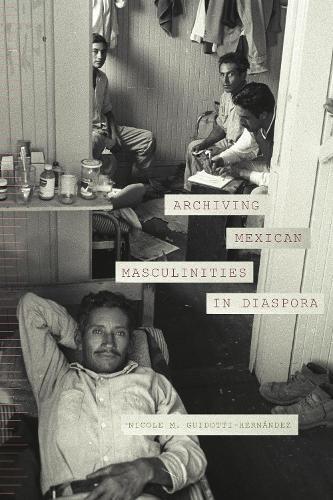
In Archiving Mexican Masculinities in Diaspora, Nicole M. Guidotti-Hernandez challenges machismo-a shorthand for racialized and heteronormative Latinx men's misogyny-with nuanced portraits of Mexican men and masculinities along and across the US-Mexico border. Guidotti-Hernandez foregrounds Mexican men's emotional vulnerabilities and intimacies in their diasporic communities. Highlighting how Enrique Flores Magon, an anarchist political leader and journalist, upended gender norms through sentimentality and emotional vulnerability that he performed publicly and expressed privately, Guidotti-Hernandez documents compelling continuities between his expressions and those of men enrolled in the Bracero program. Braceros-more than 4.5 million Mexican men who traveled to the United States to work in temporary agricultural jobs from 1942 to 1964-forged domesticity and intimacy, sharing affection but also physical violence. Through these case studies that reexamine the diasporic male private sphere, Guidotti-Hernandez formulates a theory of transnational Mexican masculinities rooted in emotional and physical intimacy that emerged from the experiences of being racial, political, and social outsiders in the United States.
Full Product Details
Author: Nicole M. Guidotti-Hernández
Publisher: Duke University Press
Imprint: Duke University Press
Weight: 0.703kg
ISBN: 9781478013242
ISBN 10: 1478013249
Pages: 352
Publication Date: 23 June 2021
Audience:
Professional and scholarly
,
Professional & Vocational
Format: Hardback
Publisher's Status: Active
Availability: In Print

This item will be ordered in for you from one of our suppliers. Upon receipt, we will promptly dispatch it out to you. For in store availability, please contact us.
Reviews
Archiving Mexican Masculinities in Diaspora makes a critical contribution to our collective sense of gender dynamics in twentieth century migration studies. Nicole M. Guidotti-Hernandez delivers a nuanced treatment of the masculinity of Mexican migrants over the first half of the twentieth century. Through myriad lenses, we see Mexican nationals as partners and lovers, as fathers and sons, as machos and domestic beings, and in homosocial and heteronormative positions. -- George J. Sanchez, * Becoming Mexican American: Ethnicity, Culture, and Identity in Chicano Los Angeles, 1900-1945 *
Archiving Mexican Masculinities in Diaspora makes a critical contribution to our collective sense of gender dynamics in twentieth century migration studies. Nicole M. Guidotti-Hernandez delivers a nuanced treatment of the masculinity of Mexican migrants over the first half of the twentieth century. Through myriad lenses, we see Mexican nationals as partners and lovers, fathers and sons, as machos and domestic beings, and in homosocial and heteronormative positions. -- George J. Sanchez, * Becoming Mexican American: Ethnicity, Culture, and Identity in Chicano Los Angeles, 1900-1945 *
Author Information
Nicole M. Guidotti-HernÁndez is Professor of English at Emory University and author of Unspeakable Violence: Remapping U.S. and Mexican National Imaginaries, also published by Duke University Press.