Overview
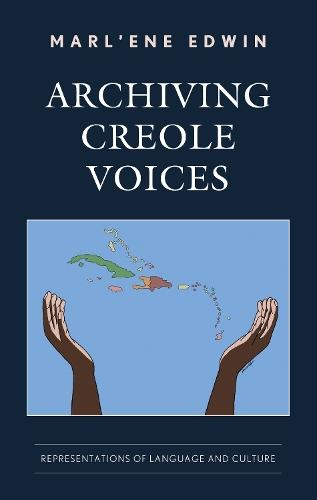
Archiving Creole Voices: Representations of Language and Culturebegins with a re-reading of selected texts by female Caribbean writers, specifically, Joan Anim-Addo, Olive Senior and Merle Collins and proclaims that literary fiction can and does function as a ‘creolised archive’. Marl'ene Edwin argues that historic marginalisation, which has barred Caribbean scholars from entering ‘formal’ archival spaces, has created an alternative discourse. Consequently, Caribbean writers have chosen the imagined landscapes of literature, a new archival space for the Caribbean, within which to document and preserve Caribbean cultural traditions. Fiction allows for the safeguarding of traditions, so how then should Caribbean literature be read? The combination of a physical and a virtual archive, questions the literary and linguistic interface that such a mingling entails in a preservation of Caribbean culture. Edwin argues for an appreciation of orality as performance as well as the reading of texts as ‘creolised archive.’
Full Product Details
Author: Marl'ene Edwin
Publisher: Bloomsbury Publishing Plc
Imprint: Lexington Books
Dimensions:
Width: 15.20cm
, Height: 2.10cm
, Length: 22.90cm
Weight: 0.485kg
ISBN: 9781666958966
ISBN 10: 1666958964
Pages: 226
Publication Date: 20 December 2024
Audience:
Professional and scholarly
,
Professional & Vocational
Format: Hardback
Publisher's Status: Active
Availability: Manufactured on demand

We will order this item for you from a manufactured on demand supplier.
Reviews
This book is unique because it uses Narratology to understand, track, and investigate cultural memory, emphasizing that some literary texts perform history, thus enabling alternative versions to be memorialized and archived. Edwin stages an encounter between Caribbean narratives and archive theory to argue that the literature teaches us to read history anew. In her analysis, literature not only supplements what official documents have left out; more importantly, it shows that in attending to archival erasures, her strategy for reading Caribbean texts will enable a different articulation of the past, one which witnesses the persistence of the past within the present. This volume testifies to the centrality of the Black Atlantic for questioning (neo-) colonial epistemologies and argues for a sophisticated interdisciplinary study of historical memory and for the preservation of creole languages. -- Maria Helena Lima, SUNY Geneseo
""This book is unique because it uses Narratology to understand, track, and investigate cultural memory, emphasizing that some literary texts perform history, thus enabling alternative versions to be memorialized and archived. Edwin stages an encounter between Caribbean narratives and archive theory to argue that the literature teaches us to read history anew. In her analysis, literature not only supplements what official documents have left out; more importantly, it shows that in attending to archival erasures, her strategy for reading Caribbean texts will enable a different articulation of the past, one which witnesses the persistence of the past within the present. This volume testifies to the centrality of the Black Atlantic for questioning (neo-) colonial epistemologies and argues for a sophisticated interdisciplinary study of historical memory and for the preservation of creole languages."" -- Maria Helena Lima, SUNY Geneseo
Author Information
Marl’ene Edwin is deputy director of the Centre for Caribbean and Diaspora Studies at Goldsmiths, University of London.