|
|
|||
|
||||
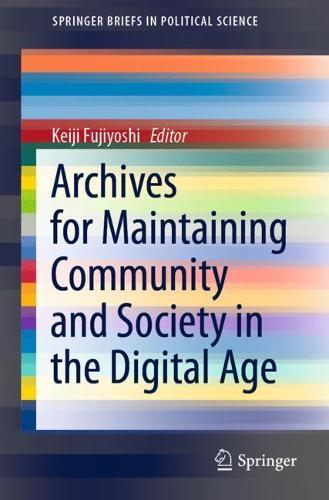
OverviewThis book explores how a society accepts and utilizes a system of archives to improve the quality of people’s lives at each level of community, organization, and government. This is the first book that examines the political, economic, and social background that has prevented the development of archival systems in Japan in comparison with other societies of different cultures such as the United States, Romania, India, and Korea. An archival system is an indispensable tool to live in the present and create a future by sharing an understanding of the past. For that reason, this book considers what “respecting the past” means from the point of view that people experience in their workplace to reconcile tragic experiences such as conflict, injustice, or corruption. Then the book shows how a system of archives plays a significant role in a democratic society because it serves as a foundation of evidence-based decision making for a specific group or the public. Thus, this volume provides guidance for ways that a society can build a common understanding of the importance of sharing the past to maintain community and society. Full Product DetailsAuthor: Keiji FujiyoshiPublisher: Springer Verlag, Singapore Imprint: Springer Verlag, Singapore Edition: 1st ed. 2021 Weight: 0.454kg ISBN: 9789811585135ISBN 10: 981158513 Pages: 112 Publication Date: 13 December 2020 Audience: Professional and scholarly , Professional & Vocational Format: Paperback Publisher's Status: Active Availability: Manufactured on demand We will order this item for you from a manufactured on demand supplier. Table of ContentsReviewsAuthor InformationEditor Keiji Fujiyoshi, Faculty of Sociology, Otemon Gakuin University Tab Content 6Author Website:Countries AvailableAll regions |
||||