Overview
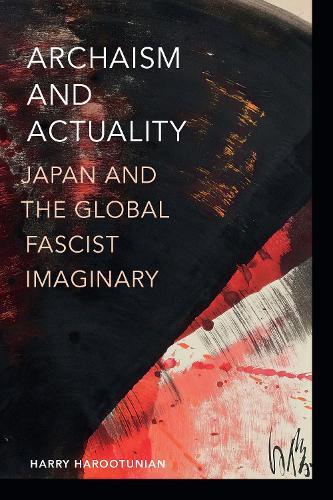
In Archaism and Actuality eminent Marxist historian Harry Harootunian explores the formation of capitalism and fascism in Japan as a prime example of the uneven development of capitalism. He applies his theorization of subsumption to examine how capitalism integrates and redirects preexisting social, cultural, and economic practices to guide the present. This subsumption leads to a global condition in which states and societies all exist within different stages and manifestations of capitalism. Drawing on Japanese philosophers Miki Kiyoshi and Tosaka Jun, Marxist theory, and Gramsci's notion of passive revolution, Harootunian shows how the Meiji Restoration of 1868 and its program dedicated to transforming the country into a modern society exemplified a unique path to capitalism. Japan's capitalist expansion in the nineteenth and twentieth centuries, rise as an imperial power, and subsequent transition to fascism signal a wholly distinct trajectory into modernity that forecloses any notion of a pure or universal development of capitalism. With Archaism and Actuality, Harootunian offers both a retheorization of capitalist development and a reinterpretation of epochal moments in modern Japanese history.
Full Product Details
Author: Harry Harootunian
Publisher: Duke University Press
Imprint: Duke University Press
Weight: 0.431kg
ISBN: 9781478025221
ISBN 10: 1478025220
Pages: 304
Publication Date: 17 November 2023
Audience:
Professional and scholarly
,
Professional & Vocational
Format: Paperback
Publisher's Status: Active
Availability: To order

Stock availability from the supplier is unknown. We will order it for you and ship this item to you once it is received by us.
Reviews
In a masterful discourse about historical time, Harry Harootunian brings to light the ways in which the past attends the present, producing uneven temporalities in three seminal moments: the Meiji Restoration, fascism, and the postwar. This book changed my understanding of modern Japanese history and indeed of history itself. -- Carol Gluck, Columbia University Harry Harootunian's analysis is rooted in the history of modern Japan, but the interest of this book extends well beyond. From that ground he is able to launch a series of fascinating arguments regarding capitalist modernity's uses of the past and its temporal heterogeneity. Particularly timely and valuable is his investigation of how the invocation of an archaic past serves as a primary trope of twentieth- and twenty-first-century fascisms. -- Michael Hardt, author of * The Subversive Seventies *
“In a masterful discourse about historical time, Harry Harootunian brings to light the ways in which the past attends the present, producing uneven temporalities in three seminal moments: the Meiji Restoration, fascism, and the postwar. This book changed my understanding of modern Japanese history and indeed of history itself.” -- Carol Gluck, Columbia University
In a masterful discourse about historical time, Harry Harootunian brings to light the ways in which the past attends the present, producing uneven temporalities in three seminal moments: the Meiji Restoration, fascism, and the postwar. This book changed my understanding of modern Japanese history and indeed of history itself. -- Carol Gluck, Columbia University
Author Information
Harry Harootunian is Max Palevsky Professor of History Emeritus at the University of Chicago and Associate Research Scholar at the Weatherhead East Asian Institute at Columbia University. He is the author of numerous books, most recently, The Unspoken as Heritage: The Armenian Genocide and Its Unaccounted Lives, also published by Duke University Press.