Overview
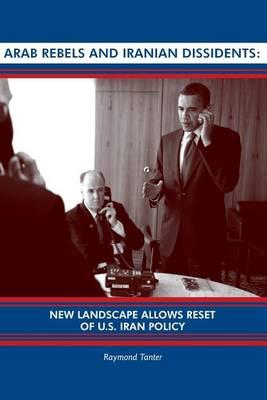
The book, Arab Rebels and Iranian Dissidents, compares revolts in the Arab world beginning in 2010 with activities of Iranian dissidents in and outside Iran during periods of intense political activity. Chapter One examines European revolutions in relation to Arab revolts, investigates political and economic causes of Arab uprisings, and closes with lessons learned from prior revolutions regarding prospects for regime change in Iran. Chapter Two examines history, achievements, and future prospects of the Iranian Mojahedin. Achievements include being so important to Tehran that it pays inordinate attention to and persecutes the Mojahedin. Secular groups that spearheaded Arab uprisings lacked organizational skills to govern; the Mojahedin reveal such ability by surviving despite efforts to destroy them. Chapter Three explores U.S. interests and role in Arab and Iranian revolutionary activity. The Mojahedin pose a political threat to the Iranian regime, which is a source of leverage to reinforce the U.S. threat of military action to prevent Iran from obtaining nuclear weapons. The Mojahedin are in position to ramp up their capacity to reveal nuclear secrets. Also of strategic value are more than 100 Mojahedin disclosures of Iranian regime violations of nonproliferation obligations. Several major revelations have been validated by independent observers. Iranian dissidents neither require nor request arms and military support; Libyan rebels, however, asked for and received U.S. air support to overthrow the Libyan regime in 2011. And Syrian rebels may receive lethal American support as that Civil War grinds on and there is evidence of chemical weapons use by Damascus. Regarding Libya, hark back to the spring of 2011. The idea behind the international intervention in Libya was to provide support for the people as they sought to overthrow the Gadhafi regime. The story behind the story of Libya is how the major powers eventually chose to support rebels rather than continue supporting military dictatorships. The western powers had accepted the legitimacy of the regime in Tripoli, although it had little popular support. There was an assumption that regime change from within was unlikely; and it was unnecessary and even undesirable to change this rogue state with external military force. Libya was a status quo regime that often cooperated with Washington in areas like terrorism and proliferation-American priorities. But once the Libyan people rose up, President Obama used the changed political landscape to pivot toward the people away from a rogue regime. The Arab uprisings and June 2013 elections in Iran offer Washington a window of opportunity to reset its policies away from just engaging Tehran to support people-inspired political change in Iran. President Obama can induce the leaderless Iranian street to rise up in their eternal quest for freedom. How? Mr. President: Empower expatriate supporters of the Mojahedin to facilitate the trip up the road to liberal democracy symbolized by Azadi Square. With removal of the terrorist tag and increased support from the American public, heightened congressional clout, and enhanced international stature, U.S. officials should reach out to the Mojahedin. U.S. envoys now have the opportunity to meet the Mojahedin at the White House, State Department, and abroad in American embassies. Sessions also could be held in the newly-reopened offices of the U.S. Representative of the National Council of Resistance of Iran in Washington DC, which are a block away from the White House. It is in the U.S. interest to hold such meetings, which would signal to the Iranian regime that all U.S. options are truly on the table, implicitly including regime change.
Full Product Details
Author: University Professor Raymond Tanter (The University of Michigan)
Publisher: Createspace Independent Publishing Platform
Imprint: Createspace Independent Publishing Platform
Dimensions:
Width: 15.20cm
, Height: 1.00cm
, Length: 22.90cm
Weight: 0.209kg
ISBN: 9781489597021
ISBN 10: 1489597026
Pages: 148
Publication Date: 30 May 2013
Audience:
General/trade
,
General
Format: Paperback
Publisher's Status: Active
Availability: Available To Order

We have confirmation that this item is in stock with the supplier. It will be ordered in for you and dispatched immediately.
Author Information
Professor Raymond Tanter Raymond Tanter served in the Executive Office of the President as a senior member on the Reagan-Bush National Security Council staff, 1981-1982. In 1983-1984, he was personal representative of the Secretary of Defense to arms control talks in Madrid, Helsinki, Stockholm, and Vienna. In 1967, Tanter was deputy director of behavioral sciences at the Advanced Research Projects Agency of the U.S. Department of Defense and a member of the Civilian Executive Panel, Chief of Naval Operations, 1980-1981. After receiving a BA from Roosevelt University in 1961 and an MA as well as Ph. D degrees from Indiana University in 1964, Tanter served as Assistant Professor at Northwestern and Professor at the University of Michigan; he was Visiting Professor at University of Amsterdam, Stanford, Hebrew University of Jerusalem, and Tel Aviv University. Since 2003, Tanter has taught terrorism and proliferation at Georgetown University as Adjunct or Visiting Professor. In 2005, Tanter cofounded the Iran Policy Committee (IPC) and serves as its President and of Iran Policy Committee Publishing. He is a member of the Council on Foreign Relations, the Committee on the Present Danger, and is Adjunct Scholar at The Washington Institute for Near East Policy. Illustrative articles relevant to his writing on Iran and the main Iranian dissident group that rejects clerical rule-the Mujahedeen-e-Khalq (MeK)/People's Mojahedin Organization of Iran (PMOI)-include: Abandoning America's Iraqi and Iranian allies; MeK, Iran and the War for Washington; Tehran's Anti-MeK Propaganda Machine; Tanter Responds to His Critics; Increasing Pressure on Iranian Opposition in Iraq; Trading Terrorists: Al-Qaeda in Iran for Mujahedin in Iraq? With special reference to Israel, see: Regime Change from within Iran to Counter Tehran's Talking about Talks; U.S. and Israel Should Push for Regime Change in Iran; Ultimately, the U.S. will attack [Iran]; Empowering Iran's opposition; and Delaying or Preventing a Nuclear-Armed Iran Among his authored and/or coauthored books relevant to Iran are: Rogue Regimes (1999); Appeasing the Ayatollahs and Suppressing Democracy (2006); What Makes Tehran Tick, (2006); Baghdad Ablaze (2007); President Obama and Iraq (2009); President Obama and Iran (2010) and (2012); and Terror Tagging of an Iranian Dissident Organization, (2011 and 2012).