Overview
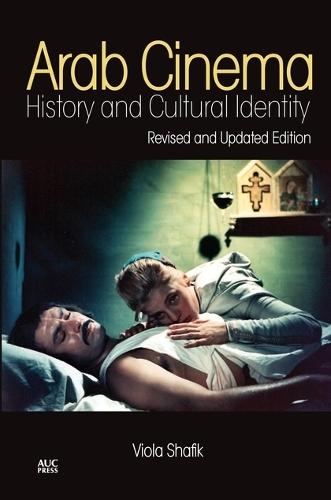
Since it was first published in 1998, Viola Shafik's Arab Cinema: History and Cultural Identity has become an indispensable work for scholars of film and the contemporary Middle East. Combining detailed narrative history-economic, ideological, and aesthetic-with thought-provoking analysis, Arab Cinema provides a comprehensive overview of cinema in the Arab world, tracing the industry's development from colonial times to the present. It analyzes the ambiguous relationship with commercial western cinema, and the effect of Egyptian market dominance in the region. Tracing the influence on the medium of local and regional art forms and modes of thought, both classical and popular, Shafik shows how indigenous and external factors combine in a dynamic process of ""cultural repackaging.""Now updated to reflect cultural shifts in the last two decades, this revised edition contains a new afterword highlighting the latest developments in popular and in art-house filmmaking, with a special focus on Iraq, Lebanon, Palestine, and the Gulf States. While exploring problematic issues such as European co-production for Arab art films, including their relation to cultural identity and their reception in the region and abroad, this new edition introduces readers to some of the most compelling cinematic works of the last decades.
Full Product Details
Author: Viola Shafik
Publisher: The American University in Cairo Press
Imprint: The American University in Cairo Press
Edition: Revised edition
Dimensions:
Width: 15.00cm
, Height: 2.30cm
, Length: 23.00cm
Weight: 0.667kg
ISBN: 9789774166907
ISBN 10: 9774166906
Pages: 320
Publication Date: 04 October 2016
Audience:
General/trade
,
Professional and scholarly
,
General
,
Professional & Vocational
Format: Paperback
Publisher's Status: Active
Availability: In Print

This item will be ordered in for you from one of our suppliers. Upon receipt, we will promptly dispatch it out to you. For in store availability, please contact us.
Reviews
""Intelligent, perceptive, and elegantly written, this volume deserves a broad readership. Highly recommended. All readers, all levels.""—CHOICE
"""Shafik discusses the history, genres, and esthetics of Arab film. She is very good at analyzing its antecedents in Arab literary, theatrical, storytelling, and musical traditions. She gives broad coverage to typical genres and is particularly good on realism and the cinema d auteur. Although Shafik focuses on Egyptian films, which comprise well more than half of all Arab films made, she discusses the films of the other Arab nations as well, delineating the differences and similarities among them. The author devotes the preponderance of the book to the films themselves, but she is also thorough in her analysis of the conditions political, religious, economic that determine what films are made, how they are made, and where they are seen. Intelligent, perceptive, and elegantly written, this volume deserves a broad readership. Highly recommended. All readers, all levels.""--CHOICE"
Shafik discusses the history, genres, and esthetics of Arab film. She is very good at analyzing its antecedents in Arab literary, theatrical, storytelling, and musical traditions. She gives broad coverage to typical genres and is particularly good on realism and the cinema d auteur. Although Shafik focuses on Egyptian films, which comprise well more than half of all Arab films made, she discusses the films of the other Arab nations as well, delineating the differences and similarities among them. The author devotes the preponderance of the book to the films themselves, but she is also thorough in her analysis of the conditions political, religious, economic that determine what films are made, how they are made, and where they are seen. Intelligent, perceptive, and elegantly written, this volume deserves a broad readership. Highly recommended. All readers, all levels. --CHOICE
Author Information
Viola Shafik studied cinema in Hamburg and is a freelance film scholar, creative consultant, and filmmaker. She has directed several documentaries, most notably My Name Is Not Ali (2011) and Arij: Scent of Revolution (2014). She is also the author of Popular Egyptian Cinema: Gender, Class, and Nation (AUC Press, 2007).