Overview
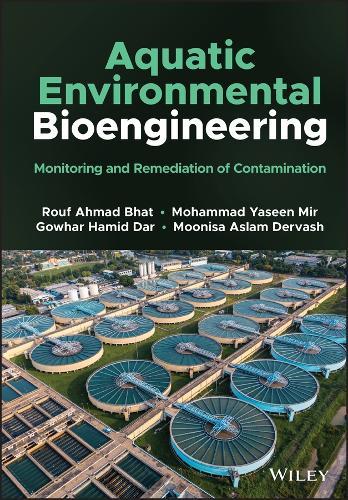
Aquatic Environmental Bioengineering Discover the importance of remediation efforts for aquatic ecosystems Most contamination of water bodies stem from human activity, and the pollution in our water is one of the most important environmental concerns facing future generations. The most significant of these pollutants are halogenated organic compounds, petroleum hydrocarbons, radionuclides, metal and metalloids, pharmaceutical drugs, microbial toxins, and flame retardants. With such a vast array of potential contaminants and dangerously cumulating contamination levels in fragile marine environments, reparative action is more essential than ever. Aquatic Environmental Bioengineering: Monitoring and Remediation of Contamination provides the reader with a map towards environmentally safe and economically feasible technologies to intervene in polluted aquatic ecosystems. The authors suggest a phased approach consisting of site classification and risk assessment, followed by remediation technology selection and implementation. Effective methods for surveying bodies of water are particularly emphasized, and advancements in the development of novel transgenic plants and microbial fuel cells are put forward as effective tools against environmental contamination and industrial wastewater pollution. Readers will also find: A focus on the most recent and cutting-edge research on the topic: photocatalysis, the use of genetically modified organisms, and the use of nanomaterials A simple compendium of fundamental concepts in environmental engineering of aquatic ecosystems A detailed discussion of the advancement in remote sensing and geographic information (GIS), methodologies that make it possible to conduct large-scale water remediation studies at reasonable cost The ideal resource for researchers and students of environmental science, plant biotechnology, agricultural science, environmental engineering, and plant sciences, Aquatic Environmental Bioengineering will be a crucial resource for the remediation of contaminants in our aquatic ecosystems.
Full Product Details
Author: Rouf Ahmad Bhat (Sri Pratap College, Cluster University Srinagar, Jammu and Kashmir, India) ,
Mohammad Yaseen Mir (Government of Jammu and Kashmir, India) ,
Gowhar Hamid Dar (Sri Pratap College, Cluster University Srinagar, Jammu and Kashmir, India) ,
Moonisa Aslam Dervash (Sri Pratap College, Cluster University Srinagar, Jammu and Kashmir, India)
Publisher: John Wiley & Sons Inc
Imprint: John Wiley & Sons Inc
Dimensions:
Width: 17.00cm
, Height: 1.90cm
, Length: 24.40cm
Weight: 0.567kg
ISBN: 9781119760948
ISBN 10: 1119760941
Pages: 240
Publication Date: 26 May 2022
Audience:
Professional and scholarly
,
Professional & Vocational
Format: Hardback
Publisher's Status: Active
Availability: Out of stock

The supplier is temporarily out of stock of this item. It will be ordered for you on backorder and shipped when it becomes available.
Author Information
Rouf Ahmad Bhat is an Assistant Professor at the Department of Environmental Science, Sri Pratap College, Cluster University Srinagar, Jammu and Kashmir, India. Mohammad Yaseen Mir is a Teacher at the Department of School Education, Government of Jammu and Kashmir, India. Gowhar Hamid Dar is an Assistant Professor at the Department of Environmental Science, Sri Pratap College, Cluster University Srinagar, Jammu and Kashmir, India. Moonisa Aslam Dervash is an Assistant Professor at the Department of Environmental Science, Sri Pratap College, Cluster University Srinagar, Jammu and Kashmir, India.