Overview
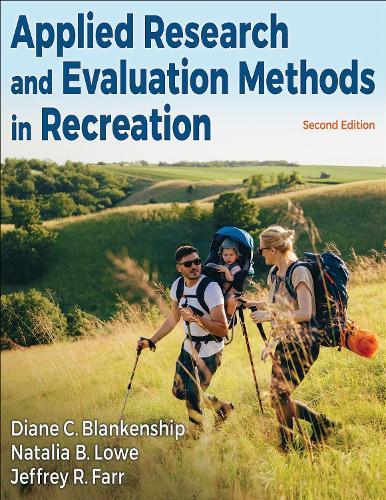
Learn to conduct quality research and evaluation within the recreation industry. Agencies in the recreation industry must often justify their existence in terms of cost and benefits, requiring recreation professionals to have the skills, competencies, and confidence to meet the demands of research and evaluation. Applied Research and Evaluation Methods in Recreation, Second Edition With Web Resource, teaches these essential skills in an approachable and engaging way, demonstrating that research doesn't have to be a scary word! A bit like a mystery that requires investigation to identify the problem, the situations presented in the text require the reader to gather information. The updated second edition contains revised examples and expanded sections to enhance learning, and the text guides readers step by step through the research and evaluation process, drawing from both qualitative and quantitative research. Learning tools include the following: A case study in each chapter Professional Perspectives sidebar elements that provide readers with real-world examples and viewpoints For the Investigator elements that connect content in each chapter to a semester-long project that serves as the foundation for a research paper Chapter conclusions that summarize and emphasize key points Exercises to help readers assess their skills Flash card activities provided online to help with learning key terms Readers explore each of the steps involved in designing a project, from developing the research problem, reviewing literature, and identifying variables and hypotheses to defining the population to study, developing the instrumentation plan, and choosing the appropriate data-collection tools. They will then cover evaluation concepts, including internal validity, data analysis, and reporting methods. Aligned with the three pillars of the National Recreation and Park Association (NRPA)—health and well-being, equity, and environmental resilience—and the 2027 Commission for Accreditation of Park and Recreation Agencies (CAPRA) standards, this resource serves as an excellent foundation for readers who will eventually pursue accreditation for their organization. Applied Research and Evaluation Methods in Recreation, Second Edition, takes a thoughtful approach to guiding readers through the research and evaluation process, preparing them to meet the demands of their profession.
Full Product Details
Author: Diane C. Blankenship ,
Natalia B. Lowe ,
Jeffrey R. Farr
Publisher: Human Kinetics Publishers
Imprint: Human Kinetics
Edition: Second Edition
ISBN: 9781718222885
ISBN 10: 1718222882
Pages: 216
Publication Date: 03 June 2026
Audience:
College/higher education
,
Tertiary & Higher Education
Format: Paperback
Publisher's Status: Forthcoming
Availability: Not yet available

This item is yet to be released. You can pre-order this item and we will dispatch it to you upon its release.
Author Information
Diane C. Blankenship, EdD, is a retired professor of Frostburg State University in Frostburg, Maryland, where she taught courses in research methods in the recreation and park management program. She also serves on the program's graduate thesis and project committee. Dr. Blankenship has extensive and varied experience, having worked as a Boy Scout executive; as a recreation therapist; in residential camps, aquatic facilities, recreation centers, and outdoor recreation facilities; and for the Department of the Army in Germany. Dr. Blankenship has used her skills in recreation and leisure research methods to assist local and state organizations in the evaluation of their programs and facilities and in strategic planning. She served as a fellow for the U.S. Department of State to conduct a study that evaluated onboarding programs across the federal government, using specific training models and assessment tools in the evaluation research. In addition, she served as a site visitor for the Commission for Accreditation of Park and Recreation Agencies (CAPRA) and as a member of the National Recreation and Park Association (NRPA) CPRP certification exam committee and policy committee. Natalia B. Lowe, PhD, is a program coordinator and full professor in the department of kinesiology and recreation and parks management at Frostburg State University. Her research interests include outdoor recreation and community and ecological well-being, community engagement in natural resource planning and management, and marketing of ecotourism and nature-based tourism destinations. She has conducted research in Retezat National Park in Romania, El Yunque National Forest in Puerto Rico, and state forests in western Maryland as well as at the Super Bowl in Tampa, Florida. Jeffrey R. Farr, PhD, is an assistant professor in the department of human nutrition, hospitality, and sport management at the University of Alabama. He was previously an assistant professor of recreation, parks, and sport management at Frostburg State University. Dr. Farr's research primarily focuses on youth sport, specifically on the relationships between youth sport participation and family functioning as well as the intersectionality and inclusion of youth sport.