Overview
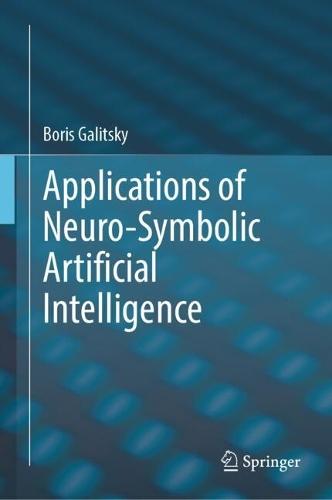
This book offers a bold vision for the future of artificial intelligence, showing how the next wave of innovation will blend the power of large language models with the rigor of logical reasoning and human-like understanding. Instead of settling for systems that simply generate text, it explores how AI can be designed to think, engage, and interact in ways that feel meaningful, personal, and trustworthy. Readers will discover how AI can move beyond common pitfalls like hallucinations through smarter frameworks that combine reinforcement learning and symbolic logic. They’ll see how new approaches make AI more empathetic, more explainable, and better at understanding human intent. From copilots that supercharge social media promotion to next-generation recommendation engines for Web 3.0, the book highlights real-world applications that bring these ideas to life. It also dives into AI’s role in creativity and industry, showing how it can craft compelling ad campaigns, spark invention dialogues, and even support specific fields like chemical engineering. Throughout, the focus is on building AI that doesn’t just serve as a tool, but as a partner—enhancing decision-making, supporting innovation, and opening new opportunities for human–machine collaboration. The book is a must-read for anyone curious about where AI is heading next.
Full Product Details
Author: Boris Galitsky
Publisher: Springer Nature Switzerland AG
Imprint: Springer Nature Switzerland AG
ISBN: 9783032165237
ISBN 10: 3032165237
Pages: 420
Publication Date: 02 June 2026
Audience:
Professional and scholarly
,
Professional & Vocational
Format: Hardback
Publisher's Status: Forthcoming
Availability: Not yet available

This item is yet to be released. You can pre-order this item and we will dispatch it to you upon its release.
Author Information
Prof. Boris Galitsky is a cofounder of Knowledge Trail, San Jose, CA, and teaches a course on LLM-based programming at Stavropol Agrarian University. He has contributed linguistic and machine learning technologies to Silicon Valley start-ups as well as to companies such as eBay and Oracle for over 25 years. His work in information extraction and sentiment analysis supported several acquisitions, including Xoopit by Yahoo, Uptake by Groupon, LogLogic by Tibco, and Zvents by eBay. His security-related document analysis technologies also contributed to the acquisition of Elastica by Symantec. As an architect of the Intelligent Bots project at Oracle, he developed a discourse analysis technique for dialogue management and documented this work in his book Developing Enterprise Chatbots. He also authored a two-volume monograph, AI for CRM, based on his experience developing Oracle Digital Assistant. In addition, he is an Apache committer to OpenNLP, where he created the OpenNLP Similarity component, a foundation for semantically enriched search engines and chatbot development. Prof. Galitsky’s research into the exploration and formalization of human reasoning culminated in his book Computational Autism, widely used by parents of children with autism and rehabilitation specialists. His focus on medical applications has resulted in two further research monographs: Artificial Intelligence for Healthcare Applications and Management, co-authored with Dr. Saveli Goldberg, and Health Applications of Neuro-Symbolic Artificial Intelligence.