|
|
|||
|
||||
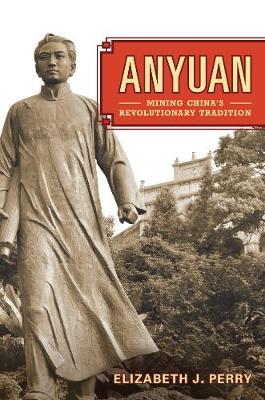
OverviewHow do we explain the surprising trajectory of the Chinese Communist revolution? Why has it taken such a different route from its Russian prototype? An answer, Elizabeth Perry suggests, lies in the Chinese Communists' creative development and deployment of cultural resources – during their revolutionary rise to power and afterwards. Skillful ""cultural positioning"" and ""cultural patronage,"" on the part of Mao Zedong, his comrades and successors, helped to construct a polity in which a once alien Communist system came to be accepted as familiarly ""Chinese."" Perry traces this process through a case study of the Anyuan coal mine, a place where Mao and other early leaders of the Chinese Communist Party mobilized an influential labor movement at the beginning of their revolution, and whose history later became a touchstone of ""political correctness"" in the People's Republic of China. Once known as ""China's Little Moscow,"" Anyuan came over time to symbolize a distinctively Chinese revolutionary tradition. Yet the meanings of that tradition remain highly contested, as contemporary Chinese debate their revolutionary past in search of a new political future. Full Product DetailsAuthor: Elizabeth PerryPublisher: University of California Press Imprint: University of California Press Volume: 24 Dimensions: Width: 15.20cm , Height: 3.00cm , Length: 22.90cm Weight: 0.544kg ISBN: 9780520271906ISBN 10: 0520271904 Pages: 412 Publication Date: 01 October 2012 Audience: Professional and scholarly , Professional & Vocational Format: Paperback Publisher's Status: Active Availability: Available To Order We have confirmation that this item is in stock with the supplier. It will be ordered in for you and dispatched immediately. Table of ContentsReviewsMeticulously researched and elegantly narrated... It is a book well worth reading. -- Carla Nappi New Bks In East Asian Stds 20130305 Meticulously researched and elegantly narrated... It is a book well worth reading. --New Bks In East Asian Stds Author InformationElizabeth Perry is Henry Rosovsky Professor of Government at Harvard University and Director of the Harvard-Yenching Institute. She is the author of many books, most recently: Mao's Invisible Hand: The Political Foundations of Adaptive Governance in China and Patrolling the Revolution: Worker Militias, Citizenship and the Modern Chinese State. Tab Content 6Author Website:Countries AvailableAll regions |
||||