Overview
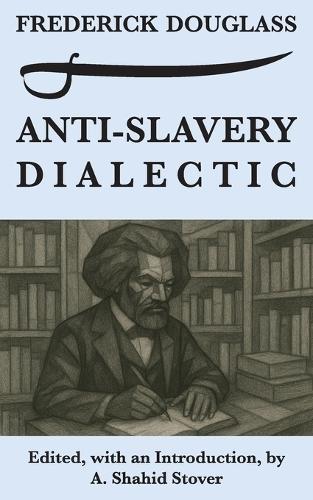
Anti-Slavery Dialectic: A Frederick Douglass Anthology brings together the fugitive slave lectures and emancipatory thought of Frederick Douglass gleaned from his vast body of intellectual work as seminal contributions towards laying the philosophical foundations of Black liberation discourse in a single comprehensive edition. What can the Revolt of human 'being' against chattel slavery tell us about the human condition? What does it mean to be human? And, how does this question of the meaning of human 'being' speak to socio-historical imperatives of human liberation against established structures of power in our contemporary world that are inscribed with an originary violence of chattel slavery, and thus systematically disavow ethical responsibility and disallow human consideration when confronted with the assertion of Black subjectivity-as-human 'being'? Anti-Slavery Dialectic immediately serves as a classic text on the question of human freedom and outstanding testament of Frederick Douglass' enduring philosophical relevance to insurgent struggles of ascendant humanity against a western imperialist continuum.
Full Product Details
Author: Frederick Douglass
Publisher: Cannae Press
Imprint: Cannae Press
Dimensions:
Width: 12.70cm
, Height: 4.10cm
, Length: 20.30cm
Weight: 0.712kg
ISBN: 9781733551052
ISBN 10: 1733551050
Pages: 734
Publication Date: 03 February 2026
Audience:
General/trade
,
General
Format: Paperback
Publisher's Status: Active
Availability: Not yet available

This item is yet to be released. You can pre-order this item and we will dispatch it to you upon its release.
Reviews
""We understand Frederick Douglass the fugitive American slave is expected to deliver lectures on American slavery in Leeds, the week after next, Mr. Douglass is a noble specimen of physical intellectual manhood, and we have no doubt his lectures will excite the same interest in Leeds which they have done in Belfast, Liverpool, Edinburgh and other places."" Leeds Mercury, 12 December 1846 ""Frederick Douglass, the famous fugitive from slavery, who is said by the Eastern papers generally to be a powerful speaker, lately addressed the good people of Lloydsville in this State. He soon obtained the command of their feelings, and set them to laughing or weeping at will."" Cincinnati Philanthropist, 15 November 1843. ""Douglass knew that the battle for African American liberation had to be fought on the philosophical terrain of discourse ..."" LaRose T. Parris, author of Black Thought Matters and Being Apart: Theoretical and Existential Resistance in Africana Literature ""His speeches were always logical, often lyrical and incomparably lucid. Laced with poetic allusions and built on a firm philosophical foundation, they embodied constant appeals to justice, equality, and freedom."" John W. Blassingame, editor of The Frederick Douglass Papers - Series One: Speeches, Debates, and Interviews, 5 Vols. ""Here are the eloquent words and penetrating thoughts that exerted a decisive influence on the course of national affairs for half a century and moved countless men and women to action in behalf of freedom. Most important of all, here are the militant principles of the outstanding leader of the Negro people whose ideas have remained vital and valid down to the present day."" Philip S. Foner, editor of The Life and Writings of Frederick Douglass Vol.1-5.
Author Information
Frederick Douglass (1817? - 1895) is a towering African American historical figure. As a Black radical abolitionist, writer, philosopher of human freedom and fugitive slave lecturer, Douglass was known for his outstanding oratorical prowess, tireless intellectual engagement and existential commitment to the socio-historical struggle against human slavery. Douglass himself was born into human slavery on Maryland's Eastern Shore as the son of an enslaved Black mother and white slavemaster. Douglass escaped slavery in 1838 and became an abolitionist lecturer by 1841. Douglass not only lectured throughout the continental United States, but throughout the British Isles on three separate tours from 1845 to 1847, 1859 to 1860 and1886 to 1887.