Overview
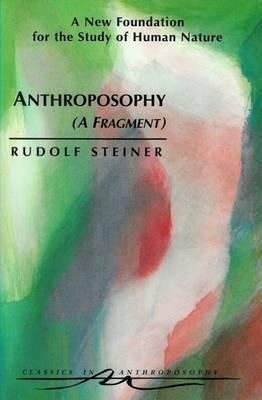
This written attempt to create a spiritual anthropology was found among Rudolf Steiner's unpublished works after his death. Although fragmentary, this key work on 'Anthroposophy' is of enormous interest and importance. Here are the first steps toward the development of a true psychology of spirit, using a phenomenological approach to the human senses, the life processes, the I-experience, the human form and the human relationship to higher spiritual worlds. Steiner struggled to express the concepts related in this book, since many of the terms used in neurology, psychology and cognitive studies did not yet exist in 1910.Since then there has been much progress, and this translation benefits from more than 80 years of development in the study of the human senses, cognition, and, neurology. While not an easy text, ""Anthroposophy (A Fragment)"" is essential for understanding Rudolf Steiner's view of the human body - especially its formation and function in relation to spirit.Included are an introduction by neurologist Dr James Dyson, an anthroposophical doctor; a foreword by Robert Sardello, co-founder and co-director of the School of Spiritual Psychology; and a translator's preface by Detlef Hardorp.
Full Product Details
Author: Rudolf Steiner ,
C.E. Creeger
Publisher: Anthroposophic Press Inc
Imprint: SteinerBooks, Inc
Dimensions:
Width: 14.00cm
, Height: 1.30cm
, Length: 20.30cm
Weight: 0.295kg
ISBN: 9780880104012
ISBN 10: 0880104015
Pages: 221
Publication Date: 01 April 1996
Audience:
College/higher education
,
Professional and scholarly
,
Undergraduate
,
Postgraduate, Research & Scholarly
Format: Paperback
Publisher's Status: Active
Availability: Out of stock

The supplier is temporarily out of stock of this item. It will be ordered for you on backorder and shipped when it becomes available.
Language: German
Author Information
RUDOLF STEINER (1861-1925) called his spiritual philosophy 'anthroposophy', meaning 'wisdom of the human being'. As a highly developed seer, he based his work on direct knowledge and perception of spiritual dimensions. He initiated a modern and universal 'science of spirit', accessible to anyone willing to exercise clear and unprejudiced thinking.From his spiritual investigations Steiner provided suggestions for the renewal of many activities, including education (both general and special), agriculture, medicine, economics, architecture, science, philosophy, religion and the arts. Today there are thousands of schools, clinics, farms and other organizations involved in practical work based on his principles. His many published works feature his research into the spiritual nature of the human being, the evolution of the world and humanity, and methods of personal development. Steiner wrote some 30 books and delivered over 6,000 lectures across Europe. In 1924 he founded the General Anthroposophical Society, which today has branches throughout the world.