Overview
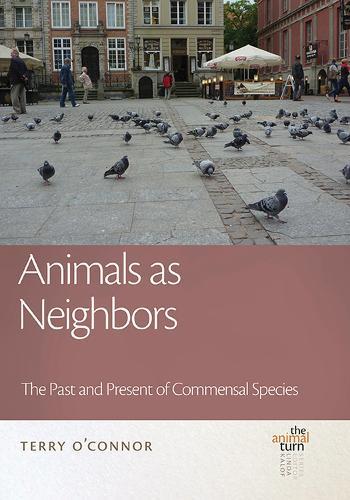
In this fascinating book, Terry O'Connor explores a distinction that is deeply ingrained in much of the language that we use in zoology, human-animal studies, and archaeology--the difference between wild and domestic. For thousands of years, humans have categorised animals in simple terms, often according to the degree of control that we have over them, and have tended to see the long story of human-animal relations as one of increasing control and management for human benefit. And yet, around the world, species have adapted to our homes, our towns, and our artificial landscapes, finding ways to gain benefit from our activities and so becoming an important part of our everyday lives. These commensal animals remind us that other species are not passive elements in the world around us but intelligent and adaptable creatures. Animals as Neighbors shows how a blend of adaptation and opportunism has enabled many species to benefit from our often destructive footprint on the world. O'Connor investigates the history of this relationship, working back through archaeological records. By requiring us to take a multifaceted view of human-animal relations, commensal animals encourage a more nuanced understanding of those relations, both today and throughout the prehistory of our species.
Full Product Details
Author: Terry O'Connor
Publisher: Michigan State University Press
Imprint: Michigan State University Press
Dimensions:
Width: 17.80cm
, Height: 1.70cm
, Length: 25.40cm
Weight: 0.653kg
ISBN: 9781611860955
ISBN 10: 1611860954
Pages: 184
Publication Date: 01 September 2013
Audience:
Professional and scholarly
,
Professional and scholarly
,
Professional & Vocational
,
Professional & Vocational
Format: Hardback
Publisher's Status: Active
Availability: In Print

This item will be ordered in for you from one of our suppliers. Upon receipt, we will promptly dispatch it out to you. For in store availability, please contact us.
Reviews
A fascinating evolutionary and social history of our relationship with a wide range of commensal mammal and bird species, raising the question of what it really means to be a wild animal. This important interdisciplinary study will be of great interest and relevance to both archaeologists and biologists. Dr. Samuel Turvey, Zoological Society of London.
A fascinating evolutionary and social history of our relationship with a wide range of commensal mammal and bird species, raising the question of what it really means to be a 'wild animal.' This important interdisciplinary study will be of great interest and relevance to both archaeologists and biologists. --Dr. Samuel Turvey, Zoological Society of London.
A fascinating evolutionary and social history of our relationship with a wide range of commensal mammal and bird species, raising the question of what it really means to be a wild animal. This important interdisciplinary study will be of great interest and relevance to both archaeologists and biologists. Dr. Samuel Turvey, Zoological Society of London. A fascinating evolutionary and social history of our relationship with a wide range of commensal mammal and bird species, raising the question of what it really means to be a 'wild animal.' This important interdisciplinary study will be of great interest and relevance to both archaeologists and biologists. --Dr. Samuel Turvey, Zoological Society of London.
A fascinating evolutionary and social history of our relationship with a wide range of commensal mammal and bird species, raising the question of what it really means to be a 'wild animal.' This important interdisciplinary study will be of great interest and relevance to both archaeologists and biologists. --Dr. Samuel Turvey, Zoological Society of London.
""A fascinating evolutionary and social history of our relationship with a wide range of commensal mammal and bird species, raising the question of what it really means to be a 'wild animal.' This important interdisciplinary study will be of great interest and relevance to both archaeologists and biologists."" --Dr. Samuel Turvey, Zoological Society of London.
Author Information
Terry O'Connor is Professor of Archaeological Science at the University of York, UK. He was formerly a trustee of York Archaeological Trust from 2005 to 2010, and was elected a fellow of the Society of Antiquaries of London in 2008. He was editor of International Journal of Osteoarchaeology from 2005 to 2011.