Overview
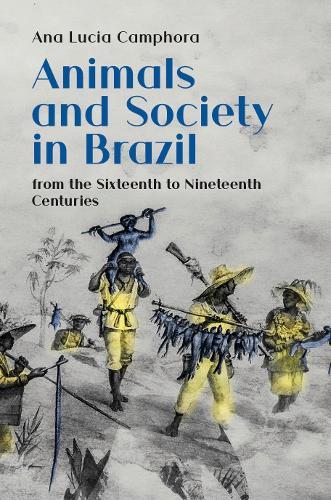
This pioneering overview of how social relations were con- structed as interspecies relations offers the reader a starting point for bringing these encounters into a historical narrative that unfolds over the course of several centuries of Portuguese South American colonial life. In showing the decisive impor- tance of non-human animals in the development of Brazilian society, this volume provides a point of departure for the con- struction of an international corpus of knowledge in the fields of environmental history and human-animal studies, adding complexity to existing narratives and throwing new light on the role of Latin American societies within the global picture. Brazil, the largest country in South America, is home to some of the planet's richest fauna, is ranked as one of the world's largest meat producers (beef, chicken and pork) and also has a huge population of pets, estimated at 54.2 million dogs, 39.8 million birds and 23.9 million cats, according to a 2018 sur- vey. Non-human animals have always been there, domesti- cated or wild, alongside their human counterparts. These sets of relationships configure what is still a less-understood part of Brazilian history. In its six chapters, this book considers the exotic wildlife diet base adopted by European explorers; the uses of animals for medicinal purposes; intense hunting and whaling activities; and the introduction of domesticated anim- als from Europe and other Portuguese colonies, focusing on the decisive contributions of cattle, horses and mules in the oc- cupation and colonisation of the extensive Brazilian territory, and the precarious system of meat supply in the-then capital, Rio de Janeiro, in the nineteenth century.
Full Product Details
Author: Ana Lucia Camphora ,
Miriam Adelman
Publisher: White Horse Press
Imprint: White Horse Press
ISBN: 9781912186174
ISBN 10: 1912186179
Pages: 220
Publication Date: 15 March 2021
Audience:
College/higher education
,
Postgraduate, Research & Scholarly
Format: Hardback
Publisher's Status: Active
Availability: In Print

This item will be ordered in for you from one of our suppliers. Upon receipt, we will promptly dispatch it out to you. For in store availability, please contact us.
Author Information
Ana Lucia Camphora was born and lives in Rio de Janeiro, Brazil, and has degrees in Pyschology and Social Sciences. Her interdisciplinary approach is rooted in previous works as an environmental consultant in economic sustainability of protected areas, environmental policy instruments and ecotourism, in partnership with Brazilian Environmental Ministry, UNESCO and NGOs. Latterly, she has moved into interspecies studies and taught postgraduate courses in Environmental Law and Animals in Law (2015 to 2018). The Portuguese edition of Animals and Society in Brazil from the 16th to the 19th Century was published in 2017.