Overview
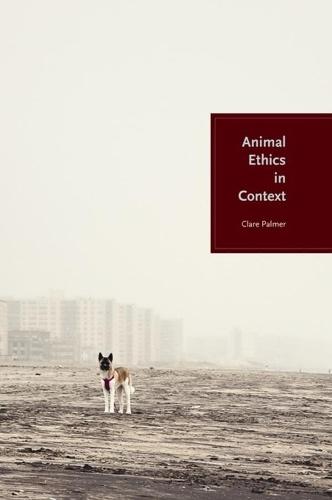
It is widely agreed that because animals feel pain we should not make them suffer gratuitously. Some ethical theories go even further: because of the capacities that they possess, animals have the right not to be harmed or killed. These views concern what not to do to animals, but we also face questions about when we should, and should not, assist animals that are hungry or distressed. Should we feed a starving stray kitten? And if so, does this commit us, if we are to be consistent, to feeding wild animals during a hard winter? In this controversial book, Clare Palmer advances a theory that claims, with respect to assisting animals, that what is owed to one is not necessarily owed to all, even if animals share similar psychological capacities. Context, history, and relation can be critical ethical factors. If animals live independently in the wild, their fate is not any of our moral business. Yet if humans create dependent animals, or destroy their habitats, we may have a responsibility to assist them. Such arguments are familiar in human cases-we think that parents have special obligations to their children, for example, or that some groups owe reparations to others. Palmer develops such relational concerns in the context of wild animals, domesticated animals, and urban scavengers, arguing that different contexts can create different moral relationships.
Full Product Details
Author: Clare Palmer
Publisher: Columbia University Press
Imprint: Columbia University Press
Dimensions:
Width: 15.20cm
, Height: 1.30cm
, Length: 22.90cm
Weight: 0.298kg
ISBN: 9780231129053
ISBN 10: 023112905
Pages: 216
Publication Date: 23 September 2010
Audience:
Professional and scholarly
,
Professional & Vocational
Format: Paperback
Publisher's Status: Active
Availability: Manufactured on demand

We will order this item for you from a manufactured on demand supplier.
Language: English
Reviews
This book deserves significant attention... Recommended. Choice The author offers the most careful treatment available of our moral obligations specifically to animals in the wild. -- Jason Zinser Quarterly Review of Biology It makes an original and important contribution to the philosophical literature on animal ethics and would make an excellent textbook for an introductory philosophy course in animal ethics, as it introduces readers to a range of theories, problems, and arguments as well as developing the author's own thought-provoking position. -- Chloe Taylor Journal for Critical Animal Studies
This book deserves significant attention... Recommended. Choice 3/1/11 The author offers the most careful treatment available of our moral obligations specifically to animals in the wild. -- Jason Zinser Quarterly Review of Biology 9/1/12 It makes an original and important contribution to the philosophical literature on animal ethics and would make an excellent textbook for an introductory philosophy course in animal ethics, as it introduces readers to a range of theories, problems, and arguments as well as developing the author's own thought-provoking position. -- Chloe Taylor Journal for Critical Animal Studies Vol 10, No 4 2012
This book deserves significant attention... Recommended. Choice 3/1/11
Author Information
Clare Palmer studied at Oxford University and is professor of philosophy at Texas A&M University. She is the author of Environmental Ethics and Process Thinking and has edited a number of volumes, including Animal Rights, and is a former president of the International Society for Environmental Ethics.