Overview
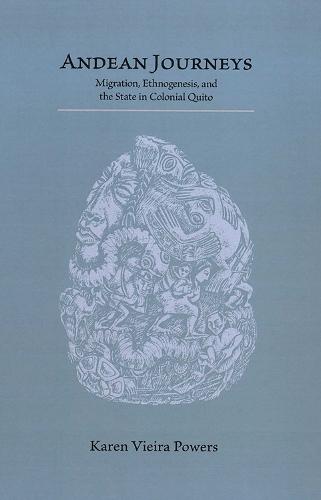
This account of the native peoples of Ecuador in the sixteenth and seventeenth century shows how they not only resisted, adapted, and survived Spanish colonization but reinvented themselves as a culture. Offered are both a revisionist treatment of the demographic history of Amerindian Ecuador and a clearer understanding of North Andean ethnogenesis. Powers's study of Andean population movements in the Audiencia of Quito from 1535 to 1700 shows that native migrations account for a population increase in Quito during a time when contiguous areas experienced a rapid decline in Indian population. Beyond reconstructing the movement of the native peoples, Powers also explores how migration changed the lives of Indians and Spaniards. The migratory flow from native communities to Spanish cities, textile mills, and haciendas resulted in a constantly mutating colonial world. For elite Spaniards, the migrations meant the near collapse of the tribute and forced labor system, while nonelite Spaniards were able to take advantage of the alternative labor supplied by the migrant Indians, resulting in social mobility and the formation of new classes. For Indians, the migrations were initially a survival strategy but ended in the decline of the traditional chiefdom. A key finding of the study is that Ecuadorean Indians achieved cultural survival by reconstructing Andean lifeways inside the sites to which they migrated. ""A truly outstanding, important work.""--Susan E. Ramírez, DePaul University
Full Product Details
Author: Karen Vieira Powers
Publisher: University of New Mexico Press
Imprint: University of New Mexico Press
Dimensions:
Width: 14.90cm
, Height: 1.70cm
, Length: 22.60cm
Weight: 0.400kg
ISBN: 9780826347695
ISBN 10: 082634769
Pages: 249
Publication Date: 30 June 2009
Audience:
College/higher education
,
Postgraduate, Research & Scholarly
Format: Paperback
Publisher's Status: Active
Availability: Manufactured on demand

We will order this item for you from a manufactured on demand supplier.
Reviews
Karen Vieira Powers's well-written and impeccably organized book focuses on migration as a colonial survival strategy. In the course of collecting and reviewing the historical data from archives in Spain and Ecuador, she explains the unusual patterns of Quito's demographic history. - American Historical Review Karen Powers examines Andean migration in the first two centuries of the Spanish colony.... Powers gives us a wealth of detail and valuable speculation. Quito's location on the frontier of Inca territory resulted in political relations between native peoples quite different from those characteristic of the southern Andeans and resulted in decades of low-intensity interethnic struggle. - Colonial Latin American Historical Review
Karen Vieira Powers's well-written and impeccably organized book focuses on migration as a colonial survival strategy. In the course of collecting and reviewing the historical data from archives in Spain and Ecuador, she explains the unusual patterns of Quito's demographic history. - American Historical Review Karen Powers examines Andean migration in the first two centuries of the Spanish colony.... Powers gives us a wealth of detail and valuable speculation. Quito's location on the frontier of Inca territory resulted in political relations between native peoples quite different from those characteristic of the southern Andeans and resulted in decades of low-intensity interethnic struggle. - Colonial Latin American Historical Review
Author Information
Karen Vieira Powers is an independent scholar. She is author of Women in the Crucible of Conquest: The Gendered Genesis of Spanish American Society, 1500-1600 (UNMP).