Overview
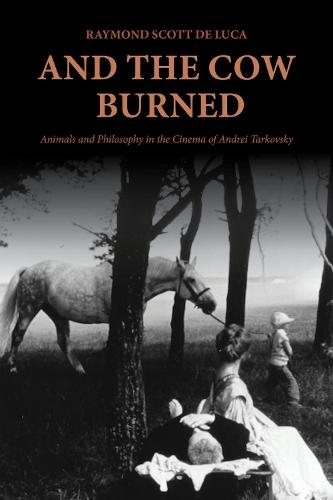
In the films of legendary Soviet director Andrei Tarkovsky, images of visually striking and mysterious animals serve as powerful symbols, marvels, and metaphors, from nomadic dogs to rolling horses and soaring birds. Yet Tarkovsky's hauntingly beautiful depictions of animals exist in suspended tension with his often grisly portrayals of animal cruelty – exemplified by the cow he set on fire while making his second feature film Andrei Rublev. These disturbing moments challenge viewers' perceptions of Tarkovsky's morality and complicate his films' refined artistry. And the Cow Burned is a dynamic interdisciplinary study of Tarkovsky's filmography that draws on insights from animal studies, ethical philosophy, and film theory. Through focused case studies centered on different animals, De Luca posits that Tarkovsky's body of work serves as a canvas for animal philosophy, exposing contradictions inherent in human-animal relationships while raising questions about agency, ethics, and power. Readers are invited to engage with the ethical ramifications of Tarkovsky's depictions and understand these animals as real beings whose experiences are fundamentally woven into his moral and aesthetic considerations. And the Cow Burned challenges us to rethink the connections between animals and humans, encouraging a fresh perspective on the paradoxical exchanges that shape our interactions and paving the way for new interpretations in the future.
Full Product Details
Author: Raymond Scott De Luca
Publisher: Indiana University Press
Imprint: Indiana University Press
ISBN: 9780253074683
ISBN 10: 0253074681
Pages: 334
Publication Date: 06 January 2026
Audience:
Professional and scholarly
,
College/higher education
,
Professional & Vocational
,
Postgraduate, Research & Scholarly
Format: Paperback
Publisher's Status: Forthcoming
Availability: Not yet available

This item is yet to be released. You can pre-order this item and we will dispatch it to you upon its release.
Reviews
""This book is beautifully conceived and extremely well written, and will be an indispensable text for scholars in a number of fields, including Slavic studies, film studies, and animal studies. It has the potential – in part due to Tarkovsky's own reputation and broad reach – to catapult the world of Slavic studies into a central spot in animal studies, a field that has to date by and large ignored the cultures of Russia when it comes to thinking about the animal in human lives.""—Jane Costlow, author of Worlds Within Worlds: The Novels of Ivan Turgenev ""Raymond Scott De Luca's volume offers a profound challenge to our unalloyed admiration for the work of Andrei Tarkovsky and his Soviet antecedents (Eisenstein, Vertov), whose cinema has chosen on-screen animal brutality as commentary on a range of social or philosophical issues. Connecting the political logic between 'arthouse' and 'slaughterhouse,' the book raises disturbing questions about the nature of genius when it becomes insistently complicit in cruelty as a component of cinematic talent. After reading De Luca, you cannot watch Tarkovsky the same way again.""—Nancy Condee, author of The Imperial Trace: Recent Russian Cinema ""This rich book provides a fresh perspective on Tarkovsky's cinema, resituating it within contemporary theoretical frames, such as animal studies and ecocriticism. De Luca confronts the paradoxical cruelty and tenderness that characterizes Tarkovsky's universe. In his hands, horses, dogs, and birds come into sharp focus as humanity's powerless victims and faithful companions. And as despairing witnesses of its fatal mistakes.""—Emma Widdis, author of Socialist Senses: Film, Feeling, and the Soviet Subject, 1917–1940
""This book is beautifully conceived and extremely well written, and will be an indispensable text for scholars in a number of fields, including Slavic studies, film studies, and animal studies. It has the potential—in part due to Tarkovsky's own reputation and broad reach—to catapult the world of Slavic studies into a central spot in animal studies, a field that has to date by and large ignored the cultures of Russia when it comes to thinking about the animal in human lives.""—Jane Costlow, author of Worlds Within Worlds: The Novels of Ivan Turgenev
Author Information
Raymond Scott De Luca is Assistant Professor of Russian Studies in the Department of Russian and East Asian Languages and Cultures (REALC) at Emory University.