Overview
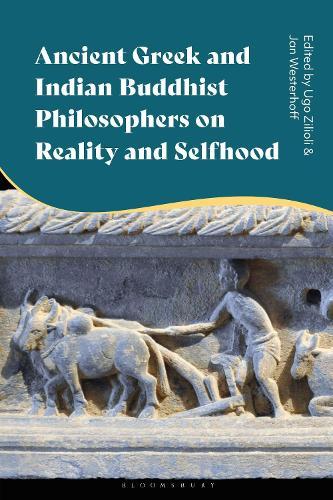
Key areas and aspects of ancient philosophy in Greek and Indian Buddhist traditions are illuminated in this collection. Covering an extended period of time, from early (5th century BC), through Hellenism, to post-Hellenistic times (up to the 7th century AD) it begins by focusing on historical themes and methods in ancient Greece and India. This sketch of historical and philosophical connections between the regions, from Classical times to post-Hellenism, sets the ground for deeper exploration between these two traditions. Attention is placed on reality and selfhood. An international team of contributors deal with topics including consciousness, personal identity and personhood. They tackle metaphysical questions about composition and material constitution of things, shedding light on the challenges Greek and Buddhist thinkers faced. Converging analyses and shared themes are identified in a substantive introduction to the collection. This is an important contribution to the growing literature in ancient comparative philosophy.
Full Product Details
Author: Professor Ugo Zilioli (University of Oxford, UK) , Jan Westerhoff (Oxford University, UK)
Publisher: Bloomsbury Publishing PLC
Imprint: Bloomsbury Academic
Dimensions:
Width: 15.40cm
, Height: 2.20cm
, Length: 23.40cm
Weight: 0.600kg
ISBN: 9781350460362
ISBN 10: 1350460362
Pages: 288
Publication Date: 19 February 2026
Audience:
Professional and scholarly
,
Professional & Vocational
Format: Hardback
Publisher's Status: Active
Availability: Manufactured on demand 
We will order this item for you from a manufactured on demand supplier.
Table of Contents
Introduction by Jan Westerhoff and Ugo Zilioli, Oxford University Part I: History 1) Travel and Intellectual Exchange across the Ancient Indian Ocean world (ca. 100 BCE to 600 CE), Matthew Cobb (University of Wales, Trinity St Davids, UK) 2) Early Scythian Logic and the Quaestiones Disputatae Method, Christopher I. Beckwith (Indiana University, USA) 3) Hegesias: When Hellenistic and Buddhist Philosophies Unexpectedly Meet in Cyrene, Ugo Zilioli (Oxford University, UK) Part II: Knowledge and Reality 4) Eliminativism in the Presocratics, Diego Zucca (Sassari University, Italy) 5) Being and not being in Gorgias’ idios apodeixis, Roberta Ioli (Bologna University, Italy) 6) The Political Hazards of Idiosyncratic Knowledge, Amber Carpenter (Yale at Singapore, Singapore) 7) Dust World: Composition, Constitution, and Emergence in Buddhist Metaphysics, Sonam Kachru (Yale University, USA) 8) Buddhist Cosmology and Its Ethical Dimensions, Oran Tanner (NYU at Abu Dhabi, UAE) 9) Gorgias and Nagarjuna, Ugo Zilioli (Oxford University, UK) Part III: Selfhood 10) Consciousness in the Pali discourses of the Buddha, Andrea Sangiacomo (University of Groeningen, Netherlands) 11) The Treasury of the Self. Democritus on personal identity, Enrico Piergiacomi ( Israel Institute of Technology, Israel) 12) Personal identity in Protagoras and Vasubandhu, Joachim Aufderheide (Kings College London, UK) 13) Eliminating Selves and Persons, Monica Chadha (Monash University, Australia) 14) Selfhood in Yogacara Buddhist Philosophy, Szilvia Szanyi (Oxford University, UK) Glossary Index
Reviews
This collection makes a significant contribution to one of the most intriguing questions posed about ancient philosophy: whether the Greek and Indian traditions may have influenced one another. I came away from it less skeptical about this than I had been before. Along with thought-provoking discussions of historical connections between these two rich traditions, the book offers illuminating comparisons, for instance of Pyrrhonism and Buddhism, Plato and Vasubandhu, and in-depth studies of thinkers from both traditions. * Peter Adamson, LMU Munich. *
This collection makes a significant contribution to one of the most intriguing questions posed about ancient philosophy: whether the Greek and Indian traditions may have influenced one another. I came away from it less skeptical about this than I had been before. Along with thought-provoking discussions of historical connections between these two rich traditions, the book offers illuminating comparisons, for instance of Pyrrhonism and Buddhism, Plato and Vasubandhu, and in-depth studies of thinkers from both traditions. * Prof. Peter Adamson *
Author Information
Ugo Zilioli is Leverhulme Researcher in the Faculty of Theology and Religion at the University of Oxford, UK. Jan Westerhoff is Professor of Buddhist Studies at Lady Margaret Hall at the University of Oxford, UK.
Tab Content 6
Author Website:
Countries Available
All regions
|