Overview
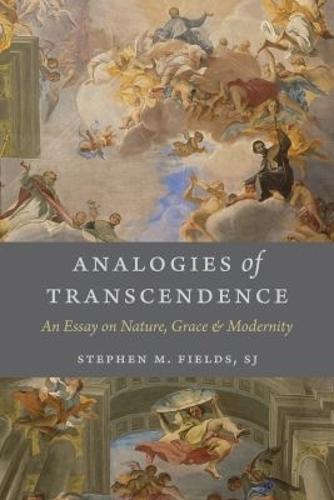
The problem of nature and grace lies at the heart of Christian theology. No dimension of divine revelation can be addressed without implicitly drawing reference to this issue. Analogies of Transcendence focuses on the central role that the analogies of being and faith play in developing a solution to the problem. These link God, as self-manifesting transcendence, to the human person as both fallen and justified, and to the material cosmos. Although the proposed solution draws on the work of Maréchal, de Lubac, Balthasar, and Rahner, it criticizes their approach for its underdeveloped analogies that diminish nature in grace’s engagement with it. In redressing this weakness, Fr. Fields adapts its solution to the intellectual struggle of our time. This volume examines the origins and structure of modernity, which, it asserts, has not been superseded and is therefore critical of ‘postmodernism,’ as well as of some ambiguous legacies of Thomism. The first part of Analogies of Transcendence probes selected understandings of nature and grace since Aquinas. These yield clues for a viable model, while also manifesting the deficiency of the theory of ‘pure nature,’ which contributes to fideism and secularism. More clues emerge in the nineteenth and twentieth centuries, including Vatican II and recent papal thought. The second part of the book constructs the model on the basis of the clues. It conceives the orders of ‘creation’ and ‘redemption’ as a continuum, and it develops a theology of nature. The third part then applies the model to other problems. These include reimagining the role of Christian art, revising the Thomist doctrine of God, and defending Christianity’s unique claim in relation to other religions. Throughout, this argument, both historical and systemic, enters the dialogue with the tradition, from the Fathers, to Augustine and the medieval, to Trent and the Baroque. Analogies of Transcendence also brings into sympathetic conversation the two often estranged titans of contemporary Catholicism, Balthasar and Rahner.
Full Product Details
Author: Stephen M. Fields
Publisher: The Catholic University of America Press
Imprint: The Catholic University of America Press
Dimensions:
Width: 14.70cm
, Height: 2.70cm
, Length: 22.00cm
Weight: 0.558kg
ISBN: 9780813228556
ISBN 10: 0813228557
Pages: 320
Publication Date: 30 June 2016
Audience:
Professional and scholarly
,
Professional & Vocational
Format: Hardback
Publisher's Status: Active
Availability: Out of stock

The supplier is temporarily out of stock of this item. It will be ordered for you on backorder and shipped when it becomes available.
Reviews
Ultimately, Fields has written a strong theological argument that, perhaps more than anything else, offers a good example of why struggling with how to integrate nature and grace continues to be important for Catholic theology. --Benjamin Peters, University of Saint Joseph, Journal of Jesuit Studies Fields moves among extraordinarily technical ideas with much grace and clarity. The book's expertise, moreover, is undeniable, emerging as the fruit of a career spent thinking about these complex questions. --Anthony Rosselli, Newman Studies Journal no good review --GREG ZUSCHLAG, Olbate School of Theology, The College Theology Society
Author Information
Stephen M. Fields, SJ is professor of theology, Georgetown University, USA.