Overview
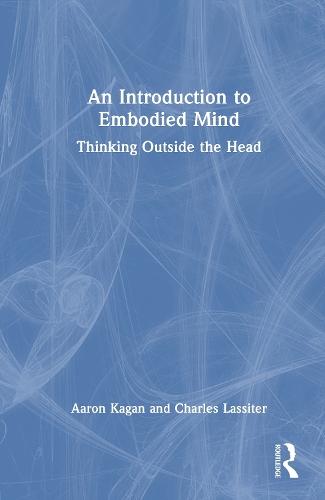
An Introduction to Embodied Mind: Thinking Outside the Head offers readers a valuable gateway to understanding one of the most exciting ideas in philosophy and cognitive science: that minds are not confined to the brain but extend into the body and environment. Written in a clear, engaging style, the book guides readers through competing views of embodiment and shows how they matter for everyday life. The book is divided into three parts. Part 1 begins with familiar ideas about mind–body separation and gradually leads readers toward embodied perspectives, distinguishing between “weak” and “strong” versions of embodiment. Part 2 develops two influential approaches to embodied cognition and highlights their strengths as well as their challenges. Part 3 explores how these theories make a difference in practice, with applications to free will, ethics, technology, and cultural life. Each chapter includes accessible overviews, exercises in “Otto’s Workbook” that encourage active reflection, and “Sidequests” and “The More You Know” boxes that invite readers to dig deeper. Examples are drawn from popular culture, psychology, and everyday experience, making the material approachable for students and general readers alike. With its blend of rigorous philosophy, practical exercises, and lively examples—as well as a helpful glossary—An Introduction to Embodied Mind: Thinking Outside the Head provides an engaging exploration of embodiment for anyone curious about how minds really work.
Full Product Details
Author: Aaron Kagan ,
Charles Lassiter
Publisher: Taylor & Francis Ltd
Imprint: Routledge
Weight: 0.650kg
ISBN: 9781032411781
ISBN 10: 1032411783
Pages: 252
Publication Date: 22 April 2026
Audience:
College/higher education
,
Tertiary & Higher Education
Format: Hardback
Publisher's Status: Forthcoming
Availability: Not yet available

This item is yet to be released. You can pre-order this item and we will dispatch it to you upon its release.
Reviews
“An Introduction to Embodied Mind is a terrific introductory text on the philosophy of embodied and extended cognition. The authors bring philosophical issues to life through intriguing real-world examples and case studies, explicitly addressing applied topics of ethical and personal significance alongside their coherent and powerful framework in philosophy of mind. A focussed line of thought is established over the course of the book, even while the authors give fair attention to approaches which diverge from their preferred one. Students in all areas of Philosophy, as well as other researchers interested in embodied cognition, will enjoy and benefit from this book”. John Sutton, Professor in Philosophy at Stirling University, Scotland
“An Introduction to Embodied Mind is a terrific introductory text on the philosophy of embodied and extended cognition. The authors bring philosophical issues to life through intriguing real-world examples and case studies, explicitly addressing applied topics of ethical and personal significance alongside their coherent and powerful framework in philosophy of mind. A focused line of thought is established over the course of the book, even while the authors give fair attention to approaches which diverge from their preferred one. Students in all areas of Philosophy, as well as other researchers interested in embodied cognition, will enjoy and benefit from this book”. John Sutton, Professor in Philosophy at Stirling University, Scotland
“An Introduction to Embodied Mind is a terrific introductory text on the philosophy of embodied and extended cognition. The authors bring philosophical issues to life through intriguing real-world examples and case studies, explicitly addressing applied topics of ethical and personal significance alongside their coherent and powerful framework in philosophy of mind. A focussed line of thought is established over the course of the book, even while the authors give fair attention to approaches which diverge from their preferred one. Students in all areas of Philosophy, as well as other researchers interested in embodied cognition, will enjoy and benefit from this book.” -- John Sutton, Professor in Philosophy at Stirling University, Scotland.
Author Information
Aaron Kagan is a Staff User Experience Researcher at Google and the founder of GraspingAI, a consultancy that helps businesses strategize and implement generative AI technologies. He serves as Chair of the American Philosophical Association’s Committee on Non-Academic Careers, supporting graduate students and PhDs pursuing diverse career paths. Charles Lassiter is Professor of Philosophy at Gonzaga University. His areas of research include philosophy of mind and social epistemology, focusing on issues at the intersection of cognition and culture. He also collects and analyzes data about the academic philosophy job market.