|
|
|||
|
||||
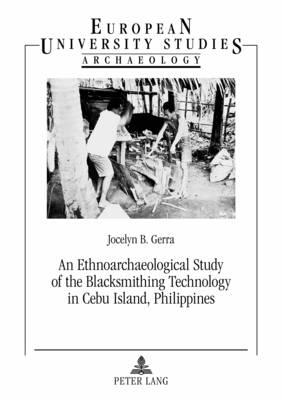
OverviewThe island of Cebu, located in Central Philippines, appeared in Western documents basically due to two events in world history. First, when Ferdinand Magellan’s fleet returned to Seville in 1522 after circumnavigating the world. Cebu arose for the second time in history due to the discovery of the return route through the Pacific 44 years after Magellan. Apart from these events in maritime history, Cebu played a significant role in interisland trading during the pre-Hispanic period. The Spanish chroniclers saw a very vibrant center of trade. The goods traded by the Chinese include porcelain, gold, slaves and food supplies. It can be inferred that through Chinese traders the local pandays (blacksmiths) got hold of iron that they used for different kinds of tools. In the archaeological sites uncovered in the historic district of Cebu, much material has been found that needs further study and interpretation. This book investigates, as an example, found pieces of a blacksmith’s shop. Full Product DetailsAuthor: Jocelyn B. GerraPublisher: Peter Lang AG Imprint: Peter Lang AG Edition: New edition Volume: 78 Weight: 0.160kg ISBN: 9783631631102ISBN 10: 3631631103 Pages: 114 Publication Date: 22 December 2012 Audience: Professional and scholarly , Professional & Vocational Format: Paperback Publisher's Status: Active Availability: Out of stock The supplier is temporarily out of stock of this item. It will be ordered for you on backorder and shipped when it becomes available. Table of ContentsContents: Landscape, environment and the people – An Ethnoarchaeology of a blacksmith’s shop – Ethnoarchaeology as background for interpretation models – Analysis of slags – Interpretation of models.ReviewsAuthor InformationJocelyn B. Gerra, born in Mandaue, Cebu (Philippines), earned her AB in Anthropology and Sociology and her MA in Anthropology from the University of San Carlos (USC) (Philippines). She worked as a researcher at Visayas State College of Agriculture (ViSCA) in Leyte, then at the University Museum of the USC, and as a lecturer and later chair at the Department of Sociology and Anthropology. She earned her doctorate at Hamburg University (Germany) and now works as Executive Director for Culture and Heritage and as Senior Curator of Casa Gorordo Museum. Tab Content 6Author Website:Countries AvailableAll regions |
||||