Overview
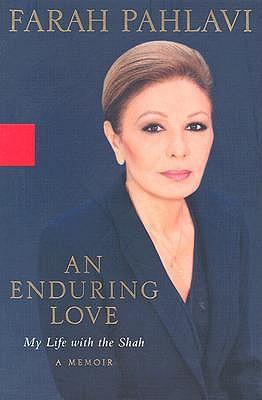
Her story began like a fairytale. At the age of 21, Farah Diba married the shah of Iran, Mohammed Reza Shah Pahlavi. Her coronation as empress of Iran was covered by the world's press and overnight she became an international celebrity. Her early years were marked by a loving marriage and the raising of four children, but they were signs of a division approaching. Twenty years later demostrations and riots caused the shah and his family to flee the county. This is an intimate view of a time of upheaval, and is a poweful human document revealing a nation's epic struggle.
Full Product Details
Author: Farah Pahlavi
Publisher: Hyperion
Imprint: Hyperion
Dimensions:
Width: 16.40cm
, Height: 4.40cm
, Length: 24.20cm
Weight: 0.845kg
ISBN: 9781401352097
ISBN 10: 140135209
Pages: 465
Publication Date: 10 March 2004
Audience:
General/trade
,
General
Format: Hardback
Publisher's Status: Active
Availability: Awaiting stock

The supplier is currently out of stock of this item. It will be ordered for you and placed on backorder. Once it does come back in stock, we will ship it out for you.
Reviews
Flat, unconvincing apologia-cum-memoir of the Shah's years as ruler of Iran, from the ex-Shabanou. Pahlavi is on stable ground at first, describing her life as a young girl in a household of middle-class royalists, the social rhythms of her life in Tehran during the 1940s and '50s, her love of the poets Ferdowsi and Hafez, the education her family sought for her, and her early exposure to religious intolerance-a foretaste of things to come. But when she marries the Shah, her prose takes on a defensive tone that makes her claims for his progressiveness deeply suspect. Pahlavi trumpets the merits of the White Revolution, with its gestures at land reform and its undoubted achievements in literacy and extending the vote to women, but is hesitant to give full voice to the shortcomings of land distribution, to the extent of cronyism and economic corruption, and to the circumscription of political participation. She conveniently forgets to mention the CIA's involvement in the return of the Shah to power after the period of the National Front, nor does she acknowledge the sway the US had over Iranian relations in the region. She dismisses the horrendous behavior of the secret police ( quite often heavy-handed, as happens in most developing countries ) and fails to accept that by denying open political expression, leaving fundamentalist religious organizations as the only large-scale, organized channels of resistance, the Shah paved the way for fanaticism to have its way in the revolution of 1979. Many readers will also be put off by the author's slavish devotion to the Shah and his infallibility; she is incredulous and adoring when she notes that her husband, his days numbered, actually made a speech going so far as to admit that he had made mistakes. Honest in its queen's-eye sentiments, but so selective in its memories and filled with glaring omissions that it fails miserably to inspire any faith in the author's perspective. (Kirkus Reviews)