Overview
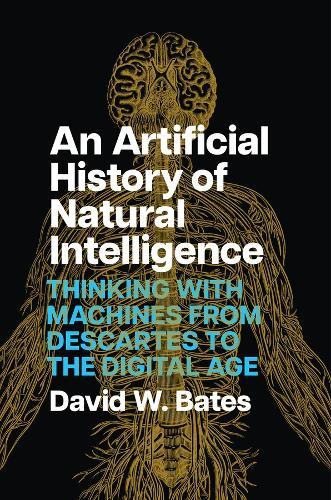
A new history of human intelligence that argues that humans know themselves by knowing their machines. We imagine that we are both in control of and controlled by our bodies—autonomous and yet automatic. This entanglement, according to David W. Bates, emerged in the seventeenth century when humans first built and compared themselves with machines. Reading varied thinkers from Descartes to Kant to Turing, Bates reveals how time and time again technological developments offered new ways to imagine how the body's automaticity worked alongside the mind's autonomy. Tracing these evolving lines of thought, An Artificial History of Natural Intelligence offers a new theorization of the human as a being that is dependent on technology and produces itself as an artificial automaton without a natural, outside origin.
Full Product Details
Author: David W. Bates
Publisher: The University of Chicago Press
Imprint: University of Chicago Press
Dimensions:
Width: 15.20cm
, Height: 3.00cm
, Length: 22.90cm
Weight: 0.513kg
ISBN: 9780226849140
ISBN 10: 0226849147
Pages: 408
Publication Date: 26 February 2026
Audience:
Professional and scholarly
,
Professional & Vocational
Format: Paperback
Publisher's Status: Active
Availability: Manufactured on demand

We will order this item for you from a manufactured on demand supplier.
Reviews
""Historically astute and philosophically brilliant, this is the most ambitious, original, and important book on human-machine relations in thirty years. Bates surveys the entirety of the modern tradition since Descartes to demonstrate that there has never been a 'natural intelligence' to contrast with artificial intelligence and offers one convincing interpretation after another to force the reader to rework basic assumptions about technology, philosophy, and humanity. This is a tremendous achievement--intellectual history at its best.""--Stefanos Geroulanos, New York University ""An impressive and important book. Readers will learn much from the author's sensitive and insightful readings of the scientific and philosophical literature . . . But that does not mean that it is only for academic readers. The topic is too important. . . . As David W. Bates shows, we cannot remove ourselves from the world of technology; it is our world. But we can try to guide its evolution to protect the things we value. This is something we all need to think about, and An Artificial History of Natural Intelligence provides essential tools for the task.""-- ""Times Literary Supplement"" ""As new forms of artificial intelligence throw us into turmoil, Bates invites us to think through the ever-evolving relations between human and humanish. Deftly weaving together cognitive science, intellectual history, and philosophy, he shows that we have for centuries measured ourselves against our self-simulating machines and reasserted our existence in the gap between the natural world (which constitutes us) and the artificial (which we constitute). It is the perfect moment for this book.""--Jessica Riskin, Stanford University
“An impressive and important book. Readers will learn much from the author’s sensitive and insightful readings of the scientific and philosophical literature . . . But that does not mean that it is only for academic readers. The topic is too important. . . . As David W. Bates shows, we cannot remove ourselves from the world of technology; it is our world. But we can try to guide its evolution to protect the things we value. This is something we all need to think about, and An Artificial History of Natural Intelligence provides essential tools for the task.” * Times Literary Supplement * “Historically astute and philosophically brilliant, this is the most ambitious, original, and important book on human-machine relations in thirty years. Bates surveys the entirety of the modern tradition since Descartes to demonstrate that there has never been a ‘natural intelligence’ to contrast with artificial intelligence and offers one convincing interpretation after another to force the reader to rework basic assumptions about technology, philosophy, and humanity. This is a tremendous achievement—intellectual history at its best.” -- Stefanos Geroulanos, New York University “As new forms of artificial intelligence throw us into turmoil, Bates invites us to think through the ever-evolving relations between human and humanish. Deftly weaving together cognitive science, intellectual history, and philosophy, he shows that we have for centuries measured ourselves against our self-simulating machines and reasserted our existence in the gap between the natural world (which constitutes us) and the artificial (which we constitute). It is the perfect moment for this book.” -- Jessica Riskin, Stanford University
“An impressive and important book. Readers will learn much from the author’s sensitive and insightful readings of the scientific and philosophical literature . . . But that does not mean that it is only for academic readers. The topic is too important. . . . As David W. Bates shows, we cannot remove ourselves from the world of technology; it is our world. But we can try to guide its evolution to protect the things we value. This is something we all need to think about, and An Artificial History of Natural Intelligence provides essential tools for the task.” * Times Literary Supplement * ""In this book, the history of human versus artificial intelligence begins with such figures as Descartes, Leibniz, and other thinkers of the seventeenth-century who wondered if thought could be mechanized and how machines could be designed to mimic human thought. . . Then come nineteenth-century developments with Babbage, Lovelace, machines with 'memory,' and early studies of the brain when a reductionist biology enters the picture. . . . Drawing on Wittgenstein, Turing, and Leroi-Gourhan, among many others, the author discusses the 'immateriality' of thought, ideas form cybernetics, and recent interpretations of the mind-body problem."" * Choice * “Historically astute and philosophically brilliant, this is the most ambitious, original, and important book on human-machine relations in thirty years. Bates surveys the entirety of the modern tradition since Descartes to demonstrate that there has never been a ‘natural intelligence’ to contrast with artificial intelligence and offers one convincing interpretation after another to force the reader to rework basic assumptions about technology, philosophy, and humanity. This is a tremendous achievement—intellectual history at its best.” -- Stefanos Geroulanos, New York University “As new forms of artificial intelligence throw us into turmoil, Bates invites us to think through the ever-evolving relations between human and humanish. Deftly weaving together cognitive science, intellectual history, and philosophy, he shows that we have for centuries measured ourselves against our self-simulating machines and reasserted our existence in the gap between the natural world (which constitutes us) and the artificial (which we constitute). It is the perfect moment for this book.” -- Jessica Riskin, Stanford University
Author Information
David W. Bates is professor of rhetoric at the University of California, Berkeley. He is the author of three books, including Enlightenment Aberrations: Error and Revolution in France.