Overview
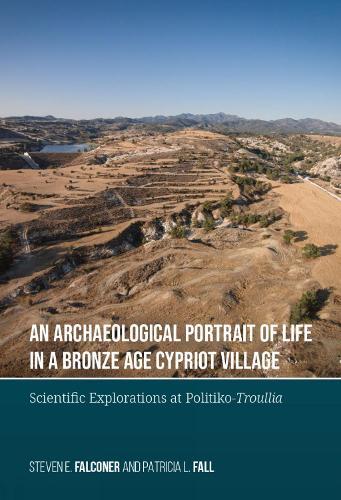
Archaeological research conducted at Politko-Troullia, Cyprus offers a portrait of life in a prehistoric Cypriot village during the formative centuries preceding the first cities on the island. We tell the story of an international team of university undergraduates, graduate students, professional staff, and professors who lived and worked together to discover how people lived in the Cypriot countryside 4000 years ago. For about six weeks each year between 2004 and 2019, project members dedicated themselves from sunrise to sunset to the recovery and analysis of the archaeological and ecological remains left behind by Bronze Age Cypriots, illuminating the intimate details of daily life in antiquity. The evidence from Politiko-Troullia highlights the emergence of Cypriot community identity as a key element in the development of Cypriot urbanized civilization. Stylized human plank figures and a multitude of butchered deer bones, associated with concentrated evidence of spinning, weaving, and dying, provide compelling evidence for celebration of communal identity through feasting, and social relations conveyed by iconography and textiles. Metallurgical evidence across the settlement suggests that backyard copper smelting and casting was virtually ubiquitous in the households of Politiko-Troullia. Scientific analyses of plant and animal remains portray intensive orchard cultivation, and sheep and goat herding on adjacent hillsides, accompanied by hunting of feral pigs and wild Mesopotamian fallow deer in the Troodos Mountain foothills. Radiocarbon dating defines the lifespan of Troullia between about 2050 and 1900 BCE and establishes the timing of major landscape impacts just after 2000 BCE, when the settlement shifted upslope and abandoned its well in response to accentuated local erosion and downcutting. Thus, the archaeological exploration of Politiko-Troullia offers a dramatic case study of life in a pre-urban Cypriot community as its inhabitants responded to their changing environment and moulded the social foundations of ancient Cypriot civilization.
Full Product Details
Author: Steven E. Falconer ,
Patricia L. Fall
Publisher: Sidestone Press
Imprint: Sidestone Press
ISBN: 9789464263688
ISBN 10: 9464263687
Pages: 90
Publication Date: 31 January 2026
Audience:
Professional and scholarly
,
Professional & Vocational
Format: Hardback
Publisher's Status: Active
Availability: In Print

This item will be ordered in for you from one of our suppliers. Upon receipt, we will promptly dispatch it out to you. For in store availability, please contact us.
Author Information
Steve Falconer is a Professor in the Department of Anthropology at the University of North Carolina at Charlotte, USA. His archaeological studies focus on the rise and collapse of civilization in the Eastern Mediterranean and Middle East. His work particularly explores the roles of rural communities during the growth and periodic abandonment of Bronze Age cities. Steve has authored nearly 80 publications and served as a Fulbright Scholar in Cyprus during 2023-2024. Pat Fall is a Professor in the Department of Earth, Environmental and Geographical Sciences at the University of North Carolina at Charlotte, USA. As a paleoecologist, her landscape studies investigate local and regional shifts in vegetation and land use triggered by climate change and human impacts. She conducts research in Polynesia and the Caribbean, as well as the Mediterranean and Middle East. Pat has authored nearly 100 publications, including articles in the Proceedings of the United States Academy of Sciences and in Nature Ecology and Evolution.