Overview
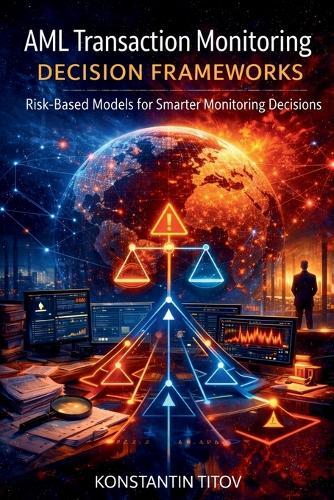
AML Transaction Monitoring Decision Frameworks Risk-Based Models for Smarter Monitoring Decisions Most transaction monitoring programs generate alerts. Very few generate consistent, defensible decisions. AML Transaction Monitoring Decision Frameworks is not an exam-prep guide and not a collection of generic red flags. It is a structured exploration of how modern monitoring programs should think, design, and decide. This book addresses the real operational challenge inside financial institutions: how to translate risk appetite, product exposure, customer behavior, and geographic complexity into clear monitoring logic that survives audit, QA review, and regulatory scrutiny. Inside, readers will explore: - How to move from alert-chasing to exposure-based thinking - Why customer risk labels alone fail without product and capability mapping - The hidden weaknesses in threshold-driven monitoring - How speed, opacity, reach, and reversibility shape abuse paths - The difference between model logic and defensible decision logic - How to build consistent escalation standards across teams - Why inconsistent reasoning-not missed criminals-is the true regulatory risk Rather than focusing on surface-level typologies, this book dives into the architecture behind monitoring systems: Risk layering (inherent risk, behavioral risk, control risk) Product capability analysis and abuse path identification Decision criteria design that reduces subjectivity Segmentation discipline and threshold strategy Governance alignment between model owners, analysts, and QA Each chapter challenges common assumptions that quietly weaken monitoring programs-such as equating high alert volume with strong control, or treating ""plausible"" explanations as evidence. The central premise is simple but uncomfortable: An alert is not proof of suspicion. It is a measurement event. A strong monitoring program is defined not by how many alerts it clears or how many SARs it files, but by whether its decisions are consistent, documented, risk-aligned, and defensible under pressure. This book is written for: - Transaction monitoring analysts seeking to understand the ""why"" behind alert logic - Senior analysts and team leads responsible for escalation decisions - QA and validation professionals reviewing case consistency - AML managers redesigning monitoring frameworks - Compliance leaders strengthening governance and defensibility It is particularly valuable for professionals working in banks, fintech platforms, payment institutions, correspondent banking environments, and cross-border transaction ecosystems. This is not a checklist manual. It is a discipline manual. Readers will walk away with a clearer mental model of how monitoring systems should be structured, how decision criteria should be defined, and how to reduce operational noise without creating blind spots. In environments where regulatory expectations continue to rise and financial crime typologies evolve rapidly, monitoring programs must mature beyond throughput metrics and reactive tuning. They must become coherent systems of risk-based judgment. AML Transaction Monitoring Decision Frameworks provides the conceptual foundation and operational clarity required to make that transition. Built for real monitoring floors. Designed for modern financial crime operations.
Full Product Details
Author: Konstantin Titov
Publisher: Independently Published
Imprint: Independently Published
Volume: 2
Dimensions:
Width: 15.20cm
, Height: 0.90cm
, Length: 22.90cm
Weight: 0.218kg
ISBN: 9798249880460
Pages: 158
Publication Date: 25 February 2026
Audience:
General/trade
,
General
Format: Paperback
Publisher's Status: Active
Availability: Available To Order

We have confirmation that this item is in stock with the supplier. It will be ordered in for you and dispatched immediately.