Overview
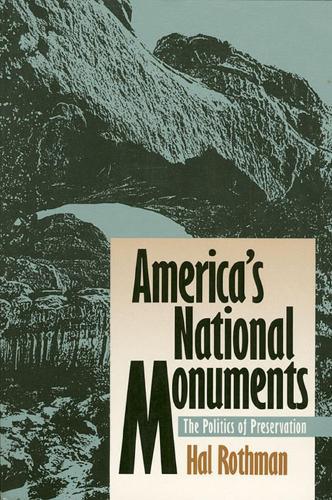
With the stroke of a pen, Theodore Roosevelt created the Grand Canyon National Monument in 1908. Without his quick action, commercial developers, already coveting this national treasure, would have invaded the canyon's floor. Not until eleven years later did Congress make it a national park, an act that provided funds for development and preservation unavailable to national monuments. According to Hal Rothman, the designation of national monument--decided at the discretion of the president--was the saving grace for many natural and archaeologically significant sites as debates on national park designations languished in Congress. But lacking sufficient financial backing, national monuments inevitably ended up taking a back seat to the national park system in the early twentieth century. Looking at the history of the national monuments, from the passage of the Antiquities Act of 1906--allowing for presidential designation of monuments--to the present, Rothman traces the evolution of federal preservation. He shows how laws, policies, personalities, personal and bureaucratic rivalries, and a changing cultural climate affected preservation efforts. And he illustrates how the national park system has functioned and changed over the years as public officials have tried to implement federal policy at the grassroots level. The Antiquities Act, he contends, has been undervalued and ignored by contemporary observers and historians. In fact, he demonstrates, it is the most important piece of preservation legislation ever enacted by the U.S. government. Without it, many significant sites would have been destroyed as a result of congressional inertia and indifference. Rothman examines the evolution of this vital legislation, originally designed to preserve archaeological sites in the Southwest but later also used to maintain other significant prehistoric, historic, and natural features. He explains how the act became less significant as New Deal financing became available for the park system in the 1930s; how expansion and reorganization of the National Park Service brought more money and status to national monuments; and how, by the 1960s, national monuments had been integrated into the modern management system for park areas. Set in the context of the regulatory century, this book offers important new insights about how the American past has been preserved and packaged for the public.
Full Product Details
Author: Hal Rothman
Publisher: University Press of Kansas
Imprint: University Press of Kansas
Dimensions:
Width: 15.10cm
, Height: 1.80cm
, Length: 22.70cm
Weight: 0.426kg
ISBN: 9780700606726
ISBN 10: 0700606726
Pages: 280
Publication Date: 30 April 1994
Audience:
College/higher education
,
Undergraduate
,
Postgraduate, Research & Scholarly
Format: Paperback
Publisher's Status: Active
Availability: Manufactured on demand

We will order this item for you from a manufactured on demand supplier.
Reviews
-It is high time that a historian analyzed the role of the Antiquities Act of 1906 as a tool for historic preservation. This story is replete with heroes and villains (or at least obstructionists). It is a judicious view of the debates over the fate of our public lands.---Charles B. Hosmer, Jr., in Pennsylvania Magazine of History and Biography -Rothman makes a persuasive case for giving the monuments their earned place in the history of preservation. He has a particular talent for choosing revealing case studies.---Patricia Nelson Limerick in the Journal of Interdisciplinary History -No one interested in the national park system, the national monuments, or the history of archaeology can afford to ignore this book--or will want to.---Stephen J. Pyne in Pacific Northwest Quarterly -Rothman has full comprehension of the environmental movement and deftly weaves the history of the national monuments into the unfolding of the bigger story. A major work for all interested in the environmental and historic preservation movements.---Melody Webb in the Journal of Arizona History It is high time that a historian analyzed the role of the Antiquities Act of 1906 as a tool for historic preservation. This story is replete with heroes and villains (or at least obstructionists). It is a judicious view of the debates over the fate of our public lands. --Charles B. Hosmer, Jr., in Pennsylvania Magazine of History and Biography Rothman makes a persuasive case for giving the monuments their earned place in the history of preservation. He has a particular talent for choosing revealing case studies. --Patricia Nelson Limerick in the Journal of Interdisciplinary History No one interested in the national park system, the national monuments, or the history of archaeology can afford to ignore this book--or will want to. --Stephen J. Pyne in Pacific Northwest Quarterly Rothman has full comprehension of the environmental movement and deftly weaves the history of the national monuments into the unfolding of the bigger story. A major work for all interested in the environmental and historic preservation movements. --Melody Webb in the Journal of Arizona History
It is high time that a historian analyzed the role of the Antiquities Act of 1906 as a tool for historic preservation. This story is replete with heroes and villains (or at least obstructionists). It is a judicious view of the debates over the fate of our public lands. --<b>Charles B. Hosmer, Jr.</b>, in <i>Pennsylvania Magazine of History and Biography</i> Rothman makes a persuasive case for giving the monuments their earned place in the history of preservation. He has a particular talent for choosing revealing case studies. --<b>Patricia Nelson Limerick</b> in the <i>Journal of Interdisciplinary History</i> No one interested in the national park system, the national monuments, or the history of archaeology can afford to ignore this book--or will want to. --<b>Stephen J. Pyne</b> in <i>Pacific Northwest Quarterly</i> Rothman has full comprehension of the environmental movement and deftly weaves the history of the national monuments into the unfolding of the bigger story. A major work for all interested in the environmental and historic preservation movements. --<b>Melody Webb</b> in the <i>Journal of Arizona History</i>
It is high time that a historian analyzed the role of the Antiquities Act of 1906 as a tool for historic preservation. This story is replete with heroes and villains (or at least obstructionists). It is a judicious view of the debates over the fate of our public lands.--Charles B. Hosmer, Jr., in Pennsylvania Magazine of History and BiographyRothman makes a persuasive case for giving the monuments their earned place in the history of preservation. He has a particular talent for choosing revealing case studies.--Patricia Nelson Limerick in the Journal of Interdisciplinary History No one interested in the national park system, the national monuments, or the history of archaeology can afford to ignore this book--or will want to.--Stephen J. Pyne in Pacific Northwest Quarterly Rothman has full comprehension of the environmental movement and deftly weaves the history of the national monuments into the unfolding of the bigger story. A major work for all interested in the environmental and historic preservation movements.--Melody Webb in the Journal of Arizona History
-It is high time that a historian analyzed the role of the Antiquities Act of 1906 as a tool for historic preservation. This story is replete with heroes and villains (or at least obstructionists). It is a judicious view of the debates over the fate of our public lands.---Charles B. Hosmer, Jr., in Pennsylvania Magazine of History and Biography -Rothman makes a persuasive case for giving the monuments their earned place in the history of preservation. He has a particular talent for choosing revealing case studies.---Patricia Nelson Limerick in the Journal of Interdisciplinary History -No one interested in the national park system, the national monuments, or the history of archaeology can afford to ignore this book--or will want to.---Stephen J. Pyne in Pacific Northwest Quarterly -Rothman has full comprehension of the environmental movement and deftly weaves the history of the national monuments into the unfolding of the bigger story. A major work for all interested in the environmental and historic preservation movements.---Melody Webb in the Journal of Arizona History