Overview
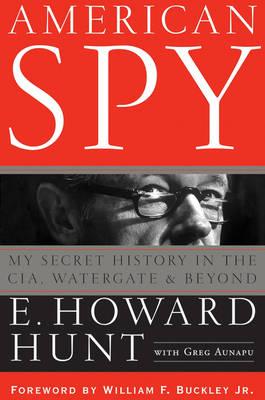
A legendary CIA operative and central figure in the Watergate scandal at last tells his story World War II covert agent E. Howard Hunt joined the CIA soon after its inception, becoming one of its most valuable operatives until his retirement in 1970. He blazed a trail for the agency in Latin America, helping to orchestrate the successful 1954 coup in Guatemala as well as the 1961 Bay of Pigs invasion of Cuba, which ended in disaster after an ill-fated decision by President John F. Kennedy. During the Nixon administration, he worked with the White House Special Investigations Unit (aka the ""plumbers""). In the aftermath of the Pentagon Papers leak, he masterminded the burglary of Daniel Ellsberg's psychiatrist's office in 1971, and, with G. Gordon Liddy, he organized the break-in at the Democratic National Committee's Watergate headquarters in 1972. Hunt was ultimately convicted of burglary, conspiracy, and wiretapping and served 33 months in prison. Now in his late eighties, Hunt looks back over his storied career, revealing what really happened and debunking the many rumors that have swirled around him. Writing with his characteristic salty wit, he brings to life his exploits in the CIA, offering surprising revelations about the agency's Latin American operations and its masterly manipulation of politics and the media in the U.S. He details the ""black bag jobs"" of the White House plumbers, explains why he agreed to participate in the Watergate burglary even though he thought it was a bad idea and sheds new light on the aftermath of the break-in. He sets the record straight on rumors about his first wife's death and accusations that have linked him to the JFK assassination and the George Wallace shooting. And finally, he offers an insider's advice on how the CIA must now reshape itself to regain its edge and help win the war on terrorism. E. Howard Hunt (Miami, FL) is author of more than 70 suspense novels. Greg Aunapu (Miami, FL) has reported for Time, People, and a variety of other national news media.
Full Product Details
Author: E. Howard Hunt ,
Greg Aunapu ,
William F. Buckley
Publisher: Turner Publishing Company
Imprint: John Wiley & Sons Inc
Dimensions:
Width: 16.40cm
, Height: 2.50cm
, Length: 23.50cm
Weight: 0.656kg
ISBN: 9780471789826
ISBN 10: 0471789828
Pages: 352
Publication Date: 01 February 2007
Audience:
Professional and scholarly
,
Professional & Vocational
Format: Hardback
Publisher's Status: Active
Availability: In Print

This item will be ordered in for you from one of our suppliers. Upon receipt, we will promptly dispatch it out to you. For in store availability, please contact us.
Reviews
WHEN I first met E. Howard Hunt in late 2003, I expected to find a grizzled Cold Warrior, and the man who invited me into his Miami home for a weekend of interviews did not disappoint. Yet even though I had spent months exchanging correspondence with him, I was surprised by his keen mind, disarmed by his wit and charm, and entertained by his erudition. Hunt died last month at 88, and his autobiography, American Spy, has been rushed into print. He had resigned himself to the idea that the first two words of his obituary would be Watergate conspirator, but in telling his own story, he reveals a life filled with more acts than F. Scott Fitzgerald could ever have imagined. During World War II, Hunt did stints in both the Navy and Army Air Force, and ultimately wound up attached to the Office of Strategic Services (OSS), which morphed into what would become the CIA, manned by a group of veterans with impeccable WASP credentials. With his Ivy League background and OSS record, Hunt fit right in among the Wall Street lawyers and investment bankers who were recruited for America's fledgling intelligence service. The old CIA hand is candid about his role - political, not military - in the 1954 coup against democratically elected Guatemalan president Jacobo Arbenz. The CIA was determined to thwart Soviet influence in Central America and considered the operation a ringing success, defenestrating (Hunt's word) Arbenz in short order. Unfortunately, the ease with which Arbenz was toppled further swelled the CIA's enlarging head, and laid the groundwork for the disastrous Bay of Pigs invasion seven years later. While Hunt generally adopts a tone of cynical bluster, his writing is shot through with rueful threads of reconsideration. While never apologizing for his actions, he does recognize their ramifications. Unlike many of the other principals in the Cuba Project - the agency's working name for the covert action against Castro-Hunt didn't lose his job, but he never recovered psychologically from the Bay of Pigs tragedy. If Hunt's look back on his life harbors any lingering bitterness, it stems from the 33 months he spent in prison for his role in the Watergate scandal, of which he writes about in great detail, offering new clarity on how the operation unfolded from the perspective of those who planned it. He had intended to plead guilty, to fall on his sword like a good soldier, but those who were equally guilty received leniency. With four children to support (his wife died in a 1972 plane crash), Hunt had no choice but to testify through several proceedings to cut his time short. It killed him that Nixon, whom he considered responsible for the whole affair, skipped away with a presidential pardon. The fifth act of Hunt's life was spent in 30 years of relative peace as the adored husband and father of a second family. (New York Post, February 25, 2007) Career spy, Watergate conspirator and prolific suspense novelist Hunt (Guilty Knowledge) collaborated with journalist Aunapu (Without a Trace) on this breezy, unrepentant memoir. Hunt (who died recently at 88) recalls the highlights of a long career, from WWII service with the fabled Office of Strategic Services (OSS)-predecessor of the CIA-to a career with the agency itself and a stint as a consultant to the Nixon White House. As a White House operative, Hunt specialized in dirty tricks and break-ins-including the Democratic National Committee's headquarters-and served 33 months in federal prison for his role in the Watergate scandal. He claims to have been a magnet for women, especially models, and shamelessly drops the names of the rich and powerful. He also played a key role in the disastrous Bay of Pigs operation. As for his role in Watergate, he blames his bulldog loyalty and concedes only that he and his fellow conspirators did the wrong things for the right reasons. In a postscript, Hunt urges reforming the beleaguered CIA in the image of the wartime OSS and its daring amateurs. Hunt's nostalgic memoir breaks scant new ground in an already crowded field. (Apr.) (Publishers Weekly, February 5, 2007)
WHEN I first met E. Howard Hunt in late 2003, I expected to find a grizzled Cold Warrior, and the man who invited me into his Miami home for a weekend of interviews did not disappoint. Yet even though I had spent months exchanging correspondence with him, I was surprised by his keen mind, disarmed by his wit and charm, and entertained by his erudition. Hunt died last month at 88, and his autobiography, ""American Spy,"" has been rushed into print. He had resigned himself to the idea that the first two words of his obituary would be ""Watergate conspirator,"" but in telling his own story, he reveals a life filled with more acts than F. Scott Fitzgerald could ever have imagined. During World War II, Hunt did stints in both the Navy and Army Air Force, and ultimately wound up attached to the Office of Strategic Services (OSS), which morphed into what would become the CIA, manned by a group of veterans with impeccable WASP credentials. With his Ivy League background and OSS record, Hunt fit right in among the Wall Street lawyers and investment bankers who were recruited for America's fledgling intelligence service. The old CIA hand is candid about his role - political, not military - in the 1954 coup against democratically elected Guatemalan president Jacobo Arbenz. The CIA was determined to thwart Soviet influence in Central America and considered the operation a ringing success, ""defenestrating"" (Hunt's word) Arbenz in short order. Unfortunately, the ease with which Arbenz was toppled further swelled the CIA's enlarging head, and laid the groundwork for the disastrous Bay of Pigs invasion seven years later. While Hunt generally adopts a tone of cynical bluster, his writing is shot through with rueful threads of reconsideration. While never apologizing for his actions, he does recognize their ramifications. Unlike many of the other principals in the Cuba Project - the agency's working name for the covert action against Castro-Hunt didn't lose his job, but he ""never recovered psychologically from the Bay of Pigs tragedy."" If Hunt's look back on his life harbors any lingering bitterness, it stems from the 33 months he spent in prison for his role in the Watergate scandal, of which he writes about in great detail, offering new clarity on how the operation unfolded from the perspective of those who planned it. He had intended to plead guilty, to fall on his sword like a good soldier, but those who were equally guilty received leniency. With four children to support (his wife died in a 1972 plane crash), Hunt had no choice but to testify through several proceedings to cut his time short. It killed him that Nixon, whom he considered responsible for the whole affair, skipped away with a presidential pardon. The fifth act of Hunt's life was spent in 30 years of relative peace as the adored husband and father of a second family. (New York Post, February 25, 2007) Career spy, Watergate conspirator and prolific suspense novelist Hunt (Guilty Knowledge) collaborated with journalist Aunapu (Without a Trace) on this breezy, unrepentant memoir. Hunt (who died recently at 88) recalls the highlights of a long career, from WWII service with the fabled Office of Strategic Services (OSS)-predecessor of the CIA-to a career with the agency itself and a stint as a consultant to the Nixon White House. As a White House operative, Hunt specialized in dirty tricks and break-ins-including the Democratic National Committee's headquarters-and served 33 months in federal prison for his role in the Watergate scandal. He claims to have been a magnet for women, especially models, and shamelessly drops the names of the rich and powerful. He also played a key role in the disastrous Bay of Pigs operation. As for his role in Watergate, he blames his ""bulldog loyalty"" and concedes only that he and his fellow conspirators did ""the wrong things for the right reasons."" In a postscript, Hunt urges reforming the beleaguered CIA in the image of the wartime OSS and its ""daring amateurs."" Hunt's nostalgic memoir breaks scant new ground in an already crowded field. (Apr.) (Publishers Weekly, February 5, 2007)
Author Information
White House ""plumber"" E. HOWARD HUNT served as a covert operative for the CIA from 1950 until the 1970s, and participated in many of the agency's most secret missions, both abroad and in the United States. He is also the author of more than seventy spy novels. GREG AUNAPU is a nationally respected journalist, who worked as a freelancer for Time and People magazines for ten years, and has reported for many national news organizations. He is coauthor of two previous books, most recently, Without a Trace.