Overview
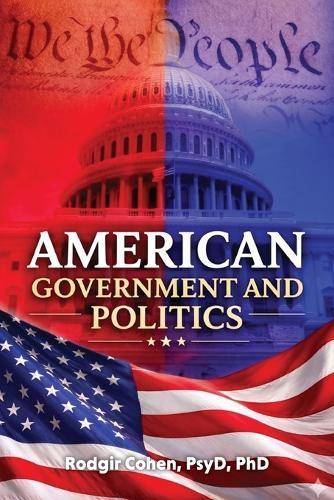
Democracy is not self-maintaining. It requires citizens who understand how power works, where it is located, how it can be checked, and what happens when the checks fail. American Government and Political Science is designed to give students precisely that understanding - not as a historical curiosity but as a living framework for making sense of the political world they inhabit right now.Fully updated to 2026, this textbook integrates the events and developments that have reshaped American government into every chapter. Students encounter the Supreme Court's 6-3 conservative supermajority and its landmark decisions in Dobbs v. Jackson (overruling Roe v. Wade), Bruen, Students for Fair Admissions v. Harvard, and Loper Bright (overruling the Chevron doctrine). They analyze the January 6th attack on the Capitol and its constitutional aftermath, including the presidential immunity ruling in Trump v. United States. They examine DOGE and Schedule F, the Russia-Ukraine war and its implications for NATO, the Israel-Gaza conflict, and the tariff agenda reshaping US trade policy. The fundamentals are learned through the events students are living through. Sixteen chapters cover: political ideologies from classical liberalism to national conservatism; the classical origins of Western political economy; American political culture and polarization; federalism and its 2026 stress tests; the Declaration of Independence, the Constitution, and originalism vs. living constitutionalism; civil liberties through the Roberts Court; civil rights from Brown through SFFA; Congress including January 6 and the 2023 Speaker crises; the executive branch including DOGE, Schedule F, and Trump v. United States; the judicial branch and the Roberts Court's landmark decisions; elections, polling, and the 2020 and 2024 presidential contests; bureaucracy and the post-Loper Bright regulatory landscape; political parties and interest groups including the MAGA transformation; media and political communication including X/Twitter under Musk, TikTok national security legislation, and AI disinformation; domestic policy from the safety net through the IRA and the Trump tariff agenda; and foreign policy from the Russia-Ukraine war through the China challenge and America First. This is a textbook that takes students seriously, presenting competing arguments at their strongest, connecting principles to concrete cases, and asking whether American democratic institutions are adequate to the challenges they face in 2026. About the Author: Dr. Rodgir Cohen holds the PsyD and PhD and teaches at Loma Linda University, California State University Fullerton, MiraCosta College, and serves as Conjoint Research Professor at Avondale University (Australia). He holds master's degrees in political science, Jewish studies, and religious studies.
Full Product Details
Author: Rodgir Cohen
Publisher: Humanities Academic Publishers
Imprint: Humanities Academic Publishers
Dimensions:
Width: 15.20cm
, Height: 1.90cm
, Length: 22.90cm
Weight: 0.435kg
ISBN: 9781988557618
ISBN 10: 1988557615
Pages: 324
Publication Date: 22 April 2026
Audience:
General/trade
,
General
Format: Paperback
Publisher's Status: Active
Availability: In Print

This item will be ordered in for you from one of our suppliers. Upon receipt, we will promptly dispatch it out to you. For in store availability, please contact us.
Author Information
Dr. Rodgir Cohen holds the Doctor of Psychology (PsyD) and the Doctor of Philosophy (PhD) and is an active scholar, educator, and author across multiple disciplines. He teaches at Loma Linda University, California State University Fullerton, and MiraCosta College, and serves as Conjoint Research Professor at Avondale University in Australia. He holds master's degrees in political science, Jewish studies, and religious studies. Dr. Cohen's academic work spans psychology, ethics, political science, and religion. He is the author of multiple textbooks and scholarly works. His interdisciplinary approach - grounding political analysis in ethical frameworks and psychological insight - distinguishes his pedagogy and his scholarship. Dr. Cohen's teaching spans traditional classroom instruction, online education, and professional development contexts.