Overview
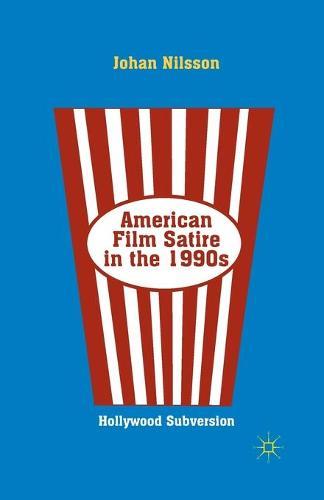
This study examines how a particular selection of films turned American cultural material of the 1990s into satirical experiences for viewers and finds that there are elements of resistance to norms and conventions in politics, to mainstream news channels and Hollywood, and to official American history already embedded in the culture.
Full Product Details
Author: J. Nilsson
Publisher: Palgrave Macmillan
Imprint: Palgrave Macmillan
Edition: 1st ed. 2013
Weight: 0.256kg
ISBN: 9781349453344
ISBN 10: 134945334
Pages: 178
Publication Date: 17 June 2013
Audience:
Professional and scholarly
,
Professional & Vocational
Format: Paperback
Publisher's Status: Active
Availability: Manufactured on demand

We will order this item for you from a manufactured on demand supplier.
Reviews
'As Nilsson notes in his introduction, satire in audiovisual media has received less scholarly attention than has literary satire. In response, he offers this study to further the investigation of how film satire works on stylistic and formal levels and of how historical context shapes aesthetic . . . Though most appropriate for undergraduate readers, this book will also be of interest to scholars interested in film satire. Summing Up: Recommended. Lower- and upper-division undergraduates; graduate students.' - CHOICE Nilsson studies the formal and stylistic 'devices' by which films signal to audiences that they are to be read as satire, thus asking the audience to participate in the generation of satirical meanings. The book is well-researched, well-written, and intelligently argued, and Nilsson raises a number of important questions that form the beginning of a more extensive critical discussion of this important topic. - M. Keith Booker, University of Arkansas, USA
'As Nilsson notes in his introduction, satire in audiovisual media has received less scholarly attention than has literary satire. In response, he offers this study to further the investigation of how film satire works on stylistic and formal levels and of how historical context shapes aesthetic . . . Though most appropriate for undergraduate readers, this book will also be of interest to scholars interested in film satire. Summing Up: Recommended. Lower- and upper-division undergraduates; graduate students.' - CHOICE ""Nilsson studies the formal and stylistic 'devices' by which films signal to audiences that they are to be read as satire, thus asking the audience to participate in the generation of satirical meanings. The book is well-researched, well-written, and intelligently argued, and Nilsson raises a number of important questions that form the beginning of a more extensive critical discussion of this important topic."" - M. Keith Booker, University of Arkansas, USA
'As Nilsson notes in his introduction, satire in audiovisual media has received less scholarly attention than has literary satire. In response, he offers this study to further the investigation of how film satire works on stylistic and formal levels and of how historical context shapes aesthetic ... Though most appropriate for undergraduate readers, this book will also be of interest to scholars interested in film satire. Summing Up: Recommended. Lower- and upper-division undergraduates; graduate students.' - CHOICE Nilsson studies the formal and stylistic 'devices' by which films signal to audiences that they are to be read as satire, thus asking the audience to participate in the generation of satirical meanings. The book is well-researched, well-written, and intelligently argued, and Nilsson raises a number of important questions that form the beginning of a more extensive critical discussion of this important topic. - M. Keith Booker, University of Arkansas, USA
Author Information
Johan Nilsson is a senior lecturer in the School of Humanities, Education and Social Sciences at Örebro University.