Overview
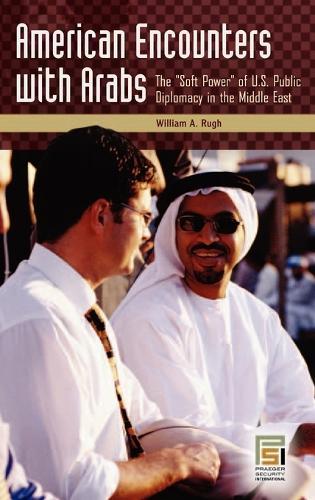
For sixty years, U.S. government officials have conducted public diplomacy programs to try to reach Arab public opinion—to inform, educate, and understand Arab attitudes. American public affairs officers have met serious challenges in the past, but Arab public criticism of the United States has reached unprecedented levels since September 11, 2001. Polls show that much of the negative opinion of the United States, especially in the Middle East, can be traced to dissatisfaction with U.S. foreign policy. Rugh, a retired career Foreign Service officer who twice served as ambassador to countries in the region, explains how U.S. government officials have dealt with key problem issues over the years, and he recommends ways that public diplomacy can better support and enhance U.S. national interests in the Middle East. This struggle for the hearts and minds of the Arab world, so crucial to the success of American efforts in post-occupation Iraq, is carried out through broadcasting, cultural contacts, and educational and professional exchanges. Rugh describes the difference between public diplomacy and propaganda. He points out that public diplomacy uses open means of communication and is truthful. Its four main components are explaining U.S. foreign policy to foreign publics; presenting them with a fair and balanced picture of American society, culture, and institutions; promoting mutual understanding; and advising U.S. policy makers on foreign attitudes. Public diplomacy supports the traditional diplomatic functions of official business between governments. Whereas diplomats from the United States deal with diplomats of foreign governments, public affairs officers deal with opinion leaders such as media editors, reporters, academics, student leaders, and prominent intellectuals and cultural personalities. Rugh provides an up-close-and-personal look at how public affairs officers do their jobs, how they used innovation in their efforts to meet the challenges of the past, and how they continue to do so in the post-September 11 era.
Full Product Details
Author: William A. Rugh
Publisher: Bloomsbury Publishing Plc
Imprint: Praeger Publishers Inc
Dimensions:
Width: 15.60cm
, Height: 1.40cm
, Length: 23.40cm
Weight: 0.514kg
ISBN: 9780275988173
ISBN 10: 0275988171
Pages: 240
Publication Date: 30 November 2005
Recommended Age: From 7 to 17 years
Audience:
General/trade
,
Professional and scholarly
,
General
,
Professional & Vocational
Format: Hardback
Publisher's Status: Active
Availability: Manufactured on demand

We will order this item for you from a manufactured on demand supplier.
Reviews
The book is a badly needed account of how the US has managed, and mismanaged, its public diplomacy with the Middle East, especially the Arab world. Rugh, a 31-year career officer with the US Information Agency (USIA), does an excellent job of illustrating the relationship between the tools of public diplomacy and the problems of interfacing with foreign audiences. The author focuses clearly on middle range theory with an emphasis on the policy issues. The presentation is organized along historical lines, with an initial general focus on the 1940s-50s and subsequent chapters devoted to each presidential era, concluding in mid-2005. The 2003 Iraq war and its aftermath exacerbated problems of public diplomacy, which began after USIA was dismantled in 1999 and its functions given over to the State Department. Despite this trend, the book cites several excellent personal efforts for public affairs officers, calls for more grounded efforts, and reminds the reader that public diplomacy is a complex process that depends not only on Washington officials but also on public diplomacy professionals who live abroad . . . managing a variety of programs. Highly recommended. General readers, upper-division undergraduates through practitioners. * Choice * Rugh, a retired career Foreign Service officer who served as ambassador to countries in the Middle East, explains key issues surrounding the US government's public diplomacy programs in the region, chronicling public diplomacy efforts from the Eisenhower presidency to the current administration. He provides a behind-the- scenes look at how public affairs officers do their jobs and how they have met the challenges of the past and the post-September 11th era. * Reference & Research Book News *
William Rugh performs a great and timely service in this outstanding volume. His history of American public diplomacy efforts in the Middle East is invaluable, and his prescriptions for the future are excellent. Anyone interested in how public diplomacy can improve America's relationship with the Arab and Islamic world should read this book. -Lee H. Hamilton Director, Woodrow Wilson International Center for Scholars; former Chair, House Committee on International Relations; and former co-chair of the 9/11 Commission
<p> The book is a badly needed account of how the US has managed, and mismanaged, its public diplomacy with the Middle East, especially the Arab world. Rugh, a 31-year career officer with the US Information Agency (USIA), does an excellent job of illustrating the relationship between the tools of public diplomacy and the problems of interfacing with foreign audiences. The author focuses clearly on middle range theory with an emphasis on the policy issues. The presentation is organized along historical lines, with an initial general focus on the 1940s-50s and subsequent chapters devoted to each presidential era, concluding in mid-2005. The 2003 Iraq war and its aftermath exacerbated problems of public diplomacy, which began after USIA was dismantled in 1999 and its functions given over to the State Department. Despite this trend, the book cites several excellent personal efforts for public affairs officers, calls for more grounded efforts, and reminds the reader that public diplomacy is
<p> The book is a badly needed account of how the US has managed, and mismanaged, its public diplomacy with the Middle East, especially the Arab world. Rugh, a 31-year career officer with the US Information Agency (USIA), does an excellent job of illustrating the relationship between the tools of public diplomacy and the problems of interfacing with foreign audiences. The author focuses clearly on middle range theory with an emphasis on the policy issues. The presentation is organized along historical lines, with an initial general focus on the 1940s-50s and subsequent chapters devoted to each presidential era, concluding in mid-2005. The 2003 Iraq war and its aftermath exacerbated problems of public diplomacy, which began after USIA was dismantled in 1999 and its functions given over to the State Department. Despite this trend, the book cites several excellent personal efforts for public affairs officers, calls for more grounded efforts, and reminds the reader that public diplomacy is a complex process that depends not only on Washington officials but also on public diplomacy professionals who live abroad . . . managing a variety of programs. Highly recommended. General readers, upper-division undergraduates through practitioners. - <p>Choice
Author Information
WILLIAM A. RUGH was a career Foreign Service officer with the U.S. Information Agency (1964-1995). He served as U.S. ambassador to Yemen and to the United Arab Emirates. He is the author of Arab Mass Media (Praeger, 2004) and the editor of Engaging the Arab and Islamic Worlds through Public Diplomacy (Public Diplomacy Council, 2004). He is a Trustee of the American University in Cairo, a Board Member and past President of AMIDEAST, an Associate of Georgetown's Institute for the Study of Diplomacy, an Adjunct Scholar of the Middle East Institute, and an Executive Committee member of the Public Diplomacy Council.