Overview
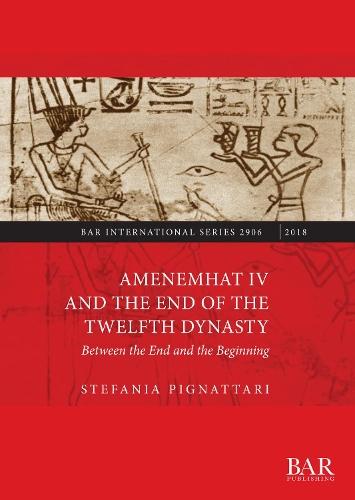
Amenemhat IV's short and poorly documented reign as penultimate Pharaoh of the Twelfth Dynasty presents an interesting subject for Egyptological research, as it marks a crucial moment in Egyptian history. Following the crisis of the First Intermediate Period and the great work of unification and innovation undertaken by the rulers of the Twelfth Dynasty, Egypt once again achieved great power and prosperity. However, with the Thirteenth Dynasty, the country's fate changed again, leading to the Second Intermediate Period, a phase that would shake the foundations of Egyptian society, and which paved the way to the New Kingdom. The purpose of this book is a comprehensive and integrated analysis of Amenemhat IV's activity in the context of this historical period. In defining Amenemhat IV's role, and establishing whether his reign represented an element of continuity or of fracture, the author seeks to clarify the causes and mechanisms that led to the end of the Twelfth Dynasty.
Full Product Details
Author: Stefania Pignattari
Publisher: BAR Publishing
Imprint: BAR Publishing
Weight: 0.909kg
ISBN: 9781407316352
ISBN 10: 1407316354
Pages: 228
Publication Date: 28 September 2018
Audience:
Professional and scholarly
,
Professional & Vocational
Format: Paperback
Publisher's Status: Active
Availability: Available To Order 
We have confirmation that this item is in stock with the supplier. It will be ordered in for you and dispatched immediately.
Table of Contents
"List of Illustrations List of Abbreviations Abstract Introduction A note on chronology Part 1. Origin and Ascent 1. Amenemhat IV and the Family of Amenemhat III 1.1. Neferuptah 1.2. Sobekneferu 1.3. Hetepti 2. Succession and Coregency 2.1. Succession and Rise to the Throne 2.1.1. Part I 2.1.2. Part II 2.2. Co-regency Part 2. Analysis of the Reign 3. The Administration 3.1. Part 1: General Features 3.1.1. The complexity of administration as a theme/topic and the peculiarity of the second half of the Twelfth Dynasty: clarifi cations and methodological premises 3.1.2. The reign of Amenemhat IV 3.1.3. The two branches of administration: the Vizier and the Treasurer 3.1.3.1. The Bureau of the Vizier 3.1.3.2. The Treasury 3.1.4. The army 3.1.5. Papyri 3.1.6 List of administrative officials 3.2. Prosopographical Analysis 3.3. Conclusions 3.4. Prosopographical List 3.5. List of Administrative Titles 4. Activity in the Nile Valley 4.1. The Delta 4.2. The Memphis Area 4.3. Dahshur 4.4. El-Lisht 4.5. Abydos 4.6. The Theban Area 4.7. Aswan 4.8. Middle Egypt 4.9. Fayyum 5. The Borderlands 5.1. Nubia 5.2. Wadi el-Hudi 5.3. Mersa Gawasis 5.4. Sinai 6. The Foreign Lands 6.1. Syria 6.2. Canaan 6.3. Asians in Egypt 6.4. Sinai 7. Amenemhat IV between Religion and Policy 7.1. Atum 7.2. Gods and Goddesses 7.3. The Decorative Cycle 7.4. Structural parallels 7.5. The Position of Gods and Goddesses Part 3. The End of the Kingdom 8. The Tomb 9. Amenemhat IV and the End of the Dynasty Conclusion: Fayyum: ""la grande aff aire de la monarchie"" Part 4. Documentary Evidence of Amenemhat IV's Reign Group A. Documents from Egypt Sculpture Document 1: Sphinx, National Museum, Alexandria Document 2: Sphinx, National Museum, Alexandria Document 3: Sphinx JE 25775, Egyptian Museum, Cairo Document 4: Block JE 42906, Egyptian Museum, Cairo Document 5: Block (MMA 22.1.12a, b), Metropolitan Museum of Arts, New York Document 6: Pillar Document 7: Statue (1117), Ägyptisches Museum und Papyrussammlung, Berlin Document 8: Medinet Madi Temple, Fayyum Document 9: Base of Sphinx n. 17, Store-room of the Pyramids, Giza Private Sculpture Document 10: Stela 645[2435], National Museum, Rio de Janeiro Document 11: Stela BM 258 (stele n. 219), British Museum, London Document 12: Stela C7, Musée du Louvre, Paris Document 13: Stela Stuttgart 11, Ägyptische Sammlung der Universität, Tübingen Document 14: Block BMFA 1971.403, Museum of Fine Arts, Boston Document 15: Stela 2579, Egyptian Museum, Florence Mobilia Document 16: Toilet Box MMA 26.7.1438, Metropolitan Museum of Arts, New York Document 17: Plaque BM 22879, British Museum, London Graffiti Document 18: Graffiti Glyptics Document 19: Scarab Document 20: Scarab UC 11332, Petrie Museum, London Document 21: Scarab, Musée du Louvre, Paris Document 22: Scarab Document 23: Cylinder Seal 44. 12362, Brooklyn Museum Document 24: Cylinder Seal Private Glyptics Document 25: Seal BM 32568, British Museum, London Document 26: Seal Impression Document 27: Seal Document 28: Seal Document 29: Seal Glyptics of uncertain attribution Document 30: SCARAB Document 31: CYLINDER SEAL Document 32: CYLINDER SEAL Papyri from el-Lahun (Kahun) Letters Document 33: p.Kahun VI. 4 (l. 28), verso (UC 32201) Document 34: p.Kahun III. 4 (l. 32), verso (UC 32205) Document 35: MODEL LETTER, p.Kahun III. 2, recto (letter 1) (UC 32196) Accounts Document 36: p.Kahun, VI. 12 (l. 8), verso (UC 32158; fr. UC 32148B and UC 32150A) Document 37: p.Kahun, LV. 8 (r. 34), recto (UC 32194) Document 38: p.Kahun VI. 21 (ll. 39; 40; 41; 44), verso (UC 32269) Document 39: p.Kahun XLIV. 1 lr. 32), recto (UC 32175) Legal Papyri Document 40: WILL (?) OF WAH, p.Kahun, I. 1 (l. 6), recto (UC 32058) Group B. Documents from the Borderlands Nubia Document 1: Seal Impression Document 2: Nile level graffiti Document 3: Nile level graffiti Document 4: Nile level graffiti Document 5: Nile level graffiti Document 6: Nile level graffiti Sinai Document 7: Stela of Sa-Sopedu Document 8: Rock Inscription of Khuy Document 9: Rock inscription of Senebu Document 10: Rock inscription of Senaa-ib Document 11: Stela of Sobekhotep (?) Document 12: Stela of Djaf-Horemsaf Document 13: Stela of Djaf-Horemsaf Document 14: Stela of Djaf-Horemsaf (JE 38547), Egyptian Museum, Cairo Document 15: Stela with Off ering Table Document 16 (a) and (b): Wall inscription Document 17 (a) and (b): Scene and wall inscription Document 18: Scene and wall inscription Document 19: Fragment of decoration Document 20: Stela of Hekhaty-Seneby Document 21: Wall inscription Document 22: Column inscription, Egyptian Museum, Cairo Document 23: Fragment of an inscribed architrave Document 24: Edge of a stela Document 25: Fragment of stela Document 26: Fragmentary off ering table JE 65465, Egyptian Museum, Cairo Document 27: Fragment of stele Document 28: Fragment of architrave Mersa Gawasis Document 29: Wooden box WG 21, trench WG 32, U. S. 25. Document 30: Stela (n. 2), WG 146, trench WG 32, niche 2 Document 31:"
Reviews
'All scholars and students of ancient Egypt, and on the institution of kingship in general, will be most interested in this volume.' Prof. Ronald J. Leprohon, University of Toronto 'The complex issues involving the royal women and royal succession treated here are important and haven't really been considered to the same extent by other authors. The evidence from Medinet Madi is new and compelling. . Pignattari does a very good job of using all available sources to draw out information about a period for which evidence is often lacking.' Dr Denise Doxey, Museum of Fine Arts, Boston
'All scholars and students of ancient Egypt, and on the institution of kingship in general, will be most interested in this volume.' Prof. Ronald J. Leprohon, University of Toronto 'The complex issues involving the royal women and royal succession treated here are important and haven't really been considered to the same extent by other authors. The evidence from Medinet Madi is new and compelling. . Pignattari does a very good job of using all available sources to draw out information about a period for which evidence is often lacking.' Dr Denise Doxey, Museum of Fine Arts, Boston
Author Information
Stefania Pignattari is an archaeologist and an independent researcher. She studied at Bologna University and holds a PhD in Egyptology from Pisa University.
Tab Content 6
Author Website:
Countries Available
All regions
|