Overview
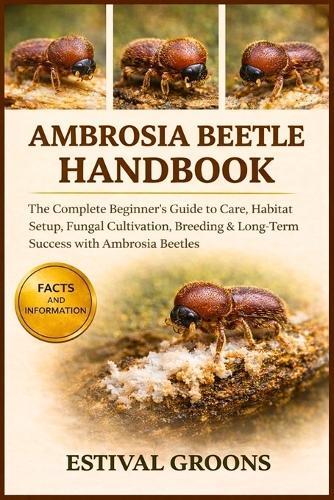
Introduction to the Ambrosia Beetle Species Overview The ambrosia beetle stands as one of the most fascinating and misunderstood insect groups in the natural world, occupying ecological roles that stretch far beyond what their small size might suggest. These beetles belong to a collection of species unified not by dramatic appearance but by their extraordinary biological partnership with the fungi they cultivate. Rather than feeding directly on the wood they bore into, ambrosia beetles nourish themselves on fungal gardens grown within the tunnels they carve. This relationship, refined over millions of years, has created a lineage unlike any other-one in which the beetle and its fungus form a near-perfect, interdependent system of survival. Understanding the ambrosia beetle begins with appreciating its evolutionary ingenuity. Unlike typical wood-borers, which digest cellulose or feed on decaying plant matter, these beetles evolved a strategy that bypasses the chemical complexity of wood digestion altogether. By relying on the rich, protein-filled fungal cultures they farm inside trees, ambrosia beetles gain access to a steady, self-generated food source. This innovation allowed them to expand into habitats across the world, from tropical forests to temperate woodlands, colonizing environments where other insect groups struggled to survive. Identification and Key Traits Ambrosia beetles are not recognized by bright colors or ornamented forms but by their compact, cylindrical bodies adapted for entering tight spaces. Their exoskeletons are typically dark brown, black, or reddish, blending seamlessly into the bark and wood they inhabit. Despite their modest size-often just a few millimeters long-they possess structures perfectly refined for excavation. Short, powerful legs support the body as it pushes deeper into wood grain, while hardened mandibles allow them to chip through bark and establish tunnels with surprising efficiency. One of the most identifiable features of ambrosia beetles is the way they carry their fungal spores. Specialized pouches known as mycangia store microscopic fungal cells, transporting them safely as the beetle searches for new host trees. These mycangia differ from species to species, sometimes forming simple pockets and other times evolving into intricate cavities capable of housing distinct fungal strains. When the beetle begins a new tunnel, these spores are deposited into the walls, germinating and spreading through the fresh wood to create the fungus-based food supply that sustains the colony. Their behavior further aids identification. Ambrosia beetles remain hidden for most of their lives, emerging only briefly to disperse or search for new host material. This secretive lifestyle means they are often discovered by their presence rather than their appearance-recognized through frass (fine wood dust) pushed out from small, round entrance holes in trees. Evolutionary Background and Adaptation The ambrosia beetle's evolutionary story is one of adaptation to a highly specialized niche. Millions of years ago, ancestral beetles attempting to colonize woody environments faced significant digestive challenges. Wood is tough, dry, and nutritionally poor for most animals. Instead of evolving complex enzymes or digestive processes, ambrosia beetles developed a symbiotic partnership with fungi capable of breaking down wood components into compounds the beetles could consume. Over time, this partnership deepened into complete dependence, forming a mutualistic system where both beetle and fungus rely on one another to survive.
Full Product Details
Author: Estival Groons
Publisher: Independently Published
Imprint: Independently Published
Dimensions:
Width: 15.20cm
, Height: 1.10cm
, Length: 22.90cm
Weight: 0.277kg
ISBN: 9798242388260
Pages: 202
Publication Date: 04 January 2026
Audience:
General/trade
,
General
Format: Paperback
Publisher's Status: Active
Availability: Available To Order

We have confirmation that this item is in stock with the supplier. It will be ordered in for you and dispatched immediately.