Overview
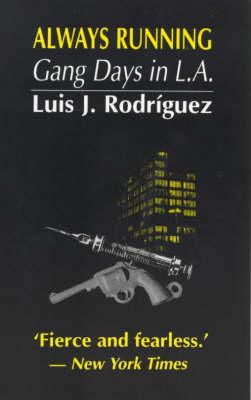
There has never been a more clear and compelling account of a gang member's life than Always Running, Luis J. Rodriguez's eloquent, impassioned, frighteningly vivid chronicle of his youth in Los Angeles in the late 60s and early 70s. Growing up in Watts and East L.A., Rodriguez joined his first gang at age 11 and was drawn into la vida loca - the crazy life. Gangs were how we wove something out of the threads of nothing, he remembers. By age 18, he was a veteran of gang warfare, police killings, drug overdoses, and suicides that had claimed 25 of his friends and had driven him and so many others to despair. In part, Rodriguez survived the violence and desperation of his youth by writing down his experiences. They were only woven into this astonishing book years later, when his son, Ramiro, joined a gang in Chicago where they now live. Always Running is packed with episode after episode of high drama, but within this honest and powerful depiction of social devastation, there is a father's impassioned message of understanding and hope to his son, and to thousands like him. Rodriguez's inspiring story should be read by anyone who cares about the future of children in America.
Full Product Details
Author: Luis J. Rodriguez
Publisher: Marion Boyars Publishers Ltd
Imprint: Marion Boyars Publishers Ltd
Edition: New edition
Dimensions:
Width: 12.80cm
, Height: 2.00cm
, Length: 22.00cm
ISBN: 9780714530130
ISBN 10: 0714530131
Pages: 260
Publication Date: 01 January 1996
Audience:
General/trade
,
General
Format: Paperback
Publisher's Status: Active
Availability: In Print

This item will be ordered in for you from one of our suppliers. Upon receipt, we will promptly dispatch it out to you. For in store availability, please contact us.
Reviews
Angry autobiography of a Mexican-American who survived the gang wars of the late 60's and early 70's. (Excerpts have appeared in The Los Angeles Tones, TriQuarterly, etc.) Nowadays, Rodriguez is a poet, editor, and publisher, but during his teenage years, he was a full-fledged participant in la vida loca ( the crazy life ), the barrio gang experience. He writes this memoir to awaken his son Ramiro to the dangers of the clicas before it's too late. For Rodriguez, childhood was a time of poverty and despair, in which his family's journey from Mexico to America brought memories that stay with me like a foul odor. His father, an unfeeling, unmoved intellectual, and his mother, full of fire, offered some stability - but not enough. School added nothing but incompetent teachers and violent playmates. By age 13, Rodriguez was tattooed, deep into drugs and sex, experienced in gang warfare. His life spiraled downward into a hell of armed robbery, paint-sniffing, heroin-shooting, attempted suicide. He bounced in and out of jail, fighting police who in the barrio...are just another gang. He took up boxing: I came to kill. I rushed up to my opponents and mowed them down. Then Rodriguez - by now enrolled in a new high school - discovered student activism. He became a student journalist, president of the Chicano Club, a spokesman for the Mexican-American student community. He began to write, won a literary contest, attended Cal State, and turned his life around. Looking ahead, Rodriguez sees a more severe and uncertain path for his son and other Latinos. Here, his ever-present political analysis, in which authorities exercise a genocidal level of destruction against expendable youth, may be too fueled by bitterness to persuade entirely, but his fiery portrait of youth caught in a dead-end system lingers in memory. A song of the streets, fortissimo. (Kirkus Reviews)