Overview
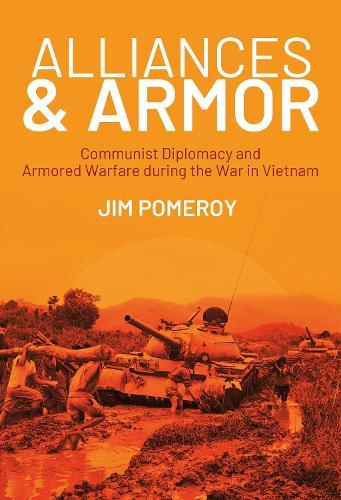
How diplomatic relations between North Vietnam and its benefactors, the People's Republic of China and the Soviet Union, affected PAVN strategy and tactics during the Vietnam War. The People's Army of Vietnamese's decision to utilize armor as part of its warfighting strategy was a product of various geopolitical factors that surrounded Hanoi during various parts of the Vietnam War. During the First Indochina War, the People's Republic of China (PRC) emerged as the foremost communist benefactor of North Vietnam. The Soviet Union however, largely stood by. While worried by the PRC's and Soviet Union's actions during the Geneva Conference of 1954, Hanoi still felt the need to maintain good relations with both countries. This was reinforced when the Sino-Soviet split occurred in 1956 and Hanoi was forced to walk a tight rope between Beijing and Moscow. As the United States escalated its war in Vietnam, Moscow (now under new leadership) sought to increase its material support for Hanoi. As the war progressed, Hanoi sought to fight larger battles against the Americans and their South Vietnamese allies. In order to fight larger battles, the PAVN needed more modern military equipment that only the Soviet Union could provide. This, paired with the chaos of the ongoing Cultural Revolution in China, led Hanoi to lean more towards Moscow in the latter years of the Vietnam War. As part of this newly blossomed relationship, Moscow began to furnish the PAVN with more modern weapons including Soviet armor. Initially, the PAVN's use of armor at Lang Vei (1968) and Laos (1971) was met with some success. However, in 1972, Hanoi panicked as the United States began to reach détente with Beijing and Moscow. This led to fears of another Geneva and thus lead Hanoi to pursue a rushed Easter Offensive in March 1972 which saw ill-trained PAVN tank crews fall prey to poor planning and bad strategy. This changed in 1975 when following the Paris Peace Accords and subsequent combined arms training in the Soviet Union, the PAVN victoriously drove its Soviet armor into Saigon. AUTHOR: Jim Pomeroy has a BA in History & Political Science from James Madison University and a Master's in History with a Master's Certificate in Strategic Studies from Texas Tech University. He has also worked in the U.S. House of Representatives as a Congressional staffer. He currently lives in Roanoke, VA.
Full Product Details
Author: Jim Pomeroy
Publisher: Casemate Publishers
Imprint: Casemate Publishers
ISBN: 9781636245362
ISBN 10: 1636245366
Pages: 174
Publication Date: 28 May 2025
Audience:
General/trade
,
General
Format: Hardback
Publisher's Status: Active
Availability: In Print

This item will be ordered in for you from one of our suppliers. Upon receipt, we will promptly dispatch it out to you. For in store availability, please contact us.
Reviews
""Jim Pomeroy's newest book provides a comprehensive understanding to key schisms and events within the communist world, shaping events on the battlefield. He painstakingly examines Vietnam's military history and diplomatic history and, in doing so, efficiently and effectively connects these important topics.""--Ken Rutherford, Professor of Political Science, James Madison University and co-founder of the Landmine Survivors Network, co-recipient of the 1997 Nobel Peace Prize as part of the global international campaign to ban landmines ""Alliances & Armor thoughtfully synthesizes the evolution of Hanoi's military strategy in the Vietnam War and beyond. It offers particularly trenchant insights on the shift to Soviet-style warfare during the latter stages of the conflict.""--Pierre Asselin, Professor of History and Dwight E. Stanford Chair in US Foreign Relations
""... could easily be assigned in seminars on Vietnam War history, Cold War alliances, or in a staff college course on doctrinal diffusion.""-- ""Military History Chronicles"" ""Pomeroy has made good use of North Vietnamese, Soviet, Chinese, and American sources and the extensive Texas Tech Virtual Vietnam Archive.""-- ""The VVA Veteran"" ""Jim Pomeroy's newest book provides a comprehensive understanding to key schisms and events within the communist world, shaping events on the battlefield. He painstakingly examines Vietnam's military history and diplomatic history and, in doing so, efficiently and effectively connects these important topics.""--Ken Rutherford, Professor of Political Science, James Madison University and co-founder of the Landmine Survivors Network, co-recipient of the 1997 Nobel Peace Prize as part of the global international campaign to ban landmines ""Jim Pomeroy's Alliances & Armor bridges the gaps between Cold War diplomacy and military operational history. With a firm grasp of multi-archival and secondary sources, Pomeroy provides a comprehensive look at the international issues that influenced Hanoi's decisions in the Second Indochina War in a concise and deftly written narrative. This is a strong addition to the voluminous literature of the war in Vietnam.""--Kelly Crager, Vietnam Center and Sam Johnson Vietnam Archive ""Alliances & Armor thoughtfully synthesizes the evolution of Hanoi's military strategy in the Vietnam War and beyond. It offers particularly trenchant insights on the shift to Soviet-style warfare during the latter stages of the conflict.""--Pierre Asselin, Professor of History and Dwight E. Stanford Chair in US Foreign Relations, San Diego State University ""Pomeroy vividly describes the evolution of Hanoi's army from guerrilla bands to tank-led offensives, a development intricately aligned with North Vietnam's turn toward the Soviet Union as the war progressed. Well-researched and hard-hitting, Alliances & Armor examines the process that led to the war's final scene: a North Vietnamese tank crashing through the main gate of South Vietnam's Independence Palace.""--Dr. George J. Veith, author of ""Black April: The Fall of South Vietnam, 1973-1975"" and ""Drawn Swords in a Distant Land: South Vietnam's Shattered Dreams"" ""When the Vietnam War is mentioned, visions of black pajama-clad jungle fighters come to mind. In truth, Hanoi won the war by employing large formations of tanks and infantry in conventional operations. In Alliances & Armor, James Pomeroy argues that there is a direct connection between diplomacy and tactics, maintaining that the evolving alliance between North Vietnam and the Soviet Union provided the impetus for Hanoi to shift from a Chinese 'people's war' to more Soviet-style conventional tactics. Impeccably documented and effectively argued, this book is an essential addition to the historiography of the Vietnam War; it is highly recommended for those wanting to understand how and why the war evolved over time.""--James H. Willbanks, PhD, Vietnam combat veteran and author of ""Abandoning Vietnam"" and ""A Raid Too Far""
""Pomeroy has made good use of North Vietnamese, Soviet, Chinese, and American sources and the extensive Texas Tech Virtual Vietnam Archive.""-- ""The VVA Veteran"" ""Jim Pomeroy's newest book provides a comprehensive understanding to key schisms and events within the communist world, shaping events on the battlefield. He painstakingly examines Vietnam's military history and diplomatic history and, in doing so, efficiently and effectively connects these important topics.""--Ken Rutherford, Professor of Political Science, James Madison University and co-founder of the Landmine Survivors Network, co-recipient of the 1997 Nobel Peace Prize as part of the global international campaign to ban landmines ""Jim Pomeroy's Alliances & Armor bridges the gaps between Cold War diplomacy and military operational history. With a firm grasp of multi-archival and secondary sources, Pomeroy provides a comprehensive look at the international issues that influenced Hanoi's decisions in the Second Indochina War in a concise and deftly written narrative. This is a strong addition to the voluminous literature of the war in Vietnam.""--Kelly Crager, Vietnam Center and Sam Johnson Vietnam Archive ""Alliances & Armor thoughtfully synthesizes the evolution of Hanoi's military strategy in the Vietnam War and beyond. It offers particularly trenchant insights on the shift to Soviet-style warfare during the latter stages of the conflict.""--Pierre Asselin, Professor of History and Dwight E. Stanford Chair in US Foreign Relations, San Diego State University ""Pomeroy vividly describes the evolution of Hanoi's army from guerrilla bands to tank-led offensives, a development intricately aligned with North Vietnam's turn toward the Soviet Union as the war progressed. Well-researched and hard-hitting, Alliances & Armor examines the process that led to the war's final scene: a North Vietnamese tank crashing through the main gate of South Vietnam's Independence Palace.""--Dr. George J. Veith, author of ""Black April: The Fall of South Vietnam, 1973-1975"" and ""Drawn Swords in a Distant Land: South Vietnam's Shattered Dreams"" ""When the Vietnam War is mentioned, visions of black pajama-clad jungle fighters come to mind. In truth, Hanoi won the war by employing large formations of tanks and infantry in conventional operations. In Alliances & Armor, James Pomeroy argues that there is a direct connection between diplomacy and tactics, maintaining that the evolving alliance between North Vietnam and the Soviet Union provided the impetus for Hanoi to shift from a Chinese 'people's war' to more Soviet-style conventional tactics. Impeccably documented and effectively argued, this book is an essential addition to the historiography of the Vietnam War; it is highly recommended for those wanting to understand how and why the war evolved over time.""--James H. Willbanks, PhD, Vietnam combat veteran and author of ""Abandoning Vietnam"" and ""A Raid Too Far""
Author Information
Jim Pomeroy has a BA in History & Political Science from James Madison University and a Master's in History with a Master's Certificate in Strategic Studies from Texas Tech University. He has also worked in the U.S. House of Representatives as a Congressional staffer. He currently lives in Roanoke, VA.